


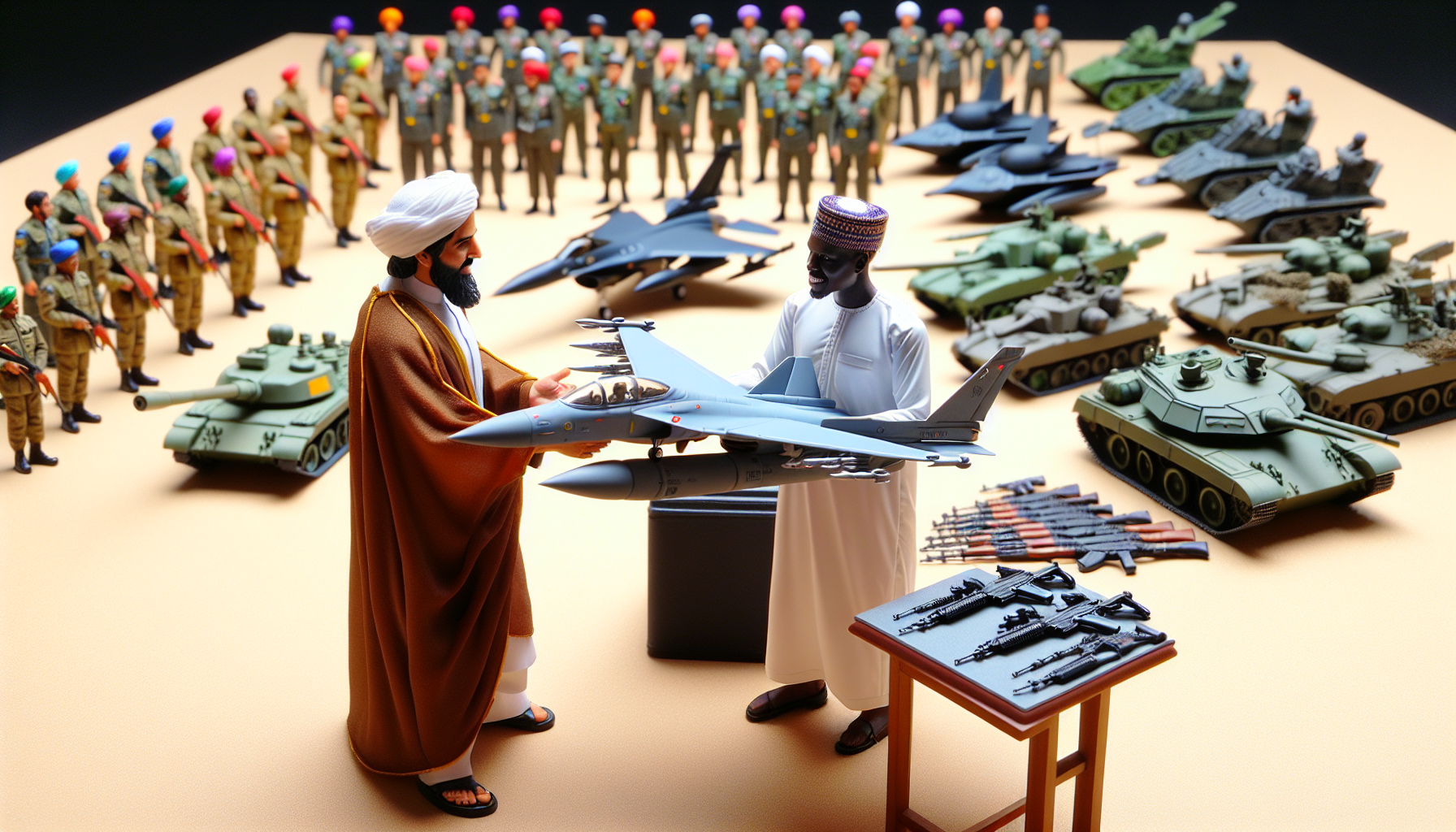
Pakistan’s Defense Expansion: A $1.5 Billion Deal with Sudan
Pakistan is currently in the advanced stages of finalizing a significant $1.5 billion arms deal with Sudan, aimed at supplying a variety of weapons and aircraft. The agreement, which promises to bolster Sudan’s military capabilities in its ongoing conflict with the paramilitary Rapid Support Forces (RSF), marks a critical moment for both nations.
A Comprehensive Military Package
The arms deal includes the procurement of ten Karakoram-8 light attack aircraft, over 200 drones designed for scouting missions and kamikaze operations, as well as advanced air defense systems. According to sources familiar with the deal—who requested anonymity for security reasons—this comprehensive military package is seen as a “done deal” by key players in the Pakistani military.
Aamir Masood, a retired Pakistani air marshal, confirmed the ongoing developments, stressing the significance of the deal in re-establishing Sudan’s air supremacy amidst its ongoing civil strife.
Sudan’s Military Needs in a Humanitarian Crisis
Sudan has been embroiled in a brutal conflict for over two years, leading to one of the worst humanitarian crises in the world. The situation has drawn in various foreign interests and escalated the threat of fragmentation in the strategically vital Red Sea country, known for its rich gold resources. The influx of Pakistani military equipment could enhance the capabilities of Sudan’s army, which faces significant challenges, particularly from the RSF, known for its effective use of drone technology in combat.
The Role of Drones in Modern Warfare
Drones have become increasingly pivotal on the modern battlefield. For Sudan, the introduction of over 200 drones will provide critical advantages in surveillance and offensive operations. As the RSF continues to leverage drone technology to gain territory, Sudan’s military urgently needs to regain its aerial capabilities, which were prominent at the onset of the conflict. The participation of Pakistan’s defense sector underscores a growing trend where countries are enhancing their military strategies through advanced technology.
Pakistan’s Defense Sector on the Rise
This arms deal is not an isolated event; it reflects Pakistan’s rising profile in the global defense market. The country has seen an increase in interest and investment in its defense sector, particularly after its military jets played a prominent role in a recent conflict with India. The Pakistani military has been keen on demonstrating its capabilities, and deals like this with Sudan serve to cement its status as a formidable player in military exports.
In addition to Sudan, Pakistan secured a whopping $4 billion weapons deal with the Libyan National Army last month, which included JF-17 fighter jets and training aircraft. This move is one of Pakistan’s largest arms sales, further highlighting the burgeoning capabilities and international interest in its defense manufacturing.
Strengthening Regional Ties
Furthermore, Pakistan is exploring defense partnerships beyond Sudan. Discussions with Bangladesh about a potential defense deal involving Super Mushshak training jets and JF-17s indicate a strategic realignment and strengthening of military ties in the region. Improved relations with Dhaka could pave the way for further collaboration in defense technology and training.
Looking Ahead
As Pakistan finalizes its deal with Sudan, the implications are vast—not just for the involved parties but for the entire region. The infusion of military strength into Sudan could alter the balance of power and impact ongoing humanitarian efforts. With global interest in Pakistan’s defense capabilities on the rise, the country’s military future looks increasingly promising.