


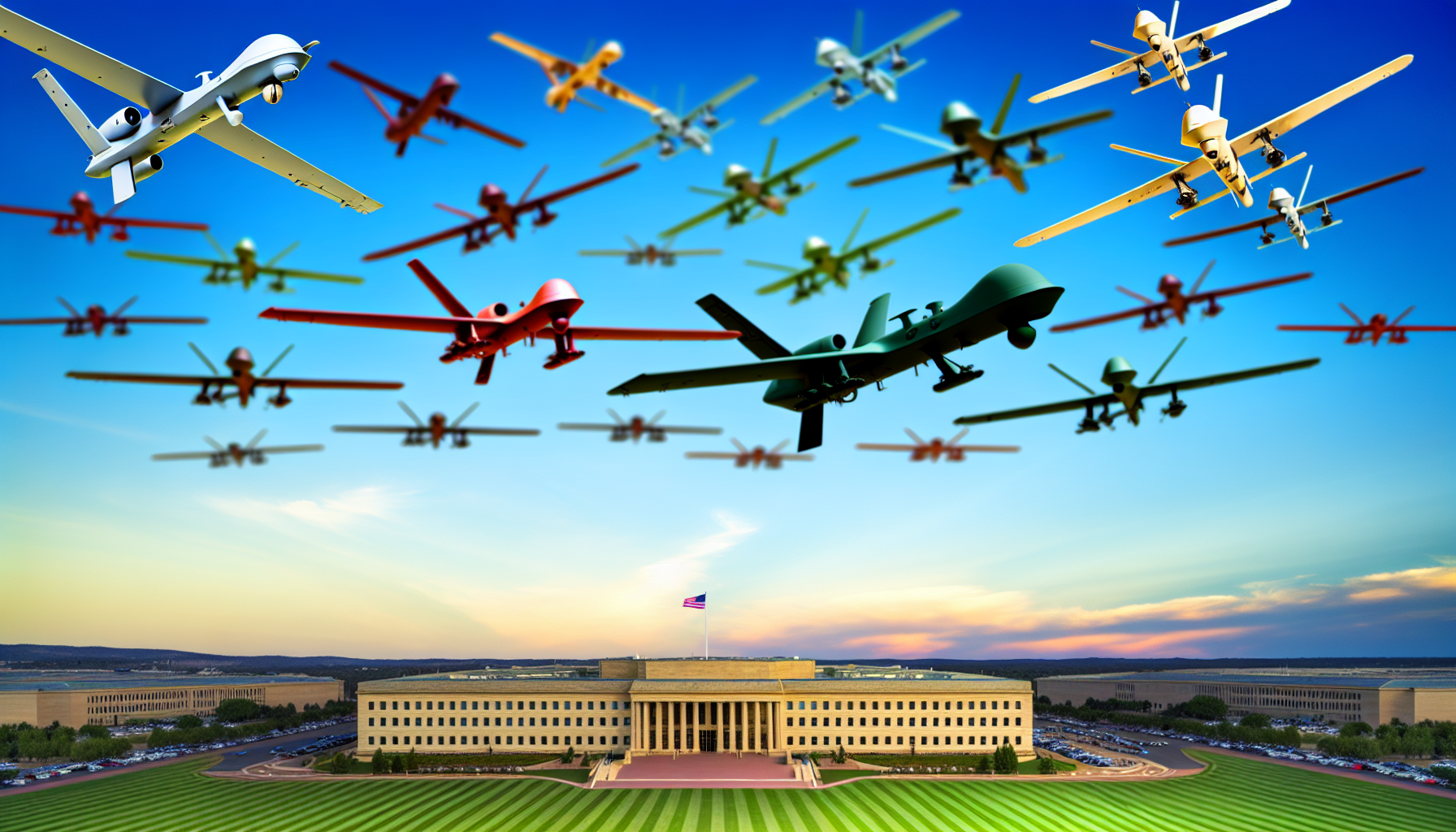
The Future of Warfare: Drones on the Battlefield
The Rising Role of Drones
In the evolving landscape of modern warfare, uncertainty looms large over where and when the next major conflict might arise. What is increasingly clear, however, is that the U.S. military’s approach to combat is changing dramatically. The introduction and integration of drones into combat scenarios are transforming how battles are fought, moving beyond traditional ground forces to a future where unmanned systems take center stage.
The Pentagon’s New Strategy
Under the leadership of Defense Secretary Pete Hegseth, the Pentagon has adopted a forward-thinking strategy to fast-track the use of drones within the military. This initiative aims to modernize the U.S. military to meet the demands of 21st-century warfare. By defining small drones not just as tools, but as consumable assets akin to bullets and grenades, the Department of Defense is taking a decisive step forward in drone integration.
Emphasizing Small Drones
The focus of this initiative is on small unmanned systems that weigh less than 55 pounds (25 kilograms). These compact devices are crucial due to their versatility and ease of deployment on the battlefield. This includes a range of capabilities, from surveillance operations to offensive actions using “kamikaze” drones that can be directed at targets, sacrificing themselves for mission success. These loitering munitions are designed to hover in an area until they detect a target, providing a strategic advantage in dynamic combat situations.
Maintaining Battlefield Superiority
As global tensions rise—particularly in the context of the United States’ geopolitical rivalry with China—the need for enhanced military capabilities becomes increasingly critical. By ramping up the production and fielding of these small drones, the U.S. aims to maintain battlefield superiority against potential adversaries. The emphasis on drones reflects a broader shift in military strategy, recognizing the importance of technological advancements in achieving objectives in modern conflicts.
Technological Advancements and Experimentation
The U.S. military’s commitment to experimenting with and deploying these unmanned systems signifies a significant investment in future technologies. Ongoing trials and prototypes are essential for understanding how these drones can be best utilized in real-world scenarios, ensuring that U.S. forces can adapt to new tactics and potential threats on the battlefield. This experimentation phase is vital not just for operational effectiveness, but also for understanding the ethical implications and regulations surrounding drone warfare.
The Geopolitical Context
The push for increased drone capabilities also mirrors strategic shifts in international relations. As national defense becomes more intertwined with technological leadership, the U.S. aims to outpace its rivals in the development and deployment of unmanned systems. The competition with nations like China, which is rapidly advancing its own military technologies, is intensifying. Drones represent both a tactical asset and a symbol of technological prowess in the global arena, making them central in discussions about future military engagement.
Conclusion: A New Era of Warfare
In essence, the United States is entering a new era of warfare where drones are crucial players on the battlefield. As the Pentagon fast-tracks their adoption, the implications for U.S. military strategy and global security will be profound. The integration of these small unmanned systems not only marks a significant step towards modernizing the military but also reshapes the very nature of what it means to engage in conflict in the 21st century.