


The Grand Military Parade: A Showcase of China’s Military Might
On September 3, 2025, Tiananmen Square in Beijing transformed into a display of military prowess as Chairman Xi Jinping presided over an elaborate parade. With esteemed guests like Vladimir Putin and Kim Jong-un by his side, Xi delivered a pre-parade speech emphasizing the “unstoppable” rejuvenation of the Chinese nation and the stark choice the world faced between “peace or war.” This served as a potent reminder of China’s growing assertiveness on the global stage.
Heavy Armor: Ground Forces Take Center Stage
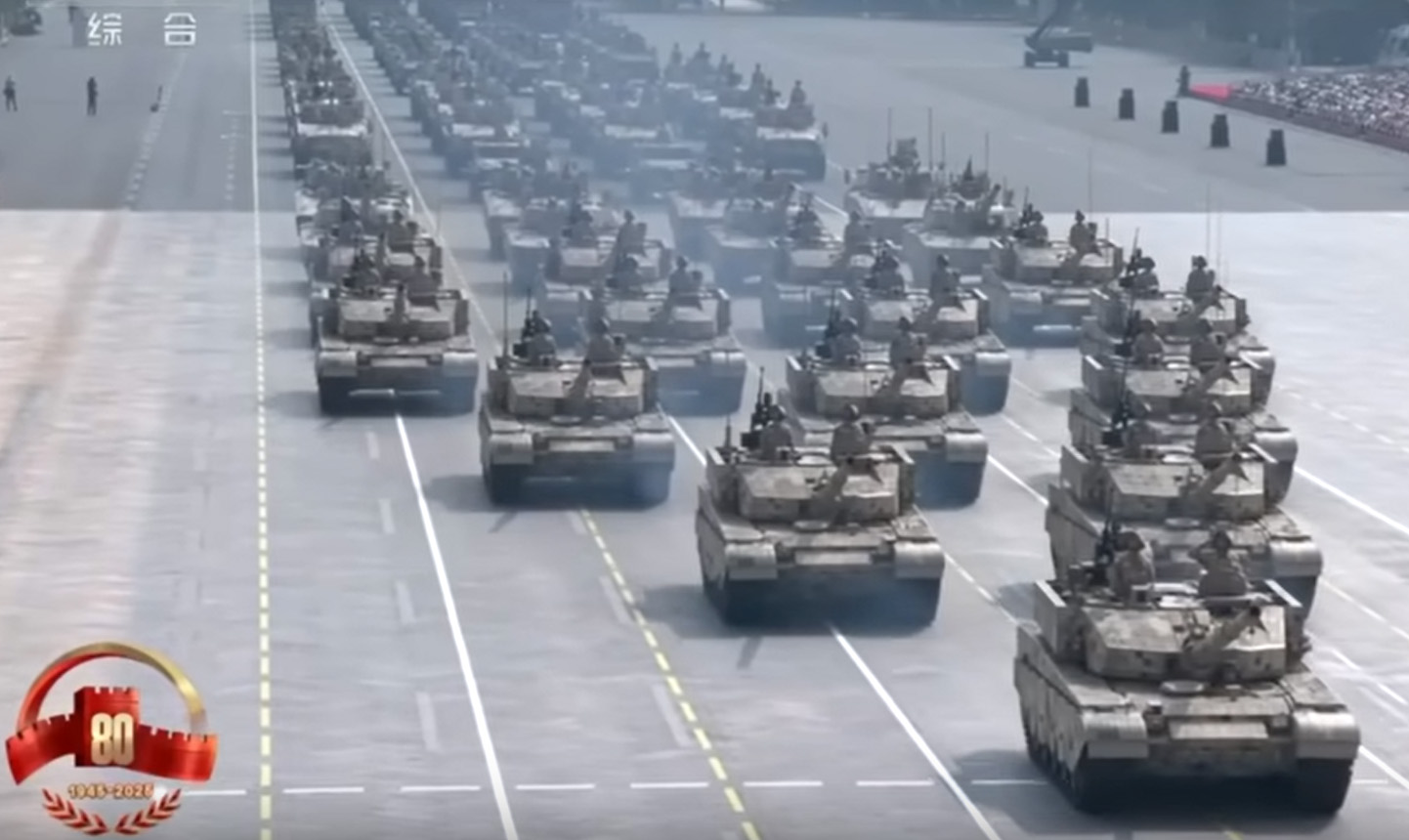
The parade commenced with a dazzling array of armored vehicles, led by the ZTZ-99B main battle tanks from the 82nd Group Army. Although the technological advancements over its predecessor, the ZTZ99A, remain somewhat ambiguous, experts suggest that the ZTZ99B showcases enhanced capabilities in joint operations, firepower, and survivability in challenging environments. The inclusion of active protection systems further underscores China’s commitment to developing robust land warfare capabilities.
Among the stars of the parade was the Type 100 family of vehicles. This fourth-generation set includes a medium tank and a combat support variant that can undertake a wide range of operational missions, from urban combat to long-range rapid deployment. Enhanced by features such as reactive armor and cutting-edge active protection systems, the Type 100 embodies lessons learned from recent conflicts, including the ongoing war in Ukraine.
Artillery and Long-Range Systems: Reaching New Heights
Long-range artillery took the spotlight with the introduction of the PCL-191 modular rocket launchers, distinguished by their 8×8 chassis. Experts noted that these systems are capable of delivering diverse payloads quickly and effectively, considerably enhancing the PLA’s strike capacities. Whether engaged in a high-precision attack or a saturation bombardment, these launchers demonstrated the PLA’s commitment to surgical strikes across vast distances.
The PCL-191’s capability to execute operations against targets like Taiwanese ports, especially highlighted during the provocative “Strait Thunder-2025A” wargames, creates an ominous undertone in the region’s already-fragile security dynamics.
The Rise of Unmanned Systems
A striking feature of the parade was the proliferation of unmanned ground vehicles (UGVs). Various models were displayed, each designed for specific combat or logistical tasks, from reconnaissance to mine clearance. These systems underscore a growing trend towards automation on the battlefield. Although their autonomous capabilities were not showcased in the parade, the ability for UGVs to operate in multiple terrains and perform a diversity of missions illustrates a profound shift towards integrating AI in military operations.
Defensive Measures: Counter-Drone Capabilities
In the face of evolving threats, China’s parade underscored its emphasis on robust counter-drone systems. A variety of technologies designed to neutralize threats from UAVs—including gun, missile, laser, and microwave systems—illustrated a layered approach to air defense. Notable among them was the FK-3000 system, capable of countering drone swarms effectively. This reflects China’s strategic foresight, learning from conflicts like the one in Ukraine where drones have become pivotal in modern warfare.
Air Defense Systems: Fortifying Chinese Skies
The air defense segment of the parade showcased an impressive array of systems. The debut of the HQ-20 and the medium-range HQ-9C demonstrated China’s advances in this critical area. The HQ-20, thought to be comparable to Russia’s S-350, offers robust point defense, while the HQ-9C and HQ-19 variants seek to counter both traditional and ballistic threats.
These systems signify a serious commitment to building a comprehensive air defense network, aiming not just to protect territory but to project power and deter adversaries across the region.
Information Warfare: The Invisible Front
While the spotlight was primarily on kinetic capabilities, the parade also emphasized information warfare and electronic support systems. Although specific names were largely absent, this equipment will play a critical role in modern military strategies, particularly in cyber and electronic realms where battles begin long before physical confrontations take place.
The inclusion of radar systems specialized for early warning against stealth technology underscores the PLA’s dedication to countering advancements in aerial stealth capabilities.
Final Thoughts
The September 3 parade not only showcased China’s advancements in various military domains but also sent a clear message: the country is committed to enhancing its military capabilities in an increasingly complex geopolitical landscape. Through this event, China positioned itself as a significant power, challenging expectations and reinforcing its security posture in an uncertain world.