


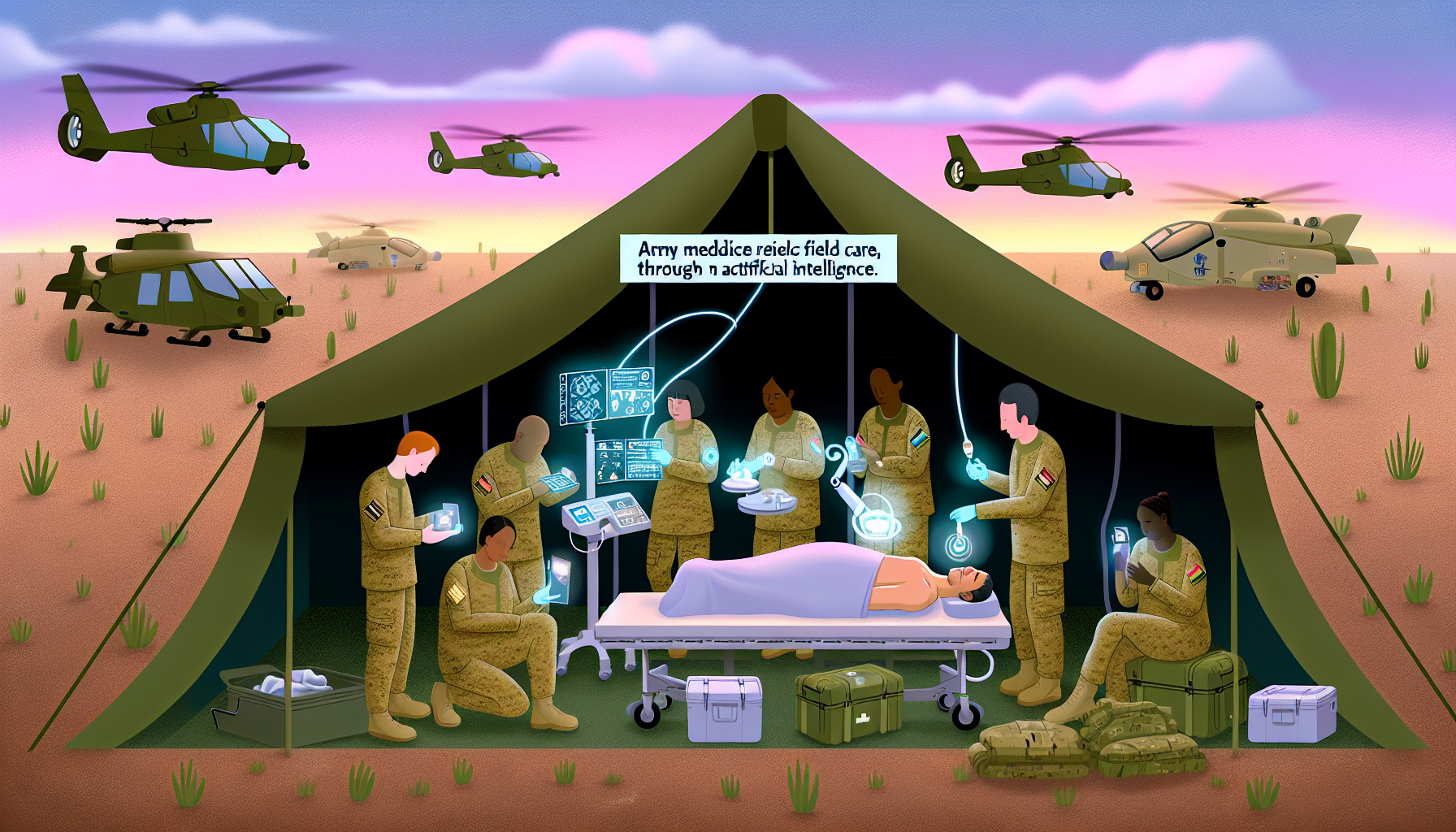
Transforming the Future Battlefield: The Role of Artificial Intelligence in Military Healthcare
Introduction
In an era where technology reshapes our world, the U.S. Army is at the forefront of innovation, particularly in military healthcare. The integration of artificial intelligence (AI), machine learning (ML), and robotics stands to enhance not only human performance but also the overall operational readiness of military forces. As the landscape of warfare evolves, so too must the strategies for managing medical care on the battlefield.
The Explosion of AI Technology
The rise of AI technologies has vastly changed various sectors, including healthcare. Much like the revolutionary impact of ChatGPT in 2022—bringing AI closer to the general public—military applications hold the potential to transform battlefield medicine. AI systems mimic human cognitive functions such as problem-solving and learning through algorithms that process massive data sets. This capability offers military leaders timely insights for decision-making crucial in high-stakes scenarios.
The Challenges of Large-Scale Combat Operations (LSCO)
The Army’s vision includes anticipating extreme challenges in future LSCO environments. Historical experiments suggest that casualty rates could soar to levels not seen since World War II, with projections estimating up to 21,000 soldiers lost in just a week of conflict. The Army Health System (AHS) faces critical imperatives: efficiently evacuating battlefield casualties, ensuring rapid return to duty, and overcoming logistical hurdles in contested environments. This coincides with the need for a medical strategy that conserves combat effectiveness while meeting the overwhelming demand for care.
Command and Control Systems Enhanced by AI
As modern warfare becomes increasingly data-driven, the command-and-control (C2) framework also allows for rapid analysis of battlefield information. AI enhances this process by employing deep learning and pattern recognition—all vital for timely decision-making. The Combined Joint All-Domain Command and Control (CJADC2) model aims to produce actionable intelligence across multiple domains, enabling military operations to adapt at the speed of relevance.
Maximizing Return to Duty
One of the primary goals of the AHS is to maximize the return of warriors to duty. Early and precise medical intervention significantly increases the chances of soldier survivability and efficacy on the battlefield. AI systems can assist health personnel in quickly diagnosing conditions and optimizing treatment plans. By doing so, they enable clinicians to focus more on patient care than administrative tasks.
Force Health Protection through Surveillance
AI technologies provide robust health surveillance capabilities that enhance Force Health Protection (FHP). By analyzing real-time data collected from wearables like biometric monitors, AI can offer predictive analytics about potential health threats, ensuring proactive intervention. This real-time monitoring allows health professionals to adjust treatment plans and prevent adverse health outcomes, thus safeguarding the welfare of soldiers even before deployment.
Treatment Improvements in Health Service Support
The AHS can leverage AI to bolster treatment protocols and hospital management. AI-powered systems are already showing promise in improving diagnostic accuracy and health communications within civilian healthcare. When tailored for military medicine, these technologies can substantially enhance the delivery of care on the battlefield, providing actionable insights to medical teams about treatment efficacy and patient management.
Clearing the Battlefield
The effective movement of casualties is crucial in unencumbering combat forces. AI can streamline patient movement requests, ensuring earlier notifications and preparation for incoming patients. This capability supports medics in providing timely, effective care while minimizing the burdens of administrative responsibilities. By analyzing injury patterns and resource availability, AI assists in making informed decisions about the best course of action for any given patient.
Overcoming Contested Logistics
Delivering quality healthcare under hostile conditions is fraught with challenges, particularly when it comes to maintaining medical supplies. AI facilitates logistical efficiency by leveraging predictive analytics. This allows the AHS to adapt to real-time conditions on the battlefield, improving inventory management and optimizing the distribution of critical medical resources. This turn from reactive to predictive logistics demonstrates AI’s potential for reshaping traditional processes in austere environments.
Addressing Barriers to AI Adoption
Despite the evident advantages of AI, several barriers hinder its implementation in military healthcare. Challenges include incomplete communication networks, the need for training data, and the considerable investment in AI technologies. Moreover, ensuring the security and integrity of data within military operations remains paramount. Only through sufficient infrastructure and training can military health teams effectively integrate these advanced technologies into their workflows.
Ethics and Responsibility in AI Utilization
The deployment of AI in healthcare raises significant ethical considerations. The potential for biased algorithms necessitates ongoing oversight and transparent policies governing their development and deployment. The aim must be to enhance, not replace, the human touch that is central to military medical care. Trust and ethical accountability remain paramount as AI continues to evolve within military applications.
Promising Horizons
As AI technology advances, so too must the strategies for its integration into military healthcare systems. The AHS stands to gain immeasurably from the efficiencies offered by AI, ensuring soldiers receive timely and accurate care even in the most extreme conditions. The focus remains on ensuring that AI serves as a tool for enhancing human capabilities, driving improvements in healthcare delivery, and ultimately preserving the lives of those who serve.