


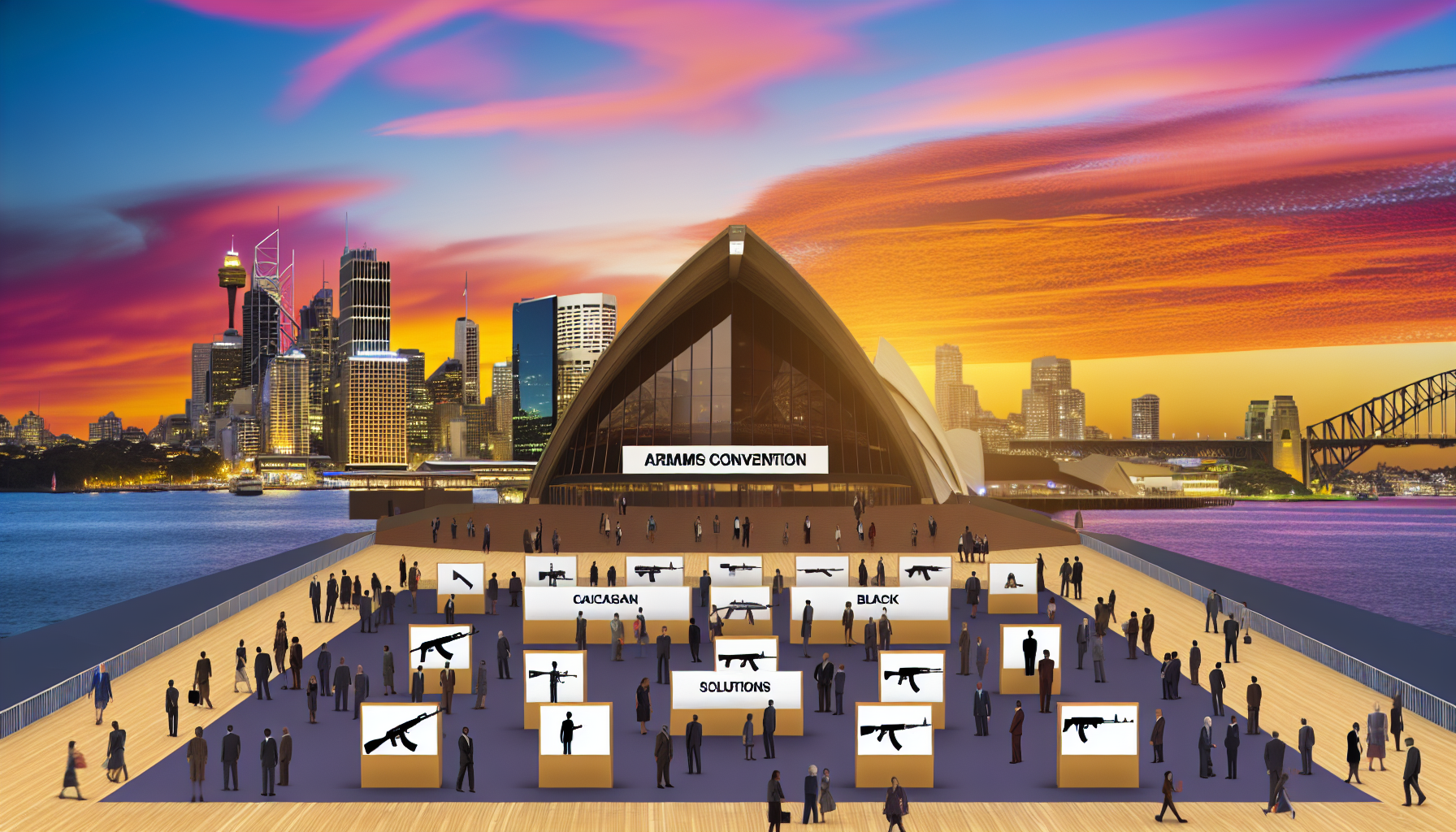
Inside the Indo-Pacific International Maritime Exposition
Context and Atmosphere
Inside the heavily guarded, aseptically cool halls of the Indo-Pacific International Maritime Exposition, Australia’s Defence Minister, Richard Marles, evokes a whimsical picture, referring to it as “a kind of Disneyland” and “the happiest place on Earth” for those within the industry. Yet, outside, the atmosphere tells a conflicting story. Lines of armed police form barricades, shielding the expo from fervent protests. Those gathered outside view the arms conference as anything but a joyful event, with chants of “War criminals are not welcome here” echoing through the air, underscoring the stark division between the military world within and the civil protest outside.
Protests and Responses
The protestors carry signs and even doves on sticks, symbolizing peace amidst a gathering that champions warfare. Their chants resonate against the backdrop of burgeoning tension, culminating in moments of violence as police reportedly “attacked from all different angles,” leading to injuries on both sides. The clash epitomizes a society deeply divided over issues of military expenditure and humanitarian concerns, vividly illustrated as demonstrators face the grim realities of conflict while the expo showcases technological advancements in arms.
A Showcase of Military Innovation
Inside, Marles continues to champion the event as an invaluable opportunity for international naval collaboration amidst myriad global challenges. He highlights the exposition as a stage for showcasing “awesome power” and “ingenious autonomous systems.” This lineup includes everything from majestic ships to advanced military drones, all intended to demonstrate the pinnacle of human ingenuity in defense technology.
Divides in Worldview
The juxtaposition of the expo and protests reveals an acute disconnect—two irreconcilable worldviews clash, one advocating for defense advancements and mutual support among nations, the other condemning the arms trade as a facilitator of human suffering. The ongoing violence in Ukraine and the fragile ceasefire in Gaza serve as grim reminders of the stakes involved, rendering the event a focal point of global military diplomacy and local dissent against the backdrop of international conflict.
The Arms Industry on Display
As attendees walk through the vast exhibitors’ hall, it becomes clear that Australia is tightly intertwined with the global arms industry. Major players, including Elbit Systems, Raytheon, and Lockheed Martin, showcase their latest technologies amidst an array of promotional gimmicks, like baristas serving free coffee. The integration of such corporations into Australia’s military framework highlights a nation navigating the complexities of global arms manufacturing while attempting to maintain its sovereign identity.
Global Implications of Local Actions
Elbit Systems, recognized as Israel’s largest weapons manufacturer, draws attention not only for its striking yellow stall but also for a troubling association with the conflict in Gaza. The controversy deepens when details emerge about the production of drones implicated in lethal strikes, establishing a morally contentious connection between Australian participation in the arms trade and international humanitarian crises.
Networks of Military Influence
Within the expo, Lockheed Martin plays an integral role in discussing military strategy and fostering networks among “primes,” reflecting Australia’s investment in global supply chains for machinery like the F-35 strike fighter. This aircraft has been associated with operations conducted in Gaza, creating a sense of complicity among Australian manufacturers in the geopolitical landscape.
Economic Ties to Controversy
As Australia grapples with its role in the global arms trade, the exposé of its Future Fund’s investments in major defense corporations raises alarms. This fiscal support for arms manufacturers draws criticism from human rights advocates who question the ethical implications of funding systems tied to global conflict, resulting in civilian casualties. Reports connecting Australian-made munitions to atrocities abroad reinforce the urgency of reevaluating national policy regarding arms exports.
Language of Warfare
In the convention center, discussions peppered with military jargon redefine the concepts of warfare. Terms like “capabilities,” “assets,” and “solutions” strip conflict of its human cost, focusing solely on operational efficiency while sidestepping the dire implications of how these “systems” are utilized around the world. The dialogue surrounding military technology often remains detached from the moral considerations of its applications in real-life scenarios.
Community Response and Engagement
Outside, the protests evolve after the initial confrontations; however, significant resistance dwindles as the expo progresses. A lone banner surfaced briefly on the final day, quickly dissipating under police scrutiny. The larger social environment remains somewhat apathetic; officers bored at barricades seem resigned to their duties, scrolling through phones as the atmosphere shifts back towards a “business as usual” mindset.
The stark contrasts at the Indo-Pacific International Maritime Exposition encapsulate a complex narrative of national defense intertwined with ethics, innovation, and responsibility. As civil voices continue to challenge military operations, the ongoing dialogue emphasizes the necessity for a more conscientious approach to arms trade and international relations.