


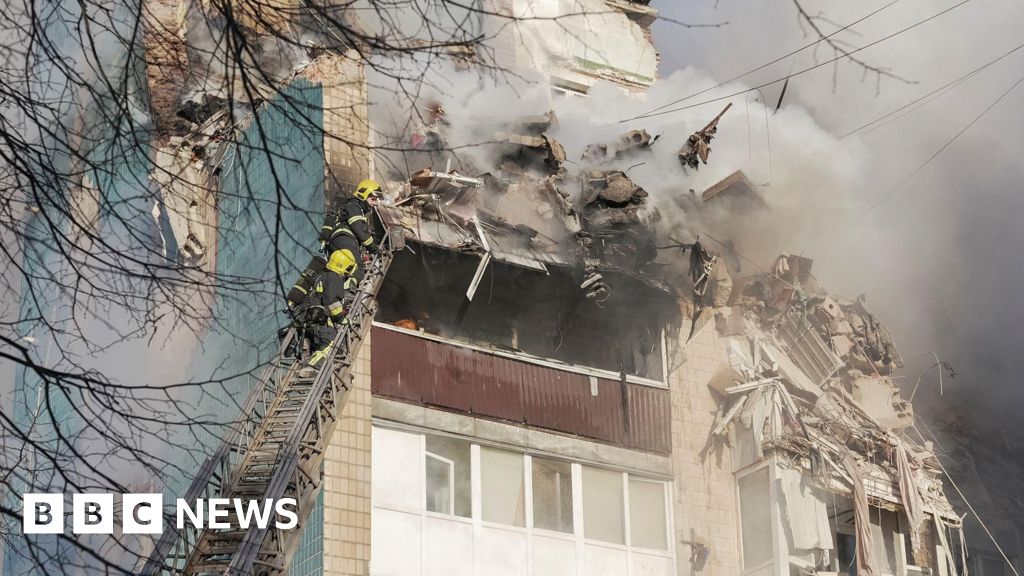
Ternopil Missile Attack: A Harrowing Incident
At least 25 lives were tragically lost, including three children, in a devastating Russian missile and drone attack on residential blocks in Ternopil, a city in western Ukraine. Ukrainian officials confirmed that an additional 73 people sustained injuries, 15 of whom were children. This attack, which unfolded early on a Wednesday morning, marked one of the deadliest incidents in the region since Russia’s full-scale invasion began in February 2022.
The Attack Details
Ukraine’s air force reported that the strike involved Russian X-101 cruise missiles targeting the residential flats. The neighboring regions of Lviv and Ivano-Frankivsk were also impacted, while a drone assault on Kharkiv resulted in over 30 injuries. Eyewitness accounts and social media footage depicted chaotic scenes, with buildings and vehicles engulfed in flames as sirens echoed throughout the city.
Air Defense Challenges
Despite the growing sophistication of Ukraine’s air defense systems, the nation faced serious challenges during this attack. The air force claimed to have intercepted 442 of 476 drones and 41 of 48 missiles launched by Russia. Notably, 10 of the missiles were downed by advanced F-16 and Mirage 2000 fighter jets supplied by Western allies. Yet, even with these defenses in place, vulnerabilities remained evident, prompting pleas for uninterrupted support in military aid from Western nations.
The Scene in Ternopil
Ternopil, situated closer to Poland than the capital, Kyiv, had experienced relatively few attacks until this incident. The devastation was quickly evident, with video footage circulated by President Volodymyr Zelensky showcasing one of the apartment blocks having completely collapsed. Interior Minister Ihor Klymenko provided harrowing updates, indicating that the structure had been destroyed from the third to ninth floors, leaving many victims trapped among the rubble.
Broader Impact Across Ukraine
The repercussions of the missile strikes extended beyond Ternopil. Energy, transport, and civil infrastructure sustained damage across various parts of western Ukraine. The Ivano-Frankivsk region was particularly hard-hit, where the energy sector was targeted and two of the three reported casualties were children. The head of Lviv’s region also reported damage to energy facilities, indicative of Russia’s ongoing campaign to disrupt Ukraine’s energy grid as winter approaches.
Escalating Russian Attacks
In a bid to undermine morale and disrupt logistics, Russia has intensified its assaults on Ukraine’s energy infrastructure. Following the recent strikes, the energy ministry announced that power cuts would be implemented across the country due to the extensive damage inflicted. The Russian defense ministry claimed that these large-scale attacks were aimed at Ukraine’s military-industrial complex and energy sector, allegedly in retaliation for Ukrainian actions against civilian targets.
Ukraine’s Military Response
On the military front, Ukraine acknowledged that it had deployed US-supplied longer-range Atacms missiles against military targets in Russia. This marked a significant development in the conflict, as it was the first time Ukrainian forces admitted to utilizing these advanced missiles on Russian soil. In response, the Russian defense ministry reported that four missiles targeting Voronezh were intercepted by their air defenses.
Diplomatic Efforts
As concerns about the conflict continued to escalate, President Zelensky traveled to Ankara, seeking to rekindle US-backed peace negotiations. Talks with Turkish President Recep Tayyip Erdogan took place amid reports of a plan being developed by US envoy Steve Witkoff and Russian counterpart Kirill Dmitriev. However, the Kremlin dismissed any speculation regarding participation from Russian representatives in these discussions, emphasizing their stance on the unfolding situation.
Regional Responses to Incursions
In a related incident, Romania’s defense ministry reported a Russian drone incursion that traveled through its airspace before crossing back into Ukraine and Moldova. This prompted Romanian and German fighter jets to scramble in response, highlighting the wider regional implications of the conflict. Poland also took precautionary measures, deploying jets and temporarily closing airports in southeastern regions in response to the violence in western Ukraine.
Stalemate on Ceasefire Talks
As the fourth anniversary of the full-scale invasion approaches in February, both Russia and Ukraine remain at an impasse regarding potential resolutions to the conflict. Ukraine and its Western allies continue to push for an immediate ceasefire along the extensive front lines, while Russia has firmly rejected these calls, restating demands that Ukraine views as tantamount to capitulation.
The Road Ahead
The conflict continues to evolve, with both sides entrenched in their positions. While significant military developments are unfolding, the humanitarian impact remains profound. The tragic events in Ternopil serve as a sobering reminder of the ongoing toll of the war, as civilians bear the brunt of the violence in a landscape fraught with uncertainty and peril.