
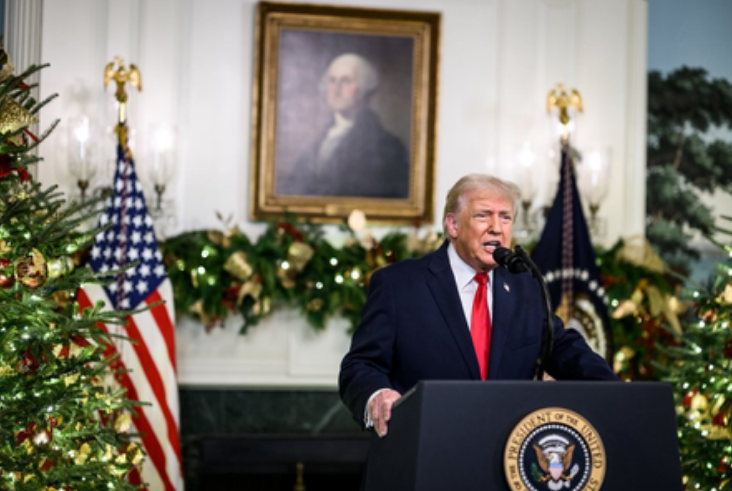

In a significant move for U.S. foreign policy, President Donald Trump has recently signed the National Defense Authorization Act (NDAA) for fiscal year 2026. This sweeping legislation lays the groundwork for expanded military cooperation with India and emphasizes deeper collaboration within the Quadrilateral Security Dialogue, strategically positioned as a cornerstone of Washington’s Indo-Pacific strategy.
The NDAA authorizes a staggering $890 billion in national security funding. It specifically directs the U.S. to enhance strategic and defense ties with India, reinforcing the commitment to a free and open Indo-Pacific region, an initiative that resonates strongly given the complex geopolitical landscape.
In his signing statement, Trump expressed that this law is essential for advancing his “Peace Through Strength” agenda, asserting that it will bolster the Department of War’s ability to address domestic and foreign threats and enhance the defense industrial base. Notably, it codifies various executive actions taken during his administration that align with these objectives.
Among its many provisions, the NDAA emphasizes the importance of bilateral and multilateral military engagement with India. The legislation encourages increased participation in joint military exercises and promotes greater defense trade. Furthermore, it identifies humanitarian assistance and disaster response as critical areas for closer cooperation, reflecting an understanding that security extends beyond military might.
A significant aspect of the NDAA is its directive for a comprehensive joint assessment of nuclear liability rules under the United States-India Strategic Security Dialogue. This includes establishing a consultative mechanism with India to evaluate the implementation of the 2008 civil nuclear agreement, an important framework for civil nuclear cooperation.
As a measure of accountability, the legislation mandates that the State Department submit a report to Congress within 180 days and continue annual assessments for five years thereafter. This transparency aims to keep lawmakers informed and engaged in U.S.-India defense collaborations.
Additionally, the NDAA requires evaluations of Russia’s military relationships with India and its broader military posture in the Indo-Pacific and other regions. This highlights an increasing awareness of international dynamics that affect U.S. and allied interests.
Separately, the law proposes the establishment of an Ambassador-at-Large for the Indian Ocean Region within the State Department. This new role is intended to coordinate diplomatic efforts across various Indian Ocean nations, focusing particularly on countering what the NDAA describes as malign influences from the People’s Republic of China.
Beyond strategic military initiatives, the NDAA also allocates $1 billion for the Taiwan Security Cooperation Initiative and incorporates measures to prevent Chinese military firms from circumventing U.S. restrictions via third-party countries. These provisions underscore a commitment to addressing the broader implications of Chinese military actions in various regions.
In a nod to the welfare of service members, the NDAA includes a commendable 3.8 percent pay raise for U.S. military personnel. It also allocates important funding for military housing, healthcare, childcare, and protections for civilian defense employees, conveying a holistic approach to U.S. defense policy.
The NDAA has been a fixture in U.S. defense legislation for more than six decades, shaping national defense policy and spending priorities. As it stands, the fiscal 2026 law firmly integrates enhanced military, nuclear, and regional engagement with India, setting a new benchmark for future U.S.-India relations.