


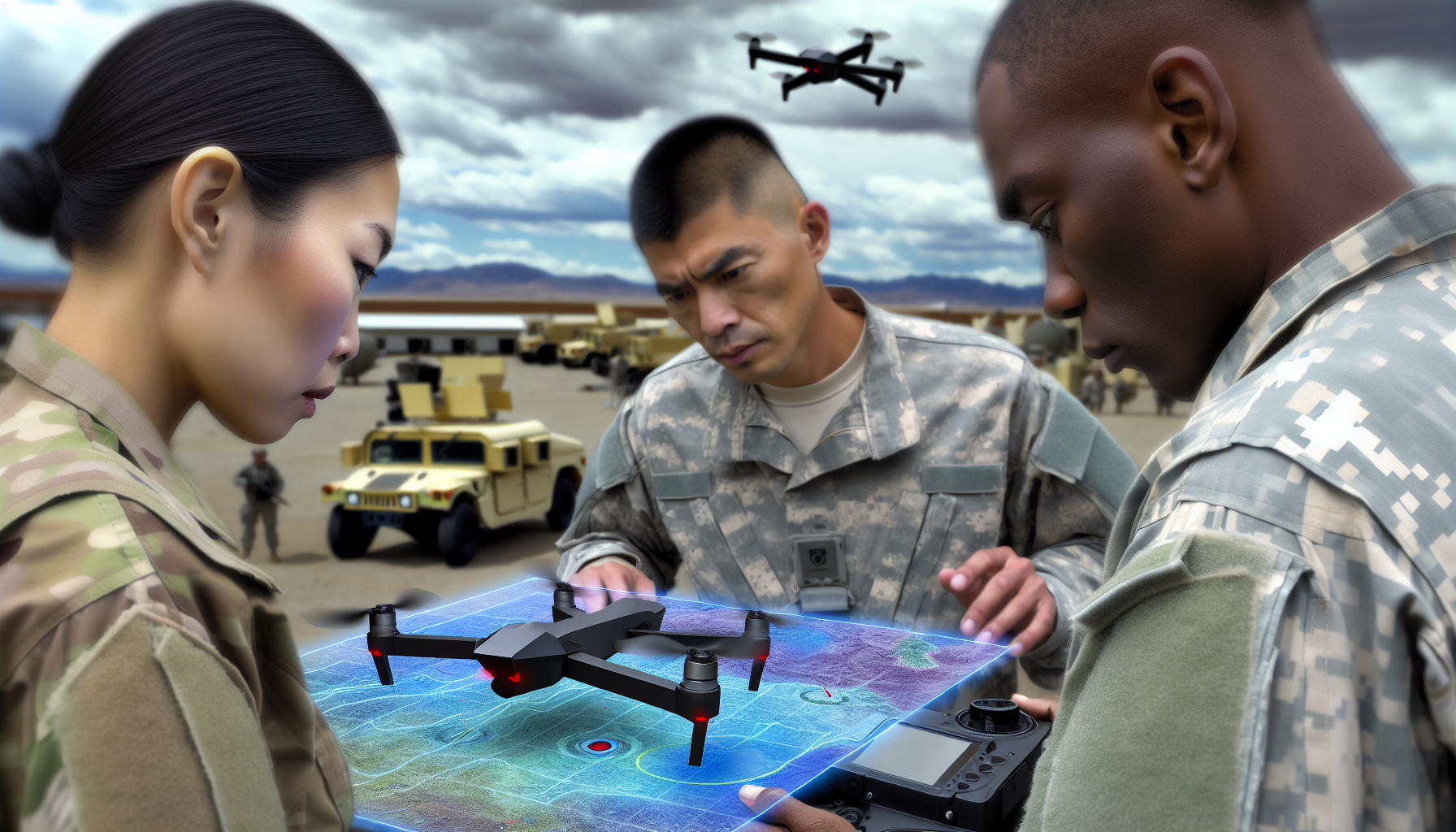
Key Points and Summary – The U.S. Army, having “fallen massively behind” in the low-cost, high-volume drone warfare perfected in Ukraine, is now launching a “massive campaign” to fix its “drone deficit.”
-Despite excelling at expensive, high-tech systems, the Army lacks the sheer numbers of small, expendable commercial-style drones. To fix this, a new Pentagon Task Force has been created.
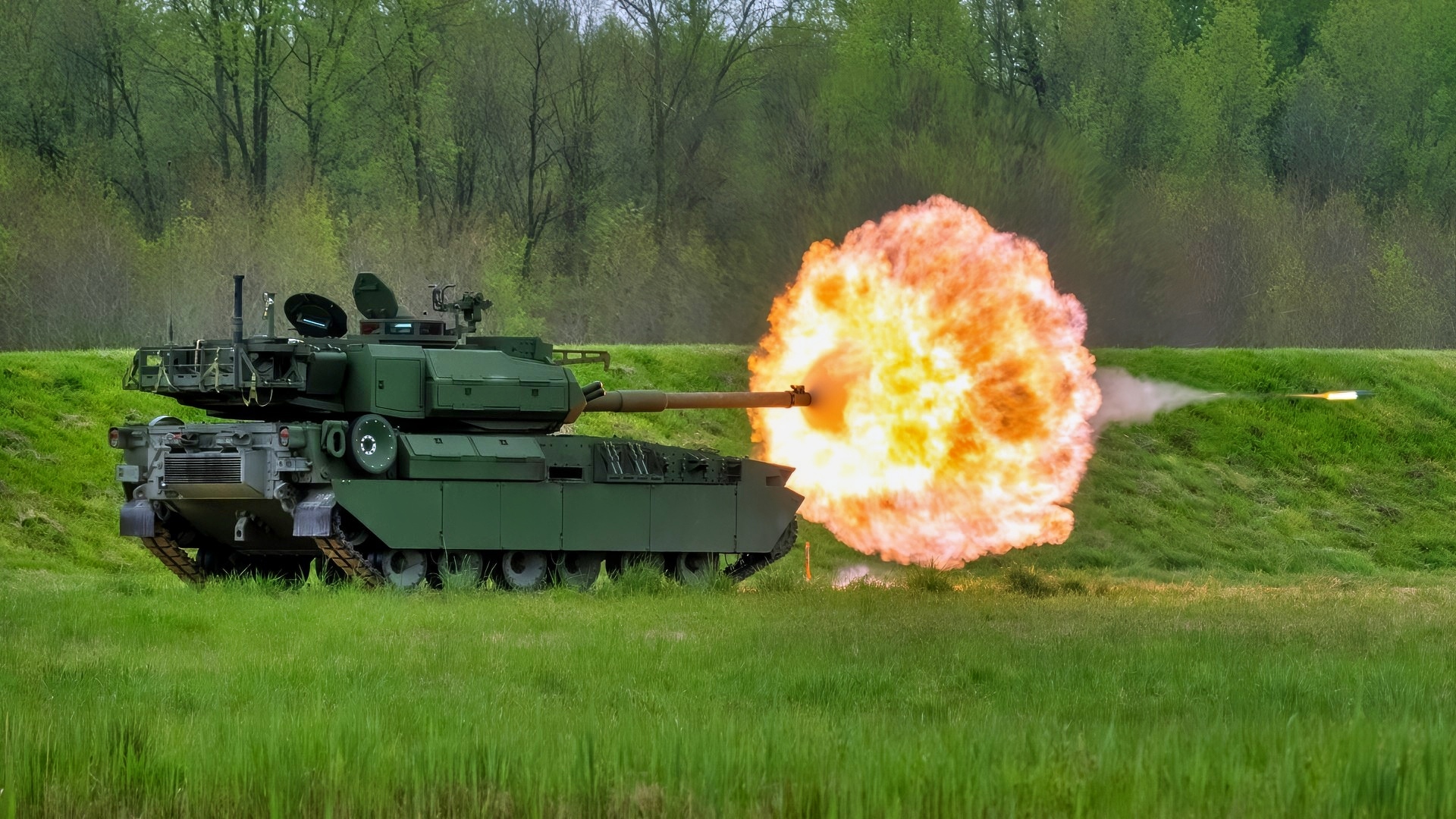
A live fire demonstration of the Army’s newest and most modernized combat vehicle, the M10 Booker, marks the conclusion of the M10 Booker Dedication Ceremony at Aberdeen Proving Ground, in Aberdeen, Md., April 18, 2024. (U.S. Army photo by Christopher Kaufmann)
-The Army aims to equip every combat division with over 1,000 drones and counter-drone systems within two years by streamlining acquisition and building new U.S. manufacturing lines to avoid Chinese-made components.
The Army Has a Drone Problem
The United States Army is among the many militaries worldwide racing to address the massive tactical and technological deficit created by advanced drone combat operations in Ukraine.
The conflict has been transformative in the realm of drone warfare, as innovations continuously redefine offensive and defensive strategies. Low-cost, high-volume drone combat has highlighted the need for rapid advancements in military capabilities.
Switchblade kamikaze drones have effectively tracked and destroyed Russian tanks, showcasing the brutal efficiency of drones in modern warfare. Drone swarms are not only utilized for surveillance but also overwhelm defenses, generating large-scale “area” attacks.
This widespread use sheds light on the rapid shift in operational tactics, where enterprising fighters have found creative applications for existing technologies, leading to an explosion of new concepts. Many small, inexpensive drones have been readily modified, including attaching grenades or paired with larger platforms to take out high-value targets.
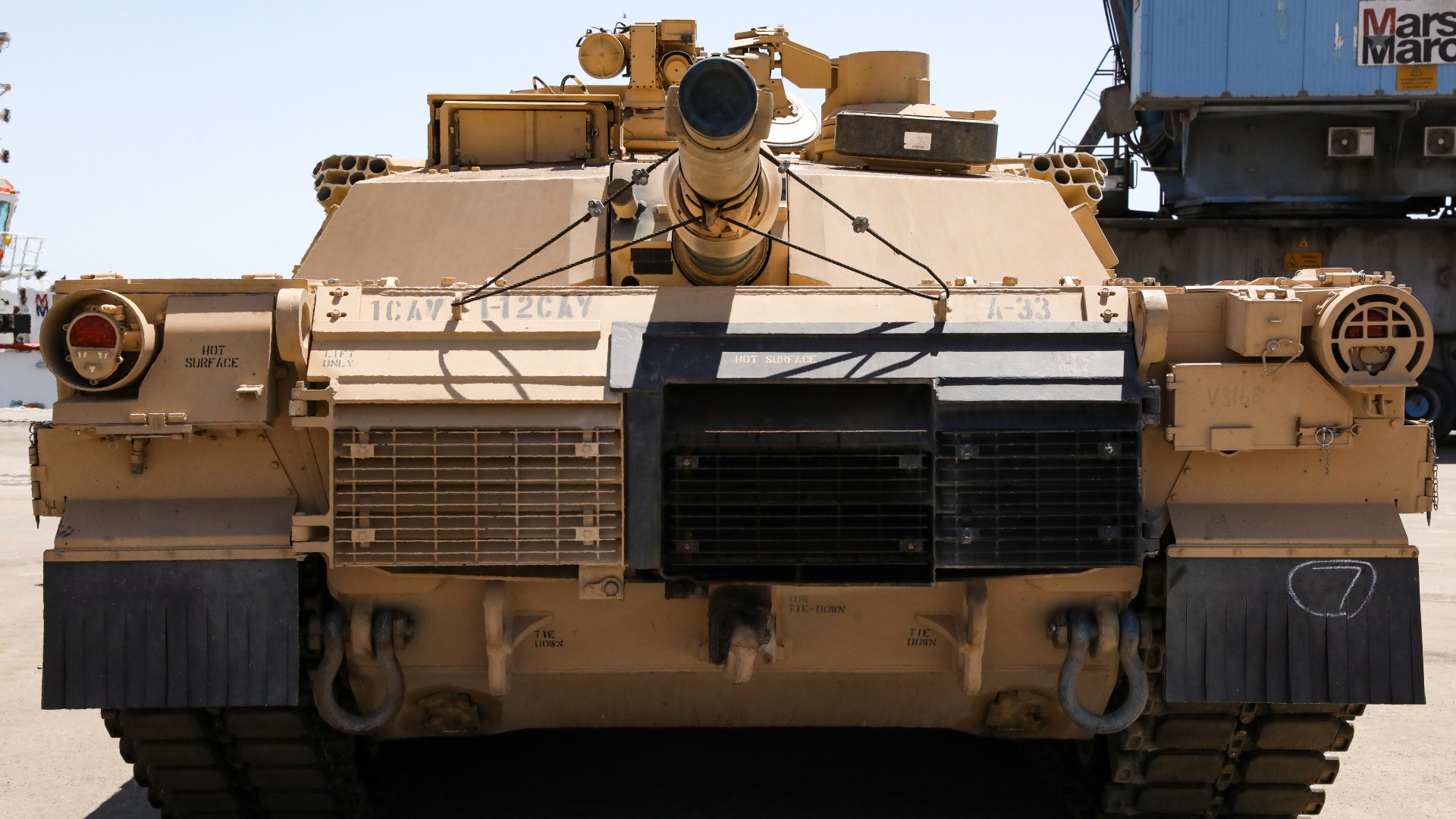
A U.S. Army M1A3 Abrams Tank from the 1-12 Cavalry Squadron, 1st Cavalry Division waits for transport preparations at the Port of Agadir, June 3, 2022. (U.S. Army photo by PFC Donald Franklin)
The developments in Ukraine starkly illustrate the growing efficacy and importance of drone warfare, creating a challenge for the U.S. Army and other global forces, who must evolve rapidly to keep pace with these advances.
Army Drones
Interestingly, the Army finds itself in a paradoxical position. On one hand, it leads the world in advanced applications of small, AI-enabled unmanned systems, employing technologies like manned-unmanned teaming (MUM-T), multi-domain networks, and drone autonomy.
On the other hand, the Army is grappling with a significant drone shortage. The lack of sufficient small drones signifies a broader disconnect in strategic priorities where high-tech systems overshadow the necessity for a large, affordable, disposable drone fleet.
Recognizing this disparity, the Army is making significant strides to ramp up its industrial capacity, focusing on the rapid production of small, commercially viable drones.
Drone Overhaul
Aiming to rectify this problem, the Army has initiated a campaign to equip each combat division with over 1,000 drones and counter-drone systems within two years. This ambitious plan highlights the Army’s commitment to addressing its drone deficit.
The service is taking proactive measures to enhance industrial capacity and streamline acquisition processes, enabling faster procurement of commercially available drone technologies.
As part of this effort, establishing new U.S. manufacturing capabilities is critical, reducing reliance on foreign-made components, particularly those produced in China.
Tactical Overhaul
The overhaul extends beyond hardware to include tactical adaptations, as the Army must train for and incorporate new weapons systems designed for complex electronic warfare environments. These systems offer enhanced guidance capabilities while presenting challenges in interception.
Adversarial forces are adopting innovative strategies, such as attaching long, flexible fiber-optic cables to drones to mitigate susceptibility to electronic jamming. These tactics demand a more sophisticated understanding of drone psychology and technology.
Training becomes essential in this new paradigm. The Army taps into lessons learned from ongoing conflicts, ensuring tactical and strategic insights inform its development and deployment of drone systems.
Fort Sill, Oklahoma, hosts the Army’s Counter-Unmanned Aerial Systems (C-UAS) Counter Drone University, spearheading efforts to analyze and develop countermeasures for the rapidly evolving drone threat.
New Pentagon Task Force
The establishment of a new Pentagon Task Force designates the Army as the Executive Agent of a Joint, Multi-Service Task Force focused on integrating lessons learned from Ukraine and other regions where drone technologies are in active deployment.
This Task Force complements existing work at the Army’s C-UAS University, which is dedicated to investigating the operational face of drone countermeasures globally. As noted by Lt. Col. John Peterson, Director of C-UAS University, the mission involves rapidly adapting lessons to keep pace with evolving threats.
“Here at the schoolhouse, we help provide the lessons because we are part of a broader lessons learned effort,” Peterson shared, illustrating the Army’s commitment to proactive adaptation in the rapidly changing warfare landscape.
About the Author: Kris Osborn
Kris Osborn is the President of Warrior Maven – Center for Military Modernization. Osborn previously served at the Pentagon as a highly qualified expert in the Office of the Assistant Secretary of the Army—Acquisition, Logistics & Technology. Osborn has also worked as an anchor and on-air military specialist at national TV networks. He has appeared as a guest military expert on Fox News, MSNBC, The Military Channel, and The History Channel. He also has a Master’s Degree in Comparative Literature from Columbia University.
More Military
The British Army’s Big Challenger 3 Tank Mistake Still Stings
F-35 Stealth Fighter Program Has Passed the Point of No Return
The Iowa-Class Battleships Have A Message for Any Navy on Earth
Canada Has a Big Message for the Eurofighter Typhoon
The Mach 2 F-16 Fighting Falcon Fighter Has a Message for the U.S. Air Force