


Rising Tensions: U.S. Forces Engage Iranian Drone in the Arabian Sea
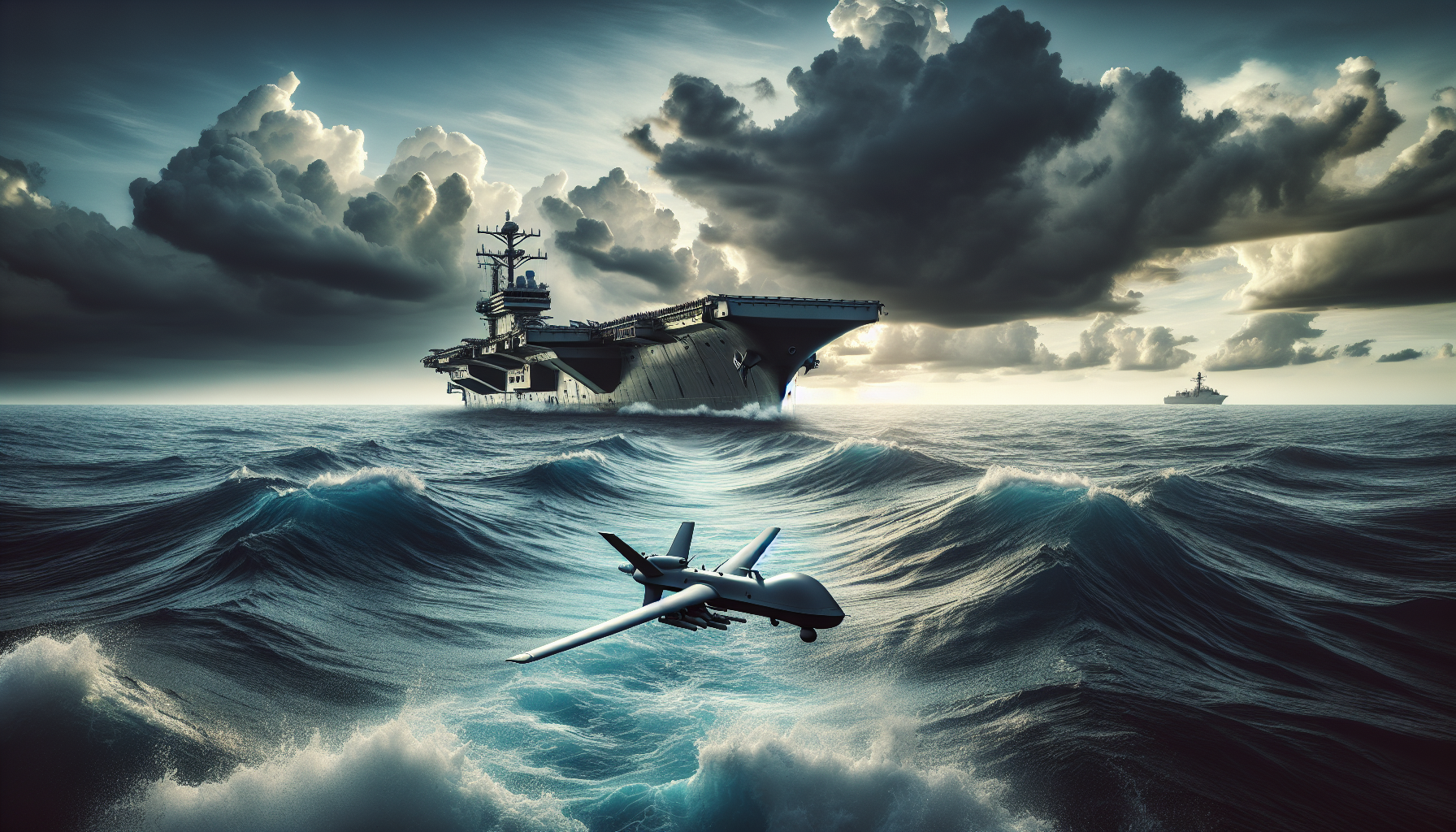
On a tense Tuesday in the Arabian Sea, American military forces shot down an Iranian drone approaching the USS Abraham Lincoln aircraft carrier, which was operating approximately 500 miles from Iran’s southern coast. This incident, which highlights ongoing hostilities between the U.S. and Iran, was confirmed by U.S. Central Command.
The Incident
According to U.S. Central Command spokesperson, Captain Tim Hawkins, the Iranian drone, identified as a Shahed-139, exhibited “aggressive” maneuvers toward the aircraft carrier. Despite U.S. forces taking de-escalatory actions, the drone continued its trajectory, raising alarms about its intent. The F-35C fighter jet deployed from the USS Abraham Lincoln successfully downed the drone without any injuries to American personnel or damage to U.S. equipment.
The Broader Context of U.S.-Iran Relations
This incident comes at a time of heightened tensions between the U.S. and Iran, amidst considerations by President Donald Trump regarding military strikes against the Islamic Republic. The delicate balance of power in the region is further complicated by ongoing negotiations involving senior officials from both nations, set to take place in Turkey, with White House special envoy Steve Witkoff alongside Iranian Foreign Minister Abbas Araghchi participating.
When asked about the potential for a resolution, Trump acknowledged the commencement of negotiations, hinting at the possibility of future talks after previous failed attempts. He mentioned “Midnight Hammer,” a military operation targeting Iran’s nuclear facilities, underscoring the stakes involved for both sides.
Iran’s Stance and Assertions
Meanwhile, the Iranian narrative presents a starkly different view. The Tasnim news agency, linked to Iran’s Islamic Revolutionary Guard Corps (IRGC), characterized the drone’s actions as a “routine and lawful mission” aimed at reconnaissance. The agency claimed that the drone was monitoring the area and successfully transmitted surveillance data before losing communication, the reason for which remains unclear.
An Iranian official also conveyed a grim outlook should conflict arise with the U.S., suggesting it would be more expansive than the brief war experienced last summer. The official proclaimed that Iran’s capacity to disrupt marine traffic in the crucial Strait of Hormuz remains a looming threat, particularly given its strategic importance in global oil supply chains.
Additional Provocations and Responses
Hours later, tensions escalated further as the IRGC harassed a U.S.-flagged merchant vessel in the Strait of Hormuz, allegedly threatening to board the ship. U.S. Central Command reported that two IRGC boats and an Iranian drone approached the vessel, increasing concerns over maritime safety and international law adherence. In response, the guided missile destroyer USS McFaul provided protective escort for the tanker, which was able to continue its journey safely.
The Uncertainty of Military Action
As the U.S. grapples with the implications of military action, opinions remain divided. Trump indicated a cautious hope for a negotiated settlement but did not discount the potential for confrontation. He emphasized the U.S.’s formidable naval presence in the area, reiterating that Iranian provocations in international waters will not be tolerated.
Recent Developments and Implications
The USS Abraham Lincoln had only arrived in the region from the South China Sea days prior to these events, serving as a critical player in the U.S. military’s strategy to deter Iranian aggression. Central Command made it clear that continued threats from Iran would provoke a robust response, signaling that the situation remains highly volatile.
In this complex theater of international relations, each maneuver by both the U.S. and Iran carries significant weight, influencing not only regional stability but also the broader dynamics of global security and trade.