


Integration of Advanced Communication Systems
To enhance the effectiveness of future military missions, especially those comparable to last summer’s strategic engagements against Iranian nuclear facilities, the U.S. Air Force (USAF) is prioritizing improvements in secure information communication among bombers and other aerial platforms. This initiative was emphasized by Lt. Gen. Jason Armagost, Deputy Commander of Air Force Global Strike Command, during a recent conference at the Mitchell Institute for Aerospace Studies. The goal is to ensure that communication streams remain secure and efficient, allowing for seamless operational execution.
Operation Midnight Hammer: A Case Study
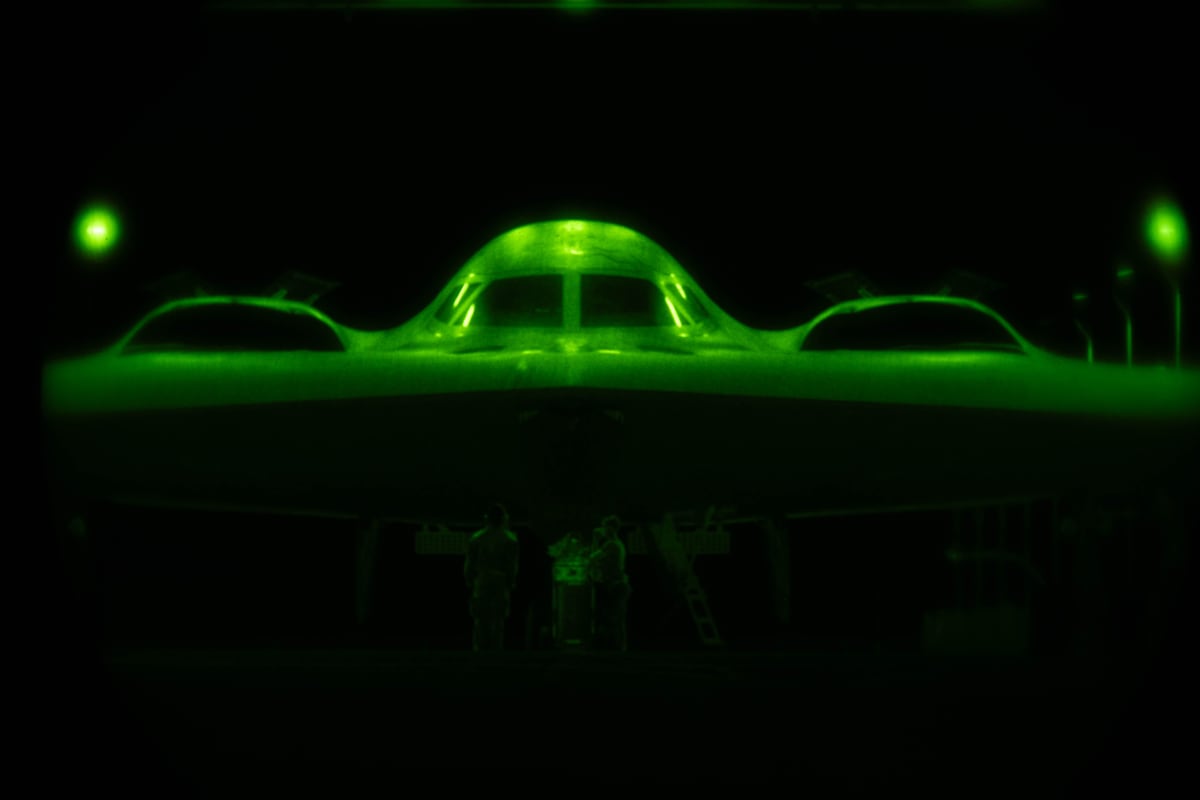
One of the standout examples of aerial operations demonstrating advanced capabilities is Operation Midnight Hammer, executed on June 22. This operation showcased the prowess of the B-2 Spirit bomber, which effectively employed Massive Ordnance Penetrator (MOP) munitions. These powerful weapons penetrated through 200 feet of rock, successfully targeting and dismantling three fortified nuclear sites. According to Armagost, the triumph of the operation was rooted in sophisticated engineering, comprehensive intelligence, and robust collaboration across various military domains, highlighting the importance of teamwork in modern warfare.
The Necessity for Improved Command-and-Control Systems
For the Air Force to maintain the strategic advantages observed in Operation Midnight Hammer, it is crucial that command-and-control networks are optimized for secure and reliable communication. Armagost emphasized how critical it is to relay timely updates and operational directives to and from bomber units. A failure in communication, he noted, could lead to mission jeopardy.
- Key Insight: Effective communication is vital; any lapse in status updates could undermine mission integrity.
- Armagost poignantly stated, “If that strike package cannot communicate the status of their assets or receive directives from the mission commander, that reflects poorly on all of us.”
Balancing Authority and Communication Channels
Echoing Armagost’s sentiments, Maj. Claire Randolph, Chief of Weapons and Tactics for U.S. Air Forces Central Command, stressed the urgent need for enhanced communication capabilities. Nevertheless, she cautioned against potential pitfalls stemming from direct links between combatant commanders and pilots. Randolph articulated concerns regarding the balance of authority, warning that too much direct communication could dilute the decision-making power of aircrew commanders.
- Concerns:
- There is a risk that the decision-making authority of aircrew commanders could be compromised if higher command levels have direct access to cockpit communications.
- Randolph illustrated this issue by envisioning a direct line from the CENTCOM commander to every B-2 or F-16 cockpit, emphasizing the dangers of decision fatigue or misinformed directives that could arise from such access.
Future Prospects with the B-21 Raider
Looking ahead, the B-21 Raider, hailed as the first sixth-generation aircraft, is central to the USAF’s strategy for future penetrating strike missions. Northrop Grumman, the developer of this cutting-edge aircraft, has emphasized its advanced data-sharing capabilities, which are poised to transform command and control in combat scenarios. The integration of these capabilities is expected to facilitate unprecedented operational efficiency.
- Integration Outlook: Armagost indicated that the operational frameworks illustrated in Midnight Hammer will undergo significant evolution with the addition of the Raider to the fleet. He remarked, “The integration of the B-21 is set to redefine our operational capabilities and communication effectiveness in combat situations.”
Conclusion
As the U.S. Air Force gears up for increasingly complex combat operations, ensuring optimized communication systems while firmly maintaining clear lines of authority will be crucial. With the B-21 Raider on the horizon, the future of air combat strategy appears set for a transformative leap, emphasizing the critical interplay between technology, communication, and command structures in the defense landscape.