


The First-Ever Best Drone Warfighter Competition Hosted by the US Army in Europe and Africa
The US Army in Europe and Africa has embarked on a groundbreaking initiative: its first-ever Best Drone Warfighter Competition. This landmark event is not only a showcase of advanced unmanned aircraft systems (UAS) but also a testament to the collaboration of American forces with allied and partner nations. The competition is taking place at the expansive Grafenwoehr Training Area in Germany, a site known for its rigorous military training environments.
Competitors and Teams
Nine teams are participating in this inaugural competition, comprising elite units from the US Army, including the 1st Battalion, 4th Infantry Regiment and the 2nd Cavalry Regiment. They are joined by rotational forces from V Corps and international partners hailing from countries such as Italy and Spain. This eclectic mix of talent reflects the US Army’s commitment to fostering interoperability and enhancing collective operational capabilities across NATO allies.
Competition Structure
Over the span of three intensive days, competitors will engage in a series of challenges designed to test their skills in various facets of UAS operation. The event kicks off with a written examination to assess participants’ knowledge of unmanned systems, setting a solid foundation for the hands-on scenarios that follow.
Following the knowledge test, teams will tackle two extensive practical challenges. The first scenario is particularly gripping, focusing on tactical operations in urban environments. Participants will need to exhibit their skills in reconnaissance and strike missions while employing effective concealment strategies and security measures—a true test of their tactical prowess.
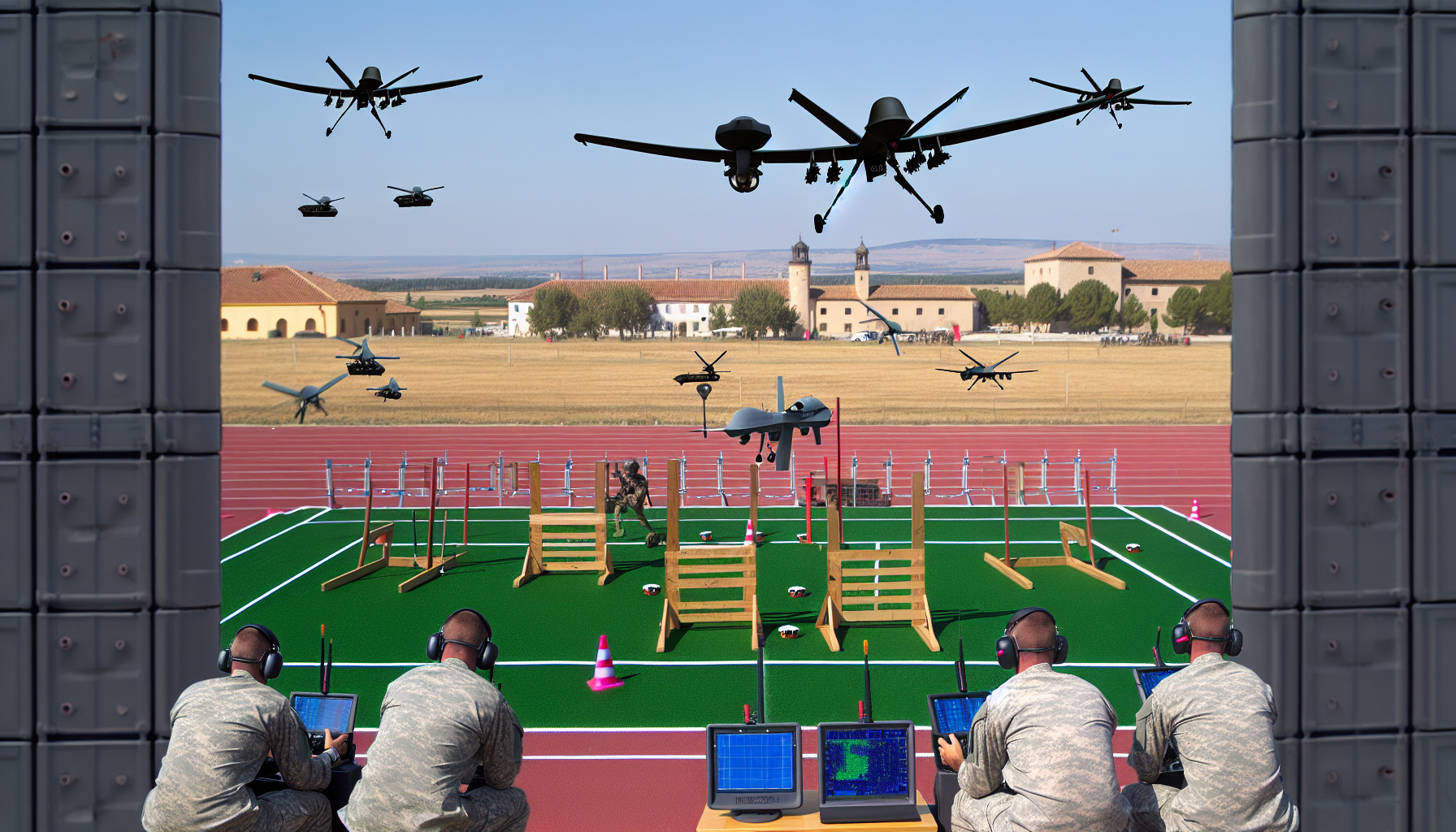
The second scenario emphasizes precision flying and teamwork, simulating a call-for-fire mission. Teams will be tasked with navigating challenging obstacle courses while executing collaborative maneuvers, pushing their coordination and operational strategies to the limit.
The Drones in Action
The competition features an impressive array of drones, ranging from standard-issue models to custom-engineered systems. Notable participants include the Skydio X2D, ORQA FPV, DJI Mavic, DJI Avata, Vantage Vesper, and the Purpose Built Attritable System. Each drone presents its unique challenges and advantages, requiring competitors to adapt their strategies to maximize effectiveness.
The stakes are high, as the winning team of this event will not only earn bragging rights but also a coveted spot in the next iteration of the competition scheduled for 2026. This long-term perspective emphasizes the importance of continuous development and refinement of drone warfare capabilities.
Technological Advancement in UAS
The Best Drone Warfighter Competition is part of the broader strategy aimed at advancing UAS and counter-UAS technologies within the military. Initiatives such as the xTech Counterstrike competition are already spotlighting next-generation, AI-enabled drones developed for passive sensing and threat simulation. This focus on innovation is crucial for enhancing air defense capabilities, particularly for smaller military units operating in complex environments.
Moreover, the Army’s Maneuver Battle Lab is actively integrating a variety of drones into its exercises. This integration aims to assess their tactical applications, specifically in areas like electronic warfare, thereby ensuring that troops are prepared to meet the evolving demands of modern combat.
Enhancing Interoperability and Operational Readiness
Competitions like the Best Drone Warfighter play a pivotal role in accelerating the adoption of deployable technologies and improving interoperability among NATO allies. As the nature of warfare becomes increasingly dominated by aerial threats, the Army recognizes the necessity of preparing soldiers to effectively counter sophisticated UAV (unmanned aerial vehicle) operations.
Through hands-on experience in high-stakes scenarios, service members not only hone their technical skills but also deepen their understanding of collaborative tactics, ultimately enabling them to work together seamlessly on the battlefield.
Such events illustrate the future of military collaboration, where shared knowledge and expertise can lead to formidable operational readiness against an array of aerial challenges.