


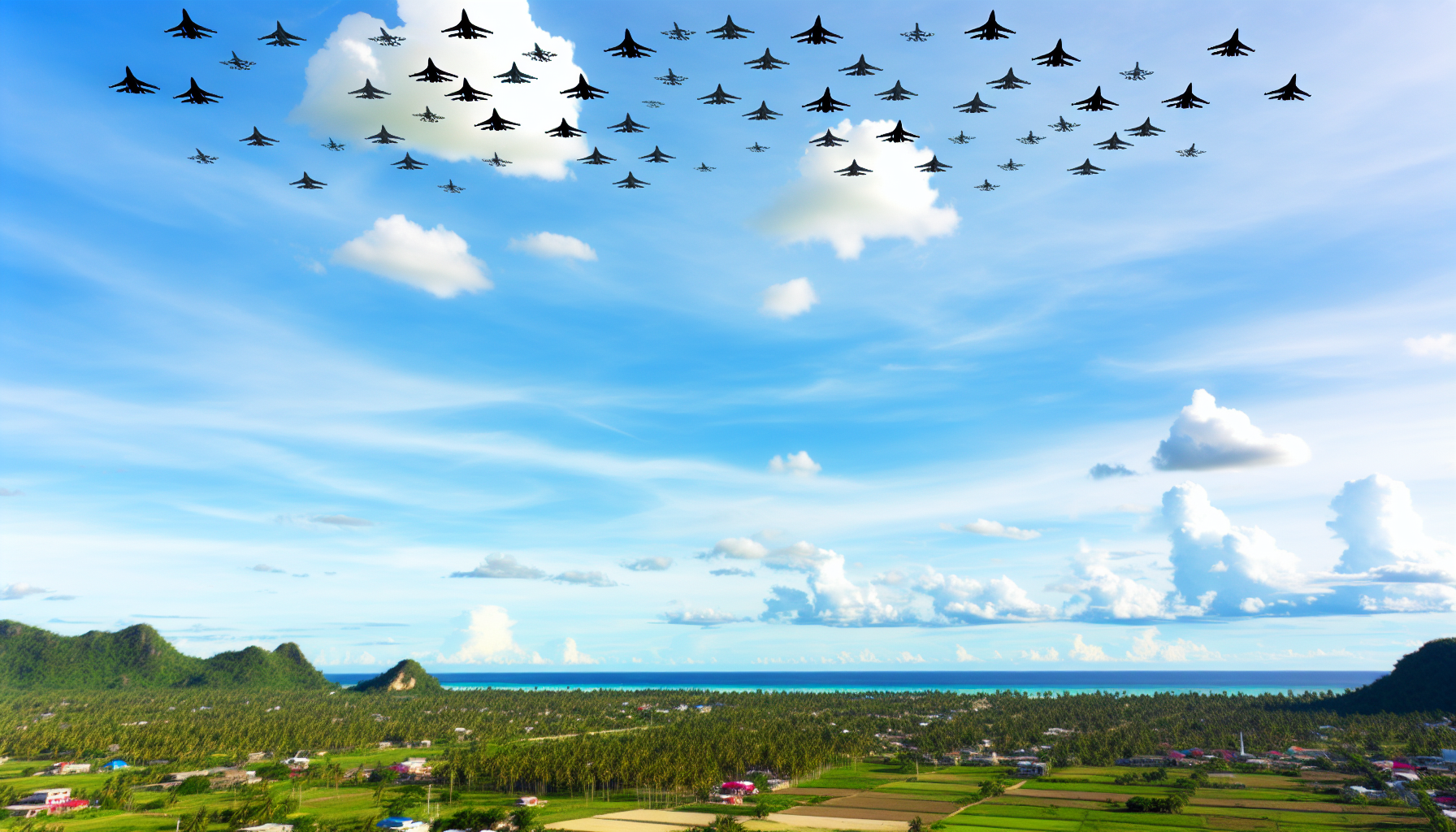
In a striking and unprecedented move, the U.S. military executed an overnight operation that led to the detention of Venezuelan President Nicolás Maduro. Dubbed Operation Absolute Resolve, this meticulous plan unfolded over several months, engaging more than 150 aircraft and drones, alongside integrated space and cyber assets. Senior government officials who managed the operation have disclosed that its success hinged on the collaboration of multiple intelligence agencies and law enforcement personnel.
Early Saturday, explosions echoed through the streets of Caracas as U.S. forces launched coordinated strikes, leading to the capture of both Maduro and his wife, Cilia Flores. The couple, now aboard a U.S. Navy ship, is facing indictment in the Southern District of New York for charges related to narco-terrorism. The operation’s timing and execution reveal a calculated strategy aimed at addressing long-standing tensions between the United States and Venezuela.
At a press conference held at his Mar-a-Lago estate, President Donald Trump provided insights into the mission’s structure and execution. “All Venezuelan military capacities were rendered powerless,” he stated, emphasizing the remarkable proficiency of U.S. military operatives. Reports suggest that the operation took place under the cover of darkness, with many lights in Caracas intentionally turned off to facilitate stealth.
Escalating tensions between the two nations have been a significant backdrop to this operation. The past months have seen a notable military buildup in the Caribbean, with U.S. officials citing both Venezuela’s extensive oil reserves and alleged drug-smuggling as critical threats to national security. By launching Operation Absolute Resolve, the U.S. aims to exert control over these pressing issues, raising the stakes in U.S.-Venezuelan relations.
During the briefing, Gen. Dan Caine, Chairman of the Joint Chiefs of Staff, detailed the tactical operations involved. “At 10:46 PM Eastern Time last night, the president ordered the United States military to move forward with this mission,” he reported. The operation saw aircraft launching from 20 different bases across the Western Hemisphere. Collectively, over 150 advanced military assets, including bombers, fighters, and drones, were mobilized, showcasing high levels of operational readiness and experience.
Curiously, the ages of the crew members involved ranged from 20 to 49 years, underscoring the diverse participation of personnel across the military spectrum. As forces approached Venezuelan shores, U.S. Space Command and Cyber Command, among others, played crucial roles in establishing air superiority, making way for the operation while neutralizing Venezuelan air defenses.
As the operation unfolded, helicopters carrying American personnel approached Maduro’s compound at 1:01 AM EST. Encountering resistance, they were fired upon, but managed to stay airborne despite suffering minor damage. Throughout the operation, real-time intelligence from air and ground teams facilitated effective communication and coordination, ensuring the safety of U.S. forces as they conducted the mission in a hostile environment.
Ultimately, Maduro and his wife surrendered without further escalation, and U.S. Department of Justice officials took custody of the couple. As the American forces executed their exfiltration around 3:29 AM EST, they were able to bring Maduro and Flores back to their afloat launch bases, marking a significant moment in military history.
The aftermath of this operation has sparked a series of reactions from the Venezuelan government, which has labeled the U.S. actions as “extremely serious military aggression,” subsequently declaring a state of national emergency. The full scope of damage to Venezuelan infrastructure or the fate of civilians affected by the strikes remains unclear, adding another layer of complexity to this already fraught situation.
During the press briefing, Trump suggested the potential U.S. intentions regarding Venezuela’s future governance, stating that America might seek to “run Venezuela” until a “safe, proper and judicious transition” of power is realized. This statement further illustrates the precarious nature of U.S.-Venezuelan relations and raises questions about international law and sovereignty in military interventions.