


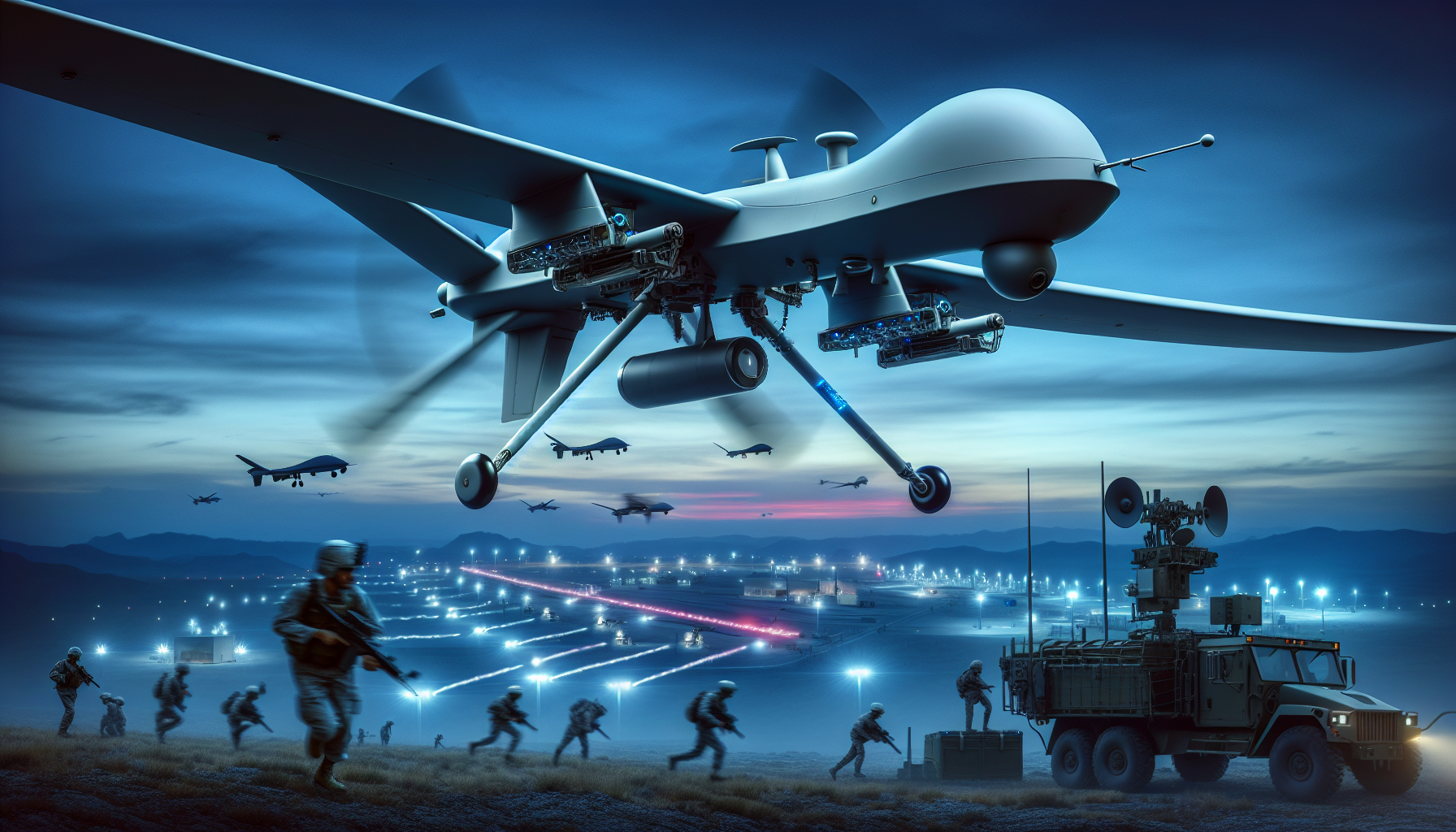
Growing Drone Vulnerabilities at U.S. Military Bases: A Pentagon Watchdog’s Warning
A recent report from the Pentagon’s Inspector General has brought to light significant vulnerabilities in U.S. military bases regarding drone threats. This report, released on a Tuesday, raises alarms about gaps in policy that leave some areas susceptible to uncrewed aerial systems (UAS) incursions, which have become a prevalent concern amid the rapid proliferation of commercial drones.
Lack of Consistent Guidance
The central finding of the report indicates that the military lacks consistent guidance when it comes to defending sensitive sites, termed “covered assets.” These installations, which can include those involved in nuclear operations, missile defense, and presidential protection, are legally authorized to utilize certain counter-drone capabilities. Unfortunately, the fragmented and often contradictory policies among different military branches have created confusion for base leaders. As a result, many may be unaware of whether their installations qualify as covered assets, ultimately leaving them exposed to potential threats from hostile drones.
Dangerous Unawareness Among Base Leaders
This disconnect between policy and awareness plays a crucial role in the security of military bases. The Inspector General’s assessment reviewed ten military installations that had experienced drone incursions, revealing that several were inadequately protected due to the unclear directives. For instance, an Air Force base in Arizona known for training F-35 pilots lacked the authorization for counter-drone measures since pilot training is not classified as a protected activity under existing Pentagon policies. This oversight highlights a troubling discrepancy where critical defense capabilities are compromised.
The Complexity of Obtaining Counter-Drone Systems
The obstacles do not stop at awareness. The processes required to obtain counter-drone systems, paired with securing rapid legal approval for their use, are often complicated and sluggish. The report noted that legal restrictions on using electronic jamming or other forceful measures within the U.S. exacerbate this issue. This complexity places additional strain on security personnel, who may already be inadequately trained or equipped to effectively counter drone threats.
Recent Drone Incursions
The situation has not improved over the past few years. In 2024, multiple military bases across the U.S. and abroad reported incidents involving drone incursions, often characterized by unauthorized unmanned aircraft entering restricted airspaces or coming alarmingly close to installations. These incursions raise serious concerns, particularly since many are not linked to hostile foreign actors but still pose significant risks to operational integrity.
Evolving Threat Landscape
As technology advances, so too do the tactics and tools used by potential adversaries. The affordability and accessibility of small commercial drones have allowed non-state actors to challenge security measures that were once deemed adequate. The Department of Defense (DoD) acknowledged this evolving landscape, emphasizing in a strategy document that evolving adversary unmanned systems threaten not only military installations but also personnel on the ground.
Insufficient Military Response
Despite ongoing efforts to combat drone incursions, many initiatives have been critiqued for lacking urgency and scale. Numerous military units have begun receiving counter-drone tools such as portable “flyaway kits” and handheld units like the “Dronebuster,” which emit signals to disrupt unauthorized drones. However, doubts remain over the efficacy of these solutions, particularly as drone technology continues to develop rapidly, often outpacing military responses.
Airspace Management Challenges
The crux of the problem also lies in how airspace is managed. With civilian communities and legitimate air traffic needing protection, finding effective countermeasures becomes increasingly challenging. Defense experts highlight the importance of non-kinetic solutions, ruling out conventional approaches that may inadvertently endanger surrounding populations. As drone usage proliferates, military and civilian airfields alike could face escalating risks, underscoring an urgent need for comprehensive policy reform and clearer guidelines.
Conclusion: A Call for Re-evaluation
As the threat of drone incursions continues to evolve, the urgent call is for the Pentagon to reassess its policies, ensuring that military installations can adequately respond to emerging threats. The gaps in guidance and the complexities surrounding counter-drone measures necessitate a deep dive into the current operational landscape to safeguard critical assets effectively, reflecting the tensions of contemporary warfare.