


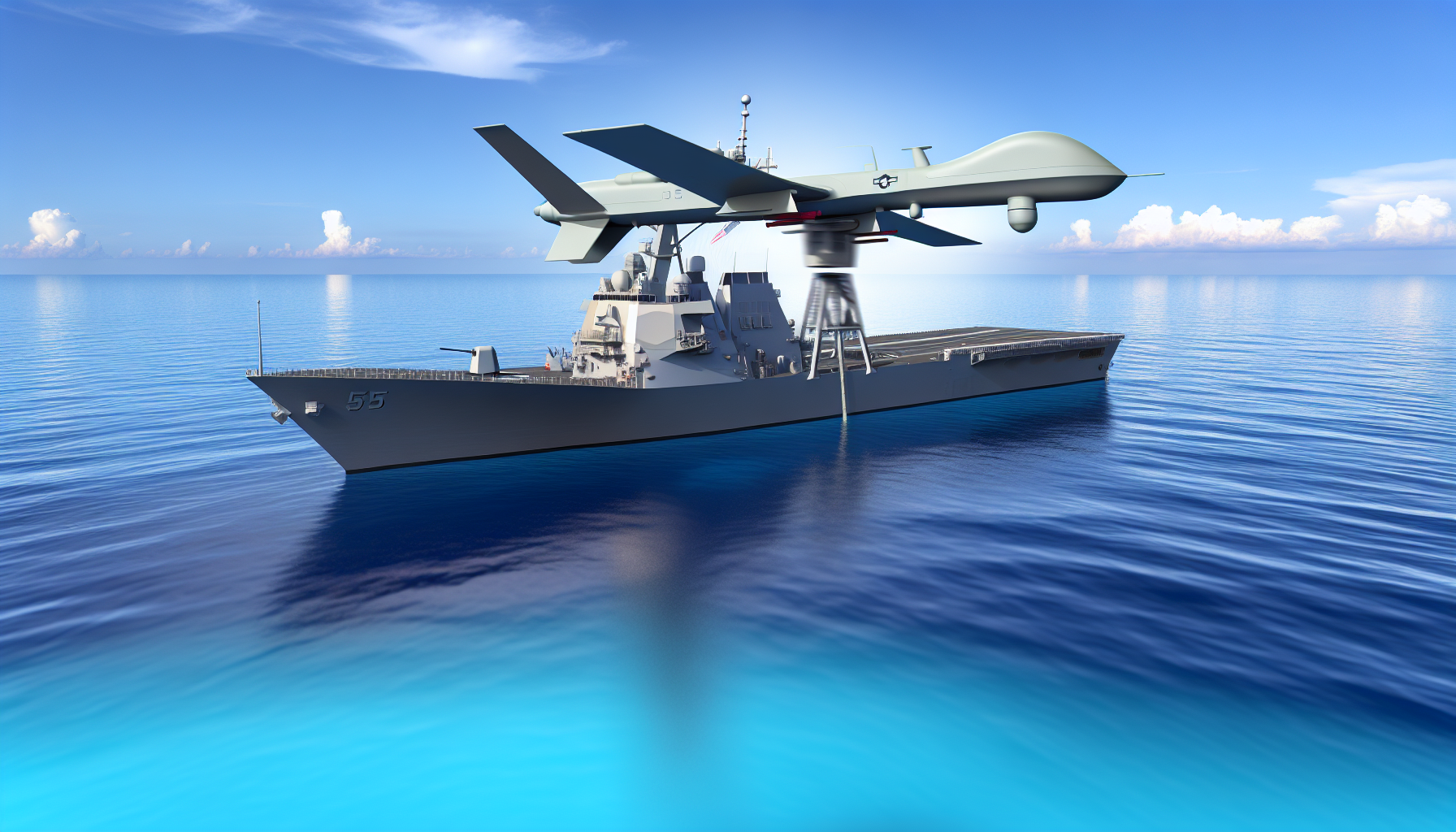
The U.S. Army has embarked on a significant transformation with the integration of drones into its military operations, reflecting a broader trend across all branches of the armed forces. This technological shift underscores the growing reliance on unmanned aerial systems (UAS) for modern warfare. One of the latest developments took place on December 16, 2025, when the USS Santa Barbara, stationed in the Persian Gulf, successfully launched the Navy’s first-ever one-way attack drone from a naval vessel. This groundbreaking event signals a pivotal step in the U.S. Navy’s evolving combat strategy.
The drone in question, known as the LUCAS (Low-cost Unmanned Combat Attack System), was designed to replicate Iran’s Shahed-136, emphasizing a strategic approach that focuses on affordability and operational effectiveness. The Marine Corps is also exploring the use of LUCAS drones, aligning with a comprehensive strategy aimed at deploying economical yet potent unmanned systems. Navy officials have highlighted that this successful launch not only showcases technological advancement but also enhances tactical options for commanders on the ground and at sea.
In a recent press release, Vice Admiral Curt Renshaw articulated the strategic importance of the LUCAS system: “This platform will undoubtedly enhance regional maritime security and deterrence.” As global geopolitics intensify, maintaining a strong military presence becomes increasingly crucial, particularly in strategically vital areas like the Persian Gulf. The successful demonstration of the LUCAS drone’s capabilities marks a significant milestone in military technology.
How Military Drones Are Changing Warfare

Niserin/Getty Images
Following the announcement of a $1 billion investment plan in military drones, Secretary of Defense Pete Hegseth outlined how the Department of Defense (DOD) intends to implement this initiative. The DOD aims to collaborate with U.S.-based companies to create drones that are competitive with those utilized by other nations, such as Russia and Israel. The Institute for Economics and Peace, a respected think tank, reported a staggering 168% increase in drone-related fatalities over the past five years, with annual drone strikes escalating from 421 to nearly 5,000 in 2023. This trend illustrates the profound impact drones are having in contemporary combat scenarios.
Cheap yet effective drones have significantly altered the battlefield landscape, proving capable of taking down multi-million-dollar tanks. Their ability to fill operational gaps is particularly beneficial for smaller military forces that might lack the resources of larger armies. The implications of these advancements in military drone technology are profound, necessitating a reevaluation of strategic military planning among nations seeking to maintain parity or superiority in the arms race.
The concept of one-way drones, often called “kamikaze” drones, isn’t novel; it dates back over a hundred years. The historical concept involved modifying old bombers by equipping them with explosives and remote controls, allowing pilots to parachute out before initiating an attack. In fact, the New York Times noted in 1946 that the military was moving toward a future defined by “push-button war,” reflecting early developments in drone technology.