


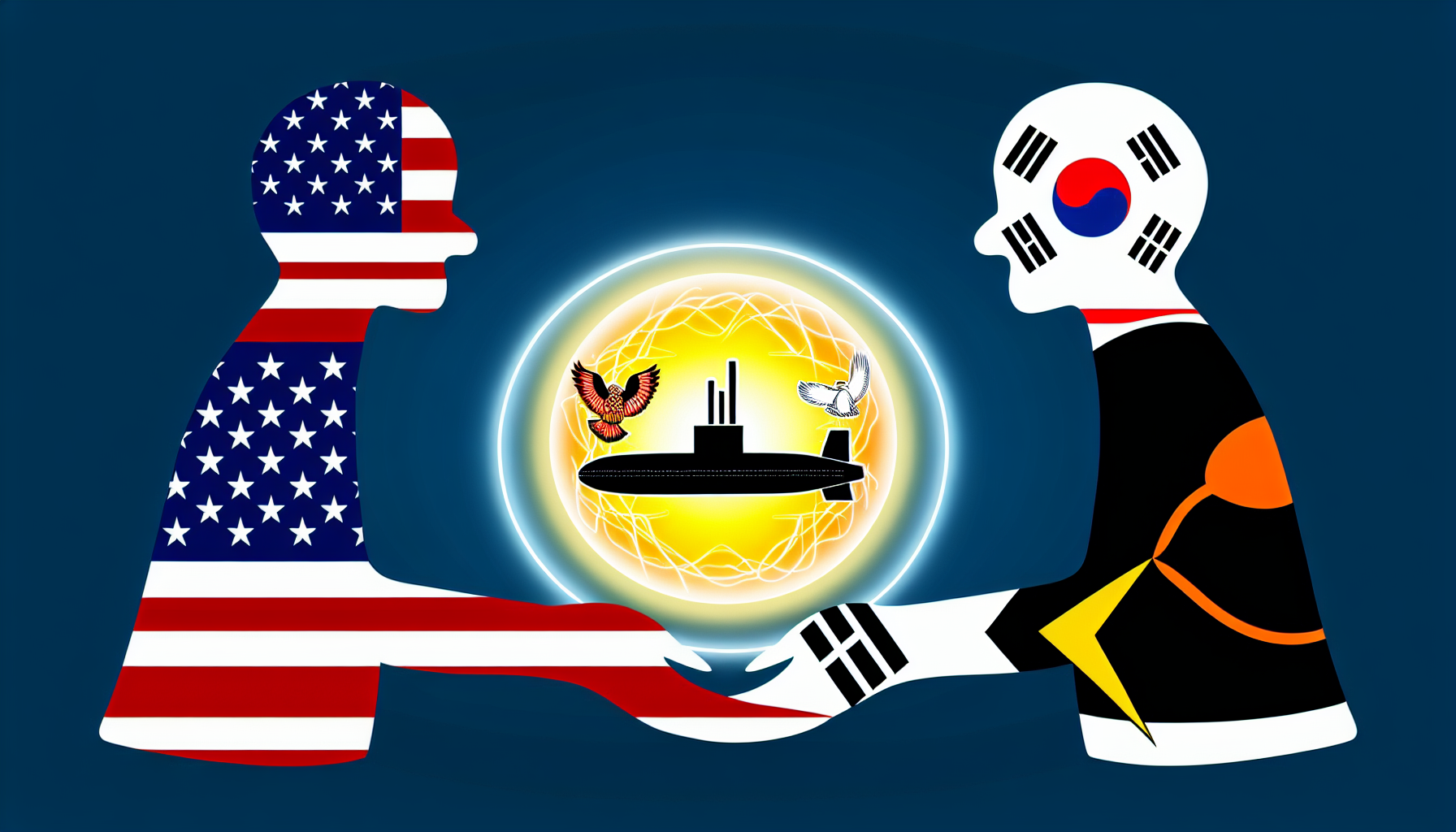
U.S. Nuclear-Powered Submarine Deal with South Korea: A New Chapter in Military Collaboration
In a significant development for military alliances, President Donald Trump announced via social media that the United States would share closely held nuclear submarine technology with South Korea. This revelation came on the heels of a meeting with South Korean President Lee Jae Myung, where both leaders discussed strategic military initiatives to modernize their longstanding alliance.
South Korea’s Military Aspirations
President Lee emphasized his nation’s commitment to modernizing military capabilities, indicating plans to increase defense spending. This move aims to alleviate the financial burden traditionally carried by the United States in their joint defense obligations. According to Lee, South Korea’s ambitions extend to acquiring nuclear-powered submarines, aimed not at weaponization but at enhancing regional security and support for U.S. operations.
In a previous discussion with Trump in August, a miscommunication suggested that South Korea was interested in nuclear capabilities primarily for weaponry. Lee clarified that the focus was on nuclear fuel for submarines, underscoring a strategic shift towards enhancing operational capacity without crossing into offensive nuclear capabilities.
Economic Investment and Shipbuilding Strength
The establishment of a nuclear submarine program could have profound implications for the U.S.-South Korea alliance, especially given the context of rising tensions in the region. As part of this new military dialogue, South Korea committed to investing approximately $150 billion to bolster America’s shipbuilding capacity. This investment is part of a broader agenda to integrate South Korean manufacturing capabilities with U.S. defense infrastructure.
Interestingly, Trump mentioned that the construction of the nuclear-powered submarines would take place at the Philadelphia Shipyard, recently acquired by South Korea’s Hanwha Group. This partnership is expected to not only strengthen ties but also enhance local economies through job creation in the shipbuilding sector.
Sensitive Nature of Nuclear Technology
U.S. nuclear submarine technology is among the most sensitive military know-how globally, with the United States historically guarding this information rigorously. Even recent collaborative endeavors, such as the AUKUS pact with Australia and the United Kingdom, do not involve direct sharing of nuclear technology. Instead, they focus on support in developing nuclear capabilities within certain frameworks. The potential agreement to share submarine technology with South Korea marks a significant departure from this precedent, raising questions and scrutiny about risks associated with technology proliferation.
Context of Global Tensions
Trump’s announcement comes at a critical time, especially with heightened military activities in the region. Notably, North Korea recently unveiled a nuclear-powered submarine under construction, showcasing its advancements in military technology that could directly threaten South Korea and U.S. interests alike. The timing of these advancements has raised alarms among defense analysts, who argue that equipping South Korea with nuclear submarines may be essential for maintaining a balance of power in Northeast Asia.
In a display of its military readiness, North Korea also conducted successful cruise missile tests while discussions about this nuclear collaboration were underway. Such provocations underline the urgent need for strategic preparedness among U.S. allies in the region.
Strategic Discussions with China
The upcoming talks between Trump and Chinese President Xi Jinping add another layer of complexity to the situation. With China possessing its own nuclear submarine fleet, the strategic implications of U.S. nuclear technology transfer to South Korea could reshape military dynamics in the Asia-Pacific region. As the geopolitical stakes rise, the international community will be watching closely to see how these developments unfold.
As this military collaboration evolves, the specific details, including the size and cost of the submarine project, remain unclear. However, the willingness to share such sensitive technology with South Korea indicates a significant shift in the U.S. approach to military alliances in a rapidly changing global landscape.