


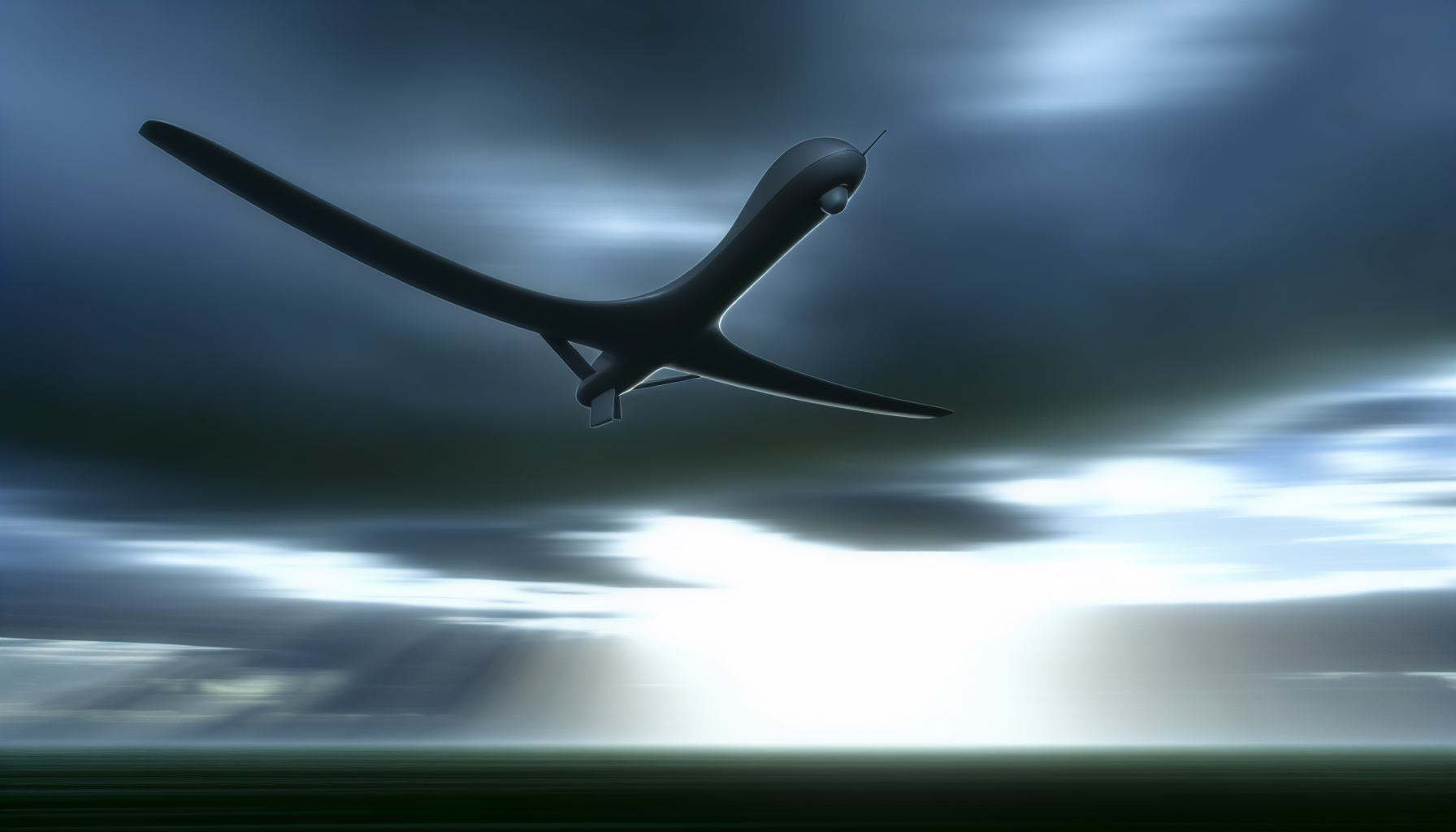
Russia’s S-70 Okhotnik: A Deep Dive into an Ambitious UAV
Article Summary – Russia’s S-70 Okhotnik was conceived as a stealthy loyal-wingman UAV to penetrate dense air defenses alongside fighters like the Su-57. Instead, one of the few prototypes was mysteriously shot down over Ukraine, then dissected by Kyiv’s intelligence services. Their teardown exposed a heavy reliance on Western microelectronics and highlighted how sanctions and low production runs are choking Moscow’s high-end drone ambitions. Built for a high-tech war against NATO, the large, expensive S-70 is ill-suited to the brutal, attritional drone fight in Ukraine, where cheap FPV quadcopters and mass-produced loitering munitions dominate. It’s a cautionary symbol of Russia’s stalled modernization drive.
Understanding the S-70 Okhotnik
The S-70 Okhotnik, developed by Sukhoi, represents one of Russia’s most ambitious attempts to create a stealthy unmanned combat aerial vehicle (UCAV). Designed to operate alongside manned combat aircraft, this UAV is intended for high-intensity warfare against peer adversaries. However, the nature of the current conflict in Ukraine has made the S-70’s capabilities less relevant. Initially built for a complex aerial environment involving NATO forces, the S-70 has become a misfit in the brutal, attritional war landscape of Ukraine.
Design and Specifications
The S-70 Okhotnik is notably larger than many of its drone counterparts, with a wingspan of about 19 meters and a takeoff weight estimated in the 20-ton range. Such size allows it to carry a substantial payload. Moreover, the drone’s design prioritizes stealth; its fuel, along with the payload, is stored internally, significantly reducing its radar cross-section and improving survivability in contested airspace.
A Mysterious Downing
In late 2024, the S-70 gained attention when it was shot down over Ukraine by Russian forces, possibly by a Su-57 fighter. The circumstances surrounding this incident are particularly puzzling. One prevailing theory is that the S-70 was shot down to prevent it from crashing into enemy hands, especially considering its advanced stealth characteristics. The wreckage was later recovered by Ukrainian forces, providing an unexpected opportunity for intelligence analysis.
Insights from the Teardown
Following its recovery, Ukraine’s intelligence services conducted a thorough examination of the S-70. The analysis revealed a startling reliance on Western components, including microelectronics sourced from companies like Texas Instruments, Analog Devices, and Infineon Technologies. Despite Russia’s ongoing sanctions, it appears that Western technology still plays a crucial role in the country’s military hardware development.
The Implications of Western Components
This reliance on foreign technology not only raises concerns regarding Russia’s self-sufficiency but also sheds light on the vulnerabilities within its defense industry. The S-70’s exposure may provide Western intelligence agencies with crucial insights into Russian stealth technology and its operational capabilities. This echoes concerns from past incidents, such as the downing of the U.S. RQ-170 drone in Iran, which similarly provided insights into American technology to its adversaries.
Challenges in Modernization
While the S-70 was envisioned as a leap forward in Russia’s military capabilities, it has not significantly narrowed the gap between Russian and Western unmanned combat aerial vehicles. Analysts indicate that despite some promising design elements, many aspects of the S-70, including its stealth features and operational autonomy, remain uncertain. The combination of low production numbers and the ongoing conflict has hindered the warrant for its further development.
Drones in the Ukraine Conflict
The war in Ukraine has drastically altered the landscape of drone warfare. Unlike the sophisticated systems like the S-70, the conflict has seen an explosion in the use of inexpensive, small-scale drones such as first-person-view (FPV) quadcopters and loitering munitions. These platforms are effective in attritional conflicts, where cost-effectiveness often trumps advanced technology.
The Future of the S-70 Okhotnik
Given the current state of hostilities, it is highly unlikely that the S-70 Okhotnik will see a renewed emphasis on production or deployment. Russia finds itself locked in a land-based conflict that doesn’t favor the usage of high-tech UAVs designed for sophisticated engagements against well-equipped foes. As the dynamics of modern warfare continue to evolve, the S-70 may remain an icon of what could have been, lacking the practical relevance needed for effective combat deployment in today’s theater.
About the Author: Caleb Larson
Caleb Larson is an American multiformat journalist based in Berlin, Germany. His work covers the intersection of conflict and society, focusing on American foreign policy and European security. He has reported from Germany, Russia, and the United States. Most recently, he covered the war in Ukraine, reporting extensively on the war’s shifting battle lines from Donbas and writing on the war’s civilian and humanitarian toll. Previously, he worked as a Defense Reporter for POLITICO Europe. You can follow his latest work on X.
More Military
The YF-23 Black Widow II Stealth Fighter Almost Made the Ultimate Comeback
The New Leopard 2A8 Tank Has a Message for the Russian Army
The F-22J Raptor Stealth Fighter Will Never Fly For Japan (China Is Smiling)