


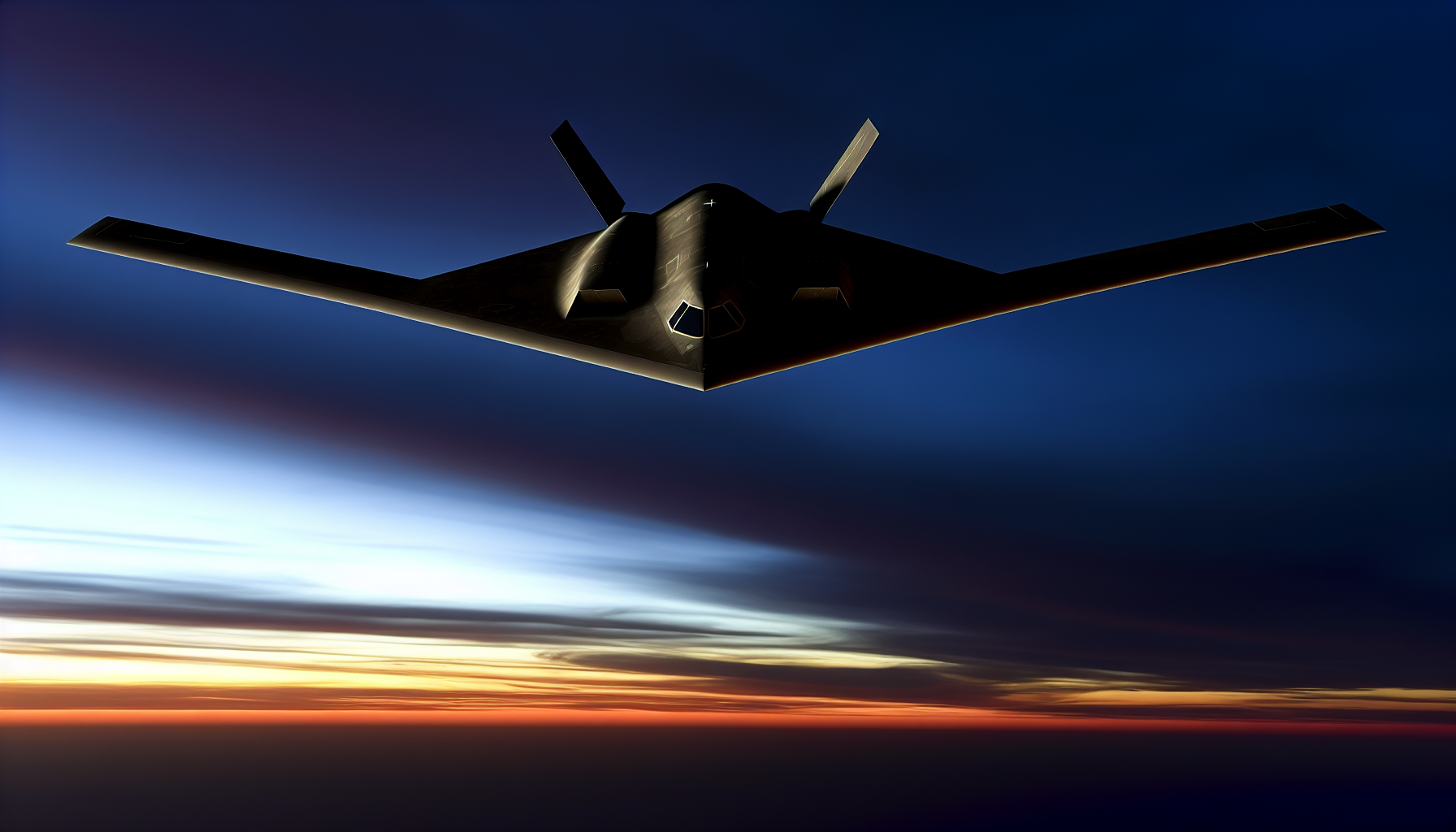
The B-21 Raider: A New Era in Stealth Bombing
Key Points and Summary
The B-21 Raider stands on the cusp of operational service, showcasing groundbreaking sixth-generation stealth technology paired with nuclear capability. This advanced bomber promises to launch hypersonic weapons and control Loyal Wingman drones, presenting a formidable force in the air.
However, skepticism looms over its effectiveness against advanced Russian and Chinese air defense systems, such as the S-500, S-550, and HQ-9B, which may render it obsolete by the time it enters active duty around 2030. Yet, some experts believe the Raider’s unique features will keep it relevant well into the future.
Will the B-21 Raider Bomber Be Obsolete When It Enters Active Duty?
The B-21 Raider is generating excitement in military circles. With two prototypes already flying from Northrop Grumman’s facility in Palmdale, California, the program is ahead of schedule and within budget. The aircraft’s design incorporates sixth-generation stealth, all-spectrum radar capabilities, and cutting-edge artificial intelligence, ensuring that it will be nuclear-capable and ready to launch hypersonic munitions. Additionally, it could control unmanned Loyal Wingman drones, giving it a versatile edge in modern warfare.
Stealth operations are increasingly crucial in contemporary combat scenarios. For example, during Operation Midnight Hammer, a fleet of seven B-2 bombers executed strikes against Iranian targets without encountering any resistance from enemy air defenses. With only 19 operational B-2s currently in the U.S. fleet, the addition of 100-plus B-21s could significantly enhance the Air Force’s operational capacity.
The B-21 Is On Track for the Long Haul
If everything goes as planned, the B-21 could achieve initial operational capability by 2027, although some forecasts suggest 2028 may be more realistic due to the complexities of the technology involved. This timeline presents a challenge as adversarial air defenses are likely to advance during this period.
Russia’s ‘Prometheus’ Air Defender: A Serious Threat
Concerns arise regarding whether new surface-to-air missile systems will compromise the B-21’s solutions. On the frontline of this discussion is the Russian S-500 “Prometheus,” a formidable air defense system with a maximum range of approximately 372 miles capable of targeting fifth-generation fighters like the F-35 and F-22. Its developers assert it can track stealthy aircraft, questioning how effective the B-21 will be against such an advanced opponent.
Equipped with four radar vehicles per battery, the S-500 can engage multiple targets simultaneously, contributing to a layered air defense strategy that Putin’s military is confident will counter any stealth aircraft.
The Emerging S-550 and HQ-9B Systems
But the threats don’t stop at the S-500. Russia is also developing the S-550, primarily designed for neutralizing ballistic missiles but certainly capable of engaging bombers like the B-21. Meanwhile, China’s developments, including the HQ-9 air defense system—akin to American Patriot systems—add another layer of complexity. The HQ-9’s upgraded version, the HQ-9B, boasts improved interceptor capabilities, making it a notable force in any potential conflict scenario.
Moreover, advancements in Chinese radar technology, such as the YLC-8E, SLC-7, and JY-26 systems, are designed to track stealth aircraft, raising additional questions about how effective the B-21 will be in contested environments.
The B-21 Will Be Relevant for Decades
Despite the formidable advancements in air defense technology from Russia and China, analysts like Dr. Brent M. Eastwood argue that the B-21 will remain significant for years to come. The Raider is designed to enhance its combat effectiveness through electronic warfare capabilities and coordinated operations with Collaborative Combat Aircraft (CCAs), effectively blinding enemy radar systems and suppressing air defenses.
While adversaries may believe they have countermeasures for fifth-generation stealth aircraft, the B-21 will feature design elements intended to minimize its radar signature beyond even that of the F-35 or F-22.
Day One suppression strategies will facilitate B-21 operations, paving the way for successful strikes. Moreover, with robust intelligence on enemy air defenses, the U.S. Air Force is prepared to counteract threats effectively. The ongoing assessment and testing of stealth technologies mean that any concerns regarding its obsolescence may be premature.
In sum, despite the advanced air defense capabilities of adversaries, the B-21 Raider is set to usher in a new age of air combat effectiveness. Its stealth characteristics, coupled with intelligence and tactical innovations, provide a solid foundation for its role in future military operations.