


The Rise of the Drone Swarm Market: Trends, Insights, and Opportunities
Introduction to Drone Swarms
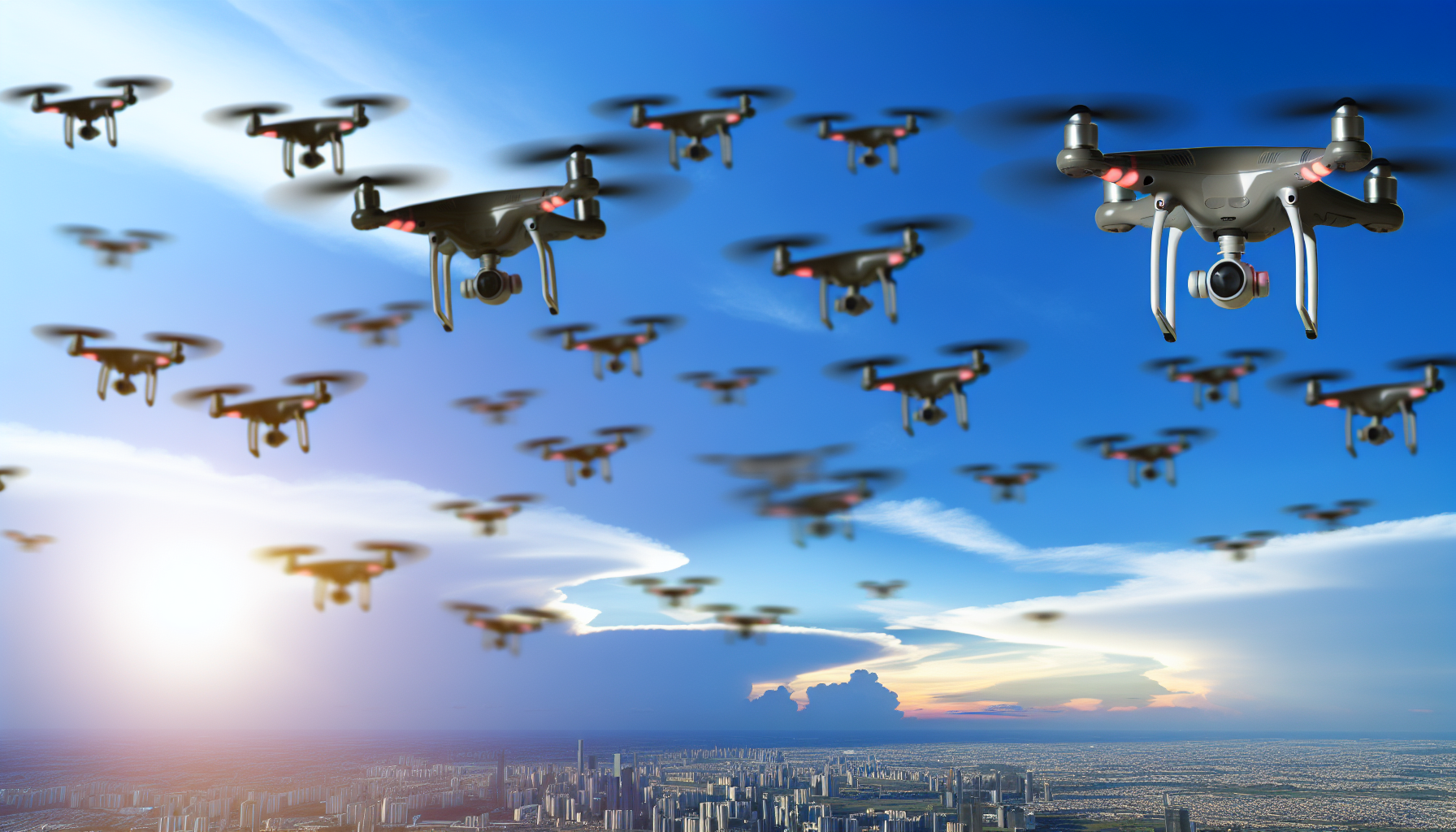
Drone swarms represent a revolutionary leap in the capabilities and applications of unmanned aerial vehicles (UAVs). These coordinated units of drones can function together to perform complex tasks, making them invaluable across various industries. As technology advances, the drone swarm market is projected to experience significant growth in the coming years, with applications spanning defense, agriculture, logistics, and more.
Market Growth Projections
The Global Drone Swarm Market is estimated to be valued at USD 2.5 billion by 2025 and is expected to reach USD 6.8 billion by 2032. This impressive growth translates to a compound annual growth rate (CAGR) of 15.2% from 2025 to 2032. Such projections underscore the increasing demand for coordinated drone operations and reflect broader technological developments.
Key Drivers of Market Expansion
Advancements in Technology
One of the primary drivers of this market is the rapid advancement in technology, particularly with artificial intelligence (AI) integration. Companies utilizing AI for real-time data analysis have reported a 30% increase in mission success rates as of 2024. This trend not only enhances operational efficiency but also paves the way for increasingly complex drone applications.
Agricultural Applications
The agriculture sector is witnessing a remarkable shift with the rising adoption of drone swarms for crop monitoring. Farms leveraging drone technology have experienced a 20% boost in yield, showcasing the potential of UAVs in enhancing agricultural productivity. As precision farming becomes more mainstream, investments in drone technologies are expected to surge.
Defense Sector Investments
Defense budgets are increasingly prioritizing drone technologies, with contracts for drone swarm applications in the military rising by 25% in 2024. This growing investment is indicative of the military’s urgent need for advanced surveillance and combat capabilities, making it a significant contributor to market growth.
Regulatory Support
Emerging regulations supporting commercial drone operations also play a crucial role in market expansion. By 2025, estimates suggest that 40% of airspace will be accessible for drone operations. Such regulatory advancements are likely to encourage wider adoption and a more robust market environment.
Competitive Landscape
The competitive dynamics within the drone swarm market are diverse, involving key players such as:
- DJI Technology Co., Ltd.
- Northrop Grumman Corporation
- Boeing Company
- Lockheed Martin Corporation
- Parrot Drones S.A.
These companies employ varied strategies to maintain or grow their market share. For instance, Northrop Grumman focuses on developing advanced technologies tailored for defense applications, while DJI is expanding its drone portfolio for agricultural use, resulting in a significant customer base increase.
Market Segmentation
Understanding market taxonomy is fundamental to grasping its structure:
- By Segment: Military Drones, Commercial Drones, Agricultural Drones, and Others.
- By Application: Surveillance, Delivery, Agriculture, and Other Uses.
- By Technology: AI-Enabled, Remote-Controlled, and Others.
Regional Analysis
The drone swarm market is experiencing growth across various regions, each offering unique opportunities:
- North America: The U.S. and Canada are leading in technology adoption and market innovations.
- Latin America: Countries like Brazil and Mexico are gradually emerging as key players.
- Europe: Notable countries include Germany, the U.K., and France, which are at the forefront of regulatory development.
- Asia Pacific: This region presents immense potential due to increasing investments and favorable regulations, making it a rapidly expanding market.
- Middle East & Africa: Nations such as the UAE and South Africa are beginning to see growth as drone technology gains traction.
Market Opportunities
Tactical Advances in Military Applications
In the military segment, there’s a growing demand for the development of sophisticated swarm technologies designed for tactical operations, enhancing situational awareness on the battlefield. The defense sector’s commitment to innovation presents substantial opportunities.
Agricultural Resource Optimization
The agricultural industry is ripe for further innovation with drone technology. The implementation of drone swarms for crop monitoring can lead to higher yields and more efficient resource use, thereby attracting investment and partnerships.
Advancements in Drone Automation
With the trend towards increasing automation, companies are investing heavily in autonomous drone technology. This shift is particularly noticeable in logistics, where automated drone swarms have cut delivery times by 30%. Such efficiencies are integral to meeting consumer demand for faster services.
Addressing Market Challenges
Despite promising growth, the drone swarm market faces challenges, including:
- Regulatory Hurdles: Navigating the changing regulatory landscape can be complex for companies and may slow market penetration.
- Competition: The market’s competitive nature means that continuous innovation and strategic partnerships are essential for sustained growth.
Future Outlook
As drone swarm technology evolves, the integration of advanced sensors and AI capabilities is expected to further enhance data collection and operational efficiency in various sectors. The increasing focus on sustainability and efficiency across industries suggests that drone technology will continue to thrive and adapt.
With its rapidly expanding applications and the promise of technological advancements, the drone swarm market is poised for transformative growth in the years ahead, inviting stakeholders to explore the myriad opportunities it presents.