


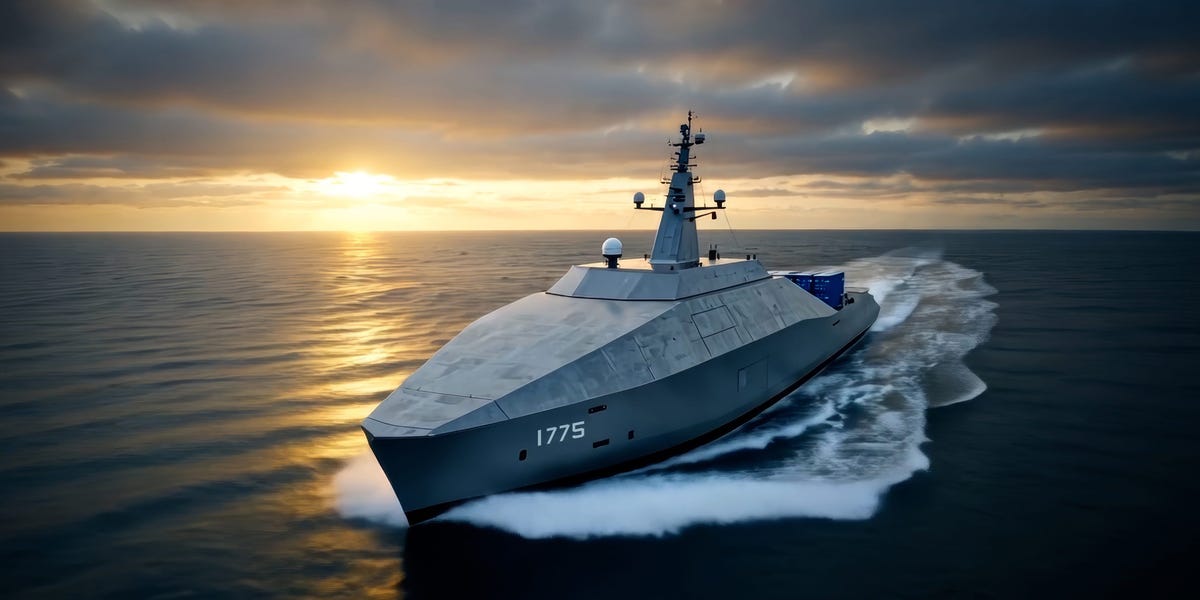
The US Navy is currently grappling with a pressing challenge as it braces for potential conflict with China: the urgent need for adequate naval resources. As tensions rise in the Indo-Pacific region, the Navy is exploring innovations meant to enhance its operational capabilities, including the development of long-range drone ships. These vessels could revolutionize naval warfare by extending the Navy’s reach while keeping personnel safe from harm.
One of the frontrunners in this technological race is Blue Water Autonomy, a forward-thinking company focused on creating uncrewed ships tailored to the specific complexities of maritime conflict. The company has successfully tested its drone technology in real-world scenarios, bringing it a step closer to deploying a new generation of naval assets that could fill critical gaps in fleet size and coverage in vast areas like the Pacific.
Blue Water Autonomy has achieved a notable milestone as it becomes the first organization to test larger, long-range interchangeable ship-scale systems in iterative ways on the water. This marks a significant advancement, given that successful autonomous operations have not been widely demonstrated in the naval sector before. The company’s vision includes creating full-scale autonomous warships capable of engaging in battles against formidable adversaries like China, whose military modernization efforts have recently accelerated exponentially.
These uncrewed vessels are invaluable not only for expanding fleet numbers but also for providing operational flexibility in high-stakes environments. The Navy’s ability to deploy these ships into contested waters without risking crewed personnel will significantly enhance its strategic posture in any potential conflict.
Recent developments in naval warfare show a marked increase in the integration of drone technology. From successful engagements in the Black Sea to increased operations in the Red Sea, the landscape of maritime combat is evolving. Militaries are now confronting the necessity to adapt both operational strategies and fleet structures, leveraging cutting-edge technology to modernize their forces.
The US Navy envisions a balanced battle force comprising 381 crewed warships complemented by 134 uncrewed surface and undersea vessels. Currently, the Navy employs several smaller drones for surveillance and combat operations, produced by various companies across the defense industrial base. Blue Water’s ambition focuses on developing a fleet of larger, long-range drone ships that can significantly augment the Navy’s operational capacity in the expansive Pacific Theater.
Founded in 2024, Blue Water Autonomy aims to revolutionize naval operations by developing fully autonomous warships that can be mass-produced without straining America’s already overburdened shipbuilding industry. This innovation aims to address the inherent challenges posed by traditional crewed vessels and enhance operational effectiveness.
To ensure the reliability of these autonomous vessels, Blue Water is paying special attention to propulsion technology and navigation systems. Rylan Hamilton, the company’s CEO and a former US Navy engineer, highlights that ensuring reliability is critical—nobody wants to see an autonomous ship rendered inert in the middle of the ocean.
The software essential for navigation autonomy is akin to technology found in driverless cars, aided by advancements in artificial intelligence. By spearheading iterative testing on the water, Blue Water has positioned itself uniquely, engaging in practical assessments that no other company is currently undertaking at a similar scale.
Despite the urgency of modernizing naval assets, the US faces significant hurdles in its military preparedness, especially concerning shipbuilding capabilities that have been fraught with delays and increased costs. China currently possesses a larger naval fleet and is rapidly expanding its ship construction capabilities, underscoring the need for urgent reform within the American shipbuilding industry.
Blue Water’s autonomous vessels could play an instrumental role in addressing this predicament. These ships have the potential to be produced more quickly and at a lower cost than traditional crewed ships, making them an attractive option for filling fleet shortfalls.
Blue Water’s co-founder, Austin Gray, believes that by tapping into smaller, fully equipped shipyards, they can churn out dozens of these autonomous warships swiftly, enhancing the Navy’s operational capacity in a fraction of the time it would take to build traditional vessels.
Ultimately, the vessels being designed by Blue Water will be capable of multi-mission operations, equipped for various roles from reconnaissance to engaging adversaries with weapons systems. Designed to withstand the rigors of the Pacific, these ships feature a range capable of traveling 6,000 miles, with the payload necessary to manage rough seas, an important aspect of naval operations in the region.
Building autonomous vessels presents distinct advantages but also imposes significant engineering challenges that need to be fully addressed. Unlike traditional ships with critical staffing numbers that can react in emergencies, these autonomous vessels require robust engineering solutions capable of self-diagnosing and maintaining operational readiness for extended periods.
In this transformative period for naval technology, Blue Water’s initiatives represent a bold, innovative step into the future of maritime conflict and security. As the Navy adjusts its strategies to meet the demands of modern warfare, autonomous systems like those being developed will prove invaluable in reshaping its tactical and operational frameworks.