


The Rise of Laser Weapons in the U.S. Military
Article Summary
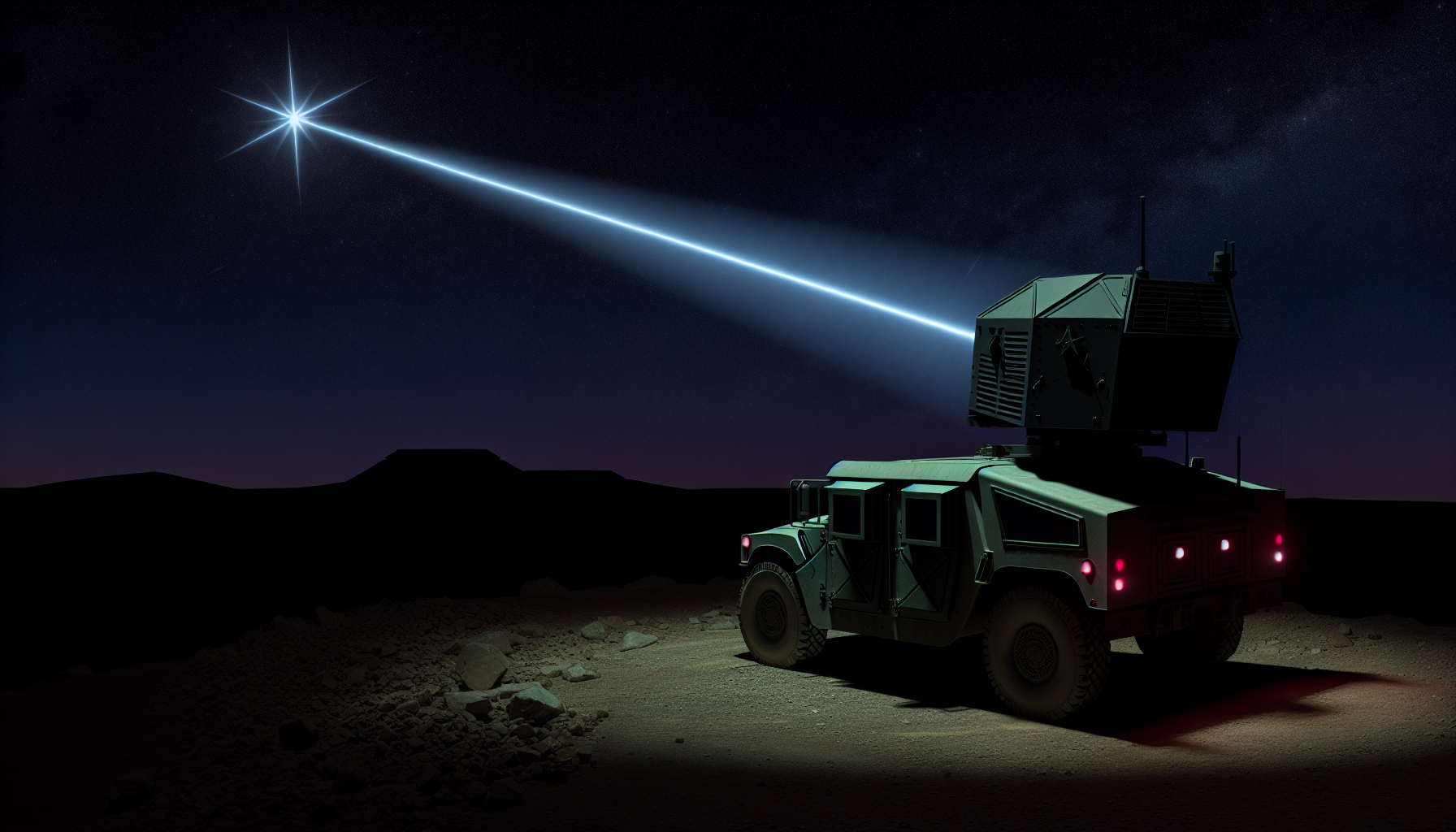
More than a decade after the USS Ponce first fired the Navy’s Laser Weapons System, directed-energy arms are now proliferating across the U.S. military. The Army is fielding high-energy lasers on various platforms, including Stryker vehicles, HEMTT trucks, and even Infantry Squad Vehicles (ISVs) and Joint Light Tactical Vehicles (JLTVs). Meanwhile, the Navy equips its destroyers with HELIOS, and the Air Force explores fighter-mounted systems. The attraction is clear: lasers offer speed, cost-effectiveness, and multidimensional capabilities against novel threats like drone swarms.
The Evolution of Laser Technology in Combat
The U.S. Navy’s arming of the USS Ponce with the Laser Weapons System (LAWS) marked a significant milestone over ten years ago. This first-of-its-kind ship-integrated, scalable laser system proved effective against drones, helicopters, surface vessels, and even fixed-wing aircraft. Since then, the Army, Navy, and Air Force have significantly advanced their capacities for employing laser weaponry in modern warfare.
Lasers are low-cost, adjustable weapons that operate at the speed of light. They open up new attack possibilities and enhance intelligence, surveillance, and reconnaissance (ISR) applications. For example, the Army has integrated a counter-unmanned aerial system (C-UAS) laser onto Strykers, while also arming Heavy Expanded Mobility Tactical Trucks (HEMTT) with high-energy lasers.
Current Deployments: Platforms and Capabilities
The Navy is now equipping its destroyers with the High Energy Laser and Integrated Optical Dazzler and Surveillance (HELIOS), while the Air Force Research Lab has tested aircraft-mounted laser systems, eyeing possibilities for the F-35 and F-22 fighters, among others.
The ongoing evolution means that small, mobile units, like ISVs, are being equipped with lasers for real-time tracking and neutralization of drones. Recent contracts with companies like AeroVironment signify a strategic shift, further enhancing the Army’s readiness for modern combat scenarios.
Miniaturization and Mobility Challenges
One of the most significant challenges in the development of laser systems is miniaturizing the power sources needed to make these weapons effective across various platforms. Large ships and ground vehicles can accommodate the substantial electricity demands of laser systems due to their greater size, weight, and power (SWAP) capabilities.
In contrast, integrating lasers into smaller platforms, such as drones or lightweight vehicles, poses complex engineering challenges. The military and its industry partners are actively working to address these issues, making strides towards creating portable laser systems capable of supporting agile, expeditionary operations.
Countering Drone Swarms
As threats evolve, the question arises: can these vehicle-mounted laser systems effectively counter large swarms of small drones? Laser technology presents promising avenues but also highlights potential limitations. Targeting and engaging hundreds of small drones simultaneously would require high-volume, precision-guided laser systems, complemented by sophisticated fire-control systems for effective engagement.
Advantages of Laser Technology
Lasers have inherent advantages that could set them apart from traditional weaponry. They deliver fire at the speed of light and can be tailored for various combat needs from disabling to complete destruction. Their operational scalability is crucial in modern warfare scenarios, where flexibility is paramount.
Additionally, lasers boast virtually limitless ammunition. Since they rely on electrical energy rather than standard ammunition, as long as there is a power source, they can continue operating. This attribute is especially beneficial when addressing drone swarms, which could quickly overwhelm traditional missile interceptors.
The Cost-Effectiveness Factor
Another significant aspect of laser weapons is their cost-effectiveness. The cost-per-shot for lasers is remarkably low compared to conventional munitions. This economic advantage could reshape military logistics and strategies, allowing forces to efficiently counter inexpensive drones without depleting costly interceptor stocks.
Highlighting the need for a deep and effective magazine in counter-drone operations, Navy commanders have increasingly recognized the potential of well-powered laser systems to meet this challenge.
Author’s Background: Kris Osborn
Kris Osborn is the President of Warrior Maven – Center for Military Modernization and has previously served at the Pentagon in the Office of the Assistant Secretary of the Army—Acquisition, Logistics & Technology. A seasoned military analyst and media expert, Osborn has contributed to national discussions on military technology and strategy.
The rapid evolution of laser technologies in military applications presents a fascinating interplay of innovation, strategy, and cost-efficiency. From combating drone swarms to redefining operational capabilities across the Army, Navy, and Air Force, lasers signify a new frontier in battlefield technology.