



Macron: “We Must Continue to Put Pressure on Russia”
French President Emmanuel Macron recently stressed the importance of maintaining pressure on Russia to encourage its pursuit of peace. His comments came as EU leaders prepare for critical talks in London regarding the ongoing conflict in Ukraine. In a post shared on social media platform X, Macron highlighted Russia’s aggressive stance, stating, “Russia is locking itself into an escalatory approach and is not seeking peace.” He condemned the latest massive strikes on Ukraine, particularly targeting energy and railway infrastructure, as unacceptable acts of aggression.
A Show of Support for Ukraine
Ahead of his meeting with Ukrainian President Volodymyr Zelensky, German Chancellor Friedrich Merz, and UK Prime Minister Sir Keir Starmer, Macron reinforced France’s unwavering support for Ukraine. He articulated his commitment during an upcoming London summit, underscoring the EU’s collective responsibility to counteract Russia’s offensive actions.

Emmanuel Macron is expected to join the talks in Downing Street, along with German Chancellor Friedrich Merz (Stefan Rousseau/PA)
The EU’s Financial Strategy
In a related development, the EU is formulating a plan to utilize approximately £80 billion of Russia’s frozen assets to bolster Ukraine’s war effort. This move has sparked concerns among some member states, notably Belgium, which holds a sizable portion of these assets. There are fears that if Russia successfully challenges the plan, Belgium could be left liable for compensations. The Belgian government’s support hinges on an equitable distribution of responsibility among EU nations.
Polish Prime Minister’s Plea to the US
Polish Prime Minister Donald Tusk has called on President Donald Trump to reaffirm the US as Europe’s ally, especially in light of recent shifts in American foreign policy. Tusk emphasized the longstanding partnership between Europe and the US, stating, “Europe is your closest ally, not your problem.” His remarks reflect growing apprehension over the new White House National Security Strategy, which critiques past American engagements and warns of potential threats to Europe’s stability.
Zelensky’s Negotiations with the US
While diplomatic engagements unfold, Ukrainian President Volodymyr Zelensky has reported making progress in negotiations with US representatives in Florida. After several days of discussions, he announced that concrete steps for future talks had been agreed upon. Zelensky noted, “Our approach is that everything must be workable—every crucial measure for peace, security, and reconstruction.” His commitment aligns with Ukraine’s broader objective of ensuring its safety and sovereignty amid ongoing hostilities.
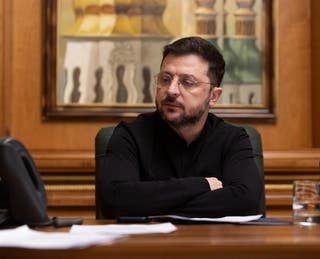
Volodymyr Zelensky
Recent Attacks by Russia
In a dramatic escalation, Russia launched a massive drone and missile attack on Ukraine, deploying 653 drones and 51 missiles in the assault. This operation triggered widespread air raid alerts across the country, particularly as Ukraine commemorated Armed Forces Day. Ukrainian defense forces managed to intercept and neutralize a significant portion of these threats, but substantial damage to key infrastructure was reported, including strikes on energy facilities.
Sweden’s Naval Concerns
The situation in Europe extends beyond Ukraine, as concerns grow about Russian naval activity in the Baltic Sea. Captain Marko Petkovic of the Swedish navy reported that encounters with Russian submarines have become alarmingly frequent, with sightings occurring almost weekly. This uptick in activity has prompted heightened vigilance from NATO forces, aimed at protecting vital undersea cables and ensuring regional stability.
A Hybrid Attack on Zelensky
In an unsettling incident, President Zelensky’s plane was reportedly followed by military-style drones during his flight to Dublin. Authorities are investigating the potential implications of this breach of airspace and whether it signifies an orchestrated cyber or hybrid attack against Ukraine’s leadership.
The complex dynamics shaping the geopolitical landscape in Europe show no signs of abating. As leaders navigate these tensions, the focus remains on forming a united front against Russian aggression, securing support for Ukraine, and fostering pathways toward lasting peace.