


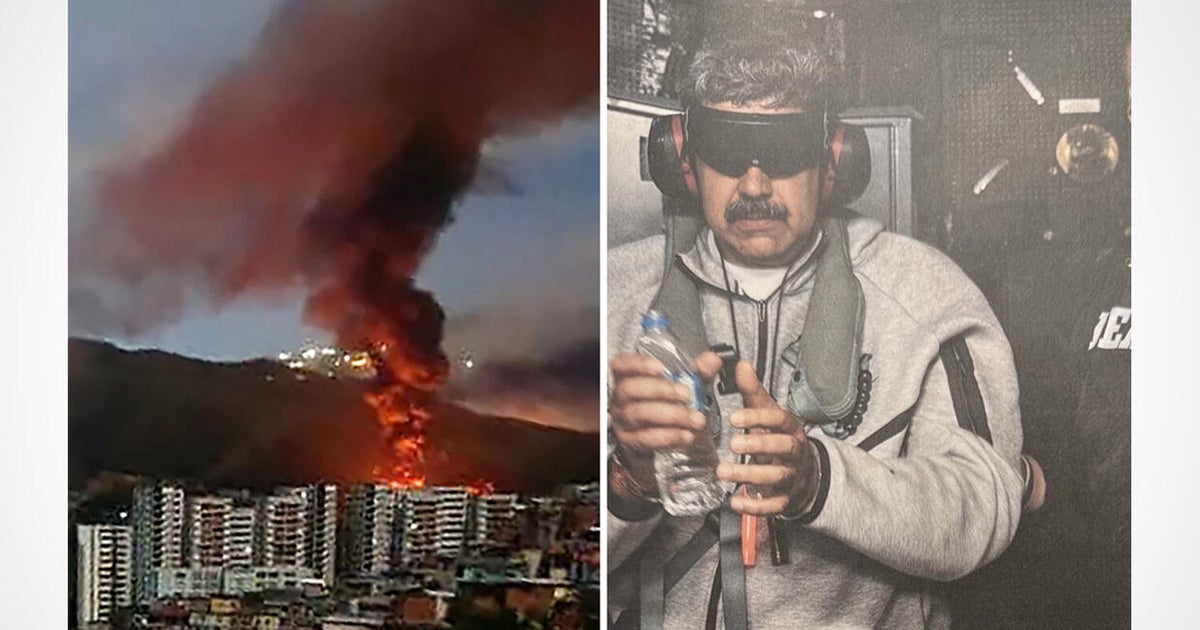
Operation Absolute Resolve: The Capture of Nicolás Maduro
On a fateful Friday night, just before midnight, the United States launched an unprecedented military operation aimed at the heart of Venezuela. In a move that set the stage for a dramatic geopolitical shift, President Donald Trump authorized the operation to capture Nicolás Maduro, the controversial Venezuelan leader.
The Mission’s Approval
At precisely 10:46 p.m. ET, President Trump gave the final green light for what was officially named Operation Absolute Resolve. This announcement came during a press conference held at Mar-a-Lago, where Joint Chiefs Chairman General Dan Caine provided critical updates to the assembled reporters. The stakes were high as the U.S. aligned its resources for a mission that was shrouded in secrecy and fraught with risk.
A Well-Coordinated Effort
The operation involved meticulous planning, with over 150 aircraft deployed from 20 bases across the Western Hemisphere. Caine detailed how the night airspace would be saturated with various forms of aerial support. As darkness enveloped the region, helicopters began their risky ascent, flying low at just 100 feet above the water toward Venezuelan shores.
The cooperation among the forces was vital. As helicopters approached the shoreline, they received support from an array of military aircraft, including drones tasked with reconnaissance, bombers, and fighter jets. The objective was clear: dismantle and disable Venezuela’s air defense systems to ensure a successful and safe entry into Caracas.
The Lightless Approach
In an interesting observation, President Trump remarked on the unusual darkness that blanketed Caracas. “The lights in Caracas had largely gone dark,” he stated, hinting at the tactical advantages this would provide the American forces during their nocturnal approach. Caine confirmed that the strategic element of surprise was maintained until the very last moment, allowing them to navigate through high terrain without detection.
Engaging the Target
Upon reaching the target compound, U.S. forces faced immediate resistance. Caine reported that while the helicopters came under fire, they remained functional and operational. Once the conditions stabilized, U.S. forces, along with agents from the FBI, made their entry into the compound itself.
Inside, Maduro and his wife were found and taken into custody. Reports indicated that Maduro attempted to flee during the capture. “He was trying to get into a safe place,” Trump recounted. “The safe place is all steel, and he wasn’t able to make it to the door because our guys were so fast.” The excerpt captures the urgency and intensity of the final moments of the operation.
Aftermath and Implications
As the operation concluded, it marked a significant turning point in U.S.-Latin American relations. The implications of capturing such a high-profile leader were vast, potentially altering the political landscape in Venezuela and reshaping American foreign policy.
Operation Absolute Resolve has infused the political discourse with renewed vigor, raising questions about intervention, sovereignty, and the ethics of military action in foreign lands. The swift execution and the operational precision with which the mission was carried out serves as a testament to the capabilities of the U.S. military and intelligence communities.
For further insights into the bold operation that led to Maduro’s capture, check out the detailed report here.