


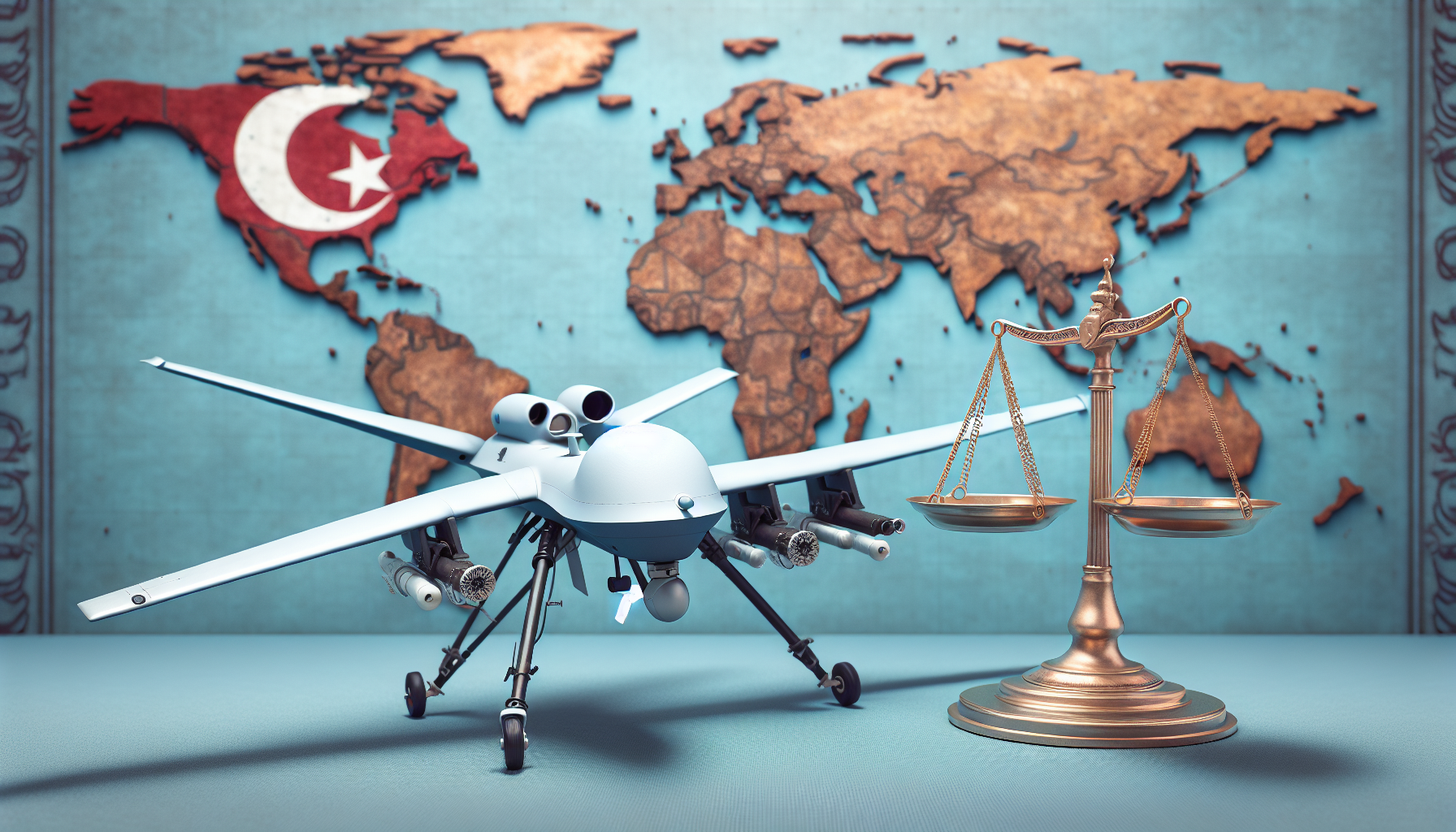
Turkey’s Drone Export Surge: Implications for Human Rights
Turkey has made headlines recently, not just for its geopolitical strategies, but for its emergence as a major player in the global drone market. As the demand for drone technology rises, this development raises significant questions about human rights implications, particularly concerning Turkey’s “no-questions-asked” export policies and the potential for war crimes associated with its drone sales.
The Rise of Turkish Drones
Historically, the use of drones has been at the forefront of military advancements, transforming how countries engage in warfare. The United States led this innovation during the war on terror, yet Turkey has swiftly carved out its niche in this arena. In recent years, with companies like Baykar and Turkish Aerospace Industries leading the charge, Turkey has ramped up drone production as part of a strategy to reduce reliance on foreign technologies.
According to the Turkish Exporters Assembly, Turkey’s defense and aerospace exports have skyrocketed, reaching around $5.8 billion within a year. The Bayraktar TB2 drone, in particular, has gained notoriety for its effectiveness on the battlefield, especially witnessed during the conflict in Ukraine. This success is not simply a national triumph; it has opened doors for sales across Europe, enticing countries like Poland and Croatia to invest in Turkish drone technology.
Turkey’s “No-Questions-Asked” Policy
One of the defining features of Turkey’s drone export strategy is its relaxed regulatory environment. The “no-questions-asked” policy permits the sale of military equipment without rigorous checks and balances, making Turkish drones a tempting choice for a diverse range of buyers. This approach serves a dual purpose for Turkey: it allows them to bolster their geopolitical influence, especially in regions like Africa and Central Asia, while establishing stronger diplomatic ties through military partnerships.
Furthermore, Turkey’s drones are priced competitively compared to their counterparts from nations like China and Iran. Their proven performance has made them especially appealing to low- and middle-income countries looking to modernize their military capabilities without breaking the bank.
Human Rights Implications
However, the implications of this rapid expansion are complex. The accessibility of drones has sparked considerable concern over human rights violations. As drones become cheaper and easier to acquire, smaller states, particularly those with internal strife, may find themselves more inclined to deploy these technologies in ways that risk civilian lives and fuel ongoing conflicts.
The Drone Arms Race
With global military spending at a record high—about $2.4 trillion—it’s clear that the market for advanced warfare technologies is booming. The proliferation of affordable drone technology might trigger what some analysts refer to as a “drone arms race.” For example, Central Asia is witnessing a surge in armed drone purchases by nations like Kyrgyzstan and Tajikistan, both of which have contentious border disputes. This democratization of drone warfare could escalate conflicts previously contained by careful diplomatic engagements.
Increasing Civilian Casualties
As seen in various applications worldwide, the deployment of drones often correlates with increased civilian casualties. The war on terror has already provided stark examples of this, with numerous incidents of civilian deaths resulting from drone strikes.
Turkey’s engagement with nations in Africa, particularly through drone sales, raises alarms. Reports have cited that Ethiopian forces, armed with Turkish drones, have targeted civilians in the Tigray region, leading to accusations of potential war crimes. Similarly, instances of civilians being killed during drone operations in Mali and Burkina Faso have emerged, raising serious ethical concerns.
The Need for Global Regulation
The rapid advancement of drone technology and its burgeoning market expose significant gaps in international regulatory frameworks. Current arms control agreements fail to address the specific challenges posed by drones, leaving a legal vacuum that states like Turkey can exploit.
The U.S. and its allies also face scrutiny for their arms exports to autocratic regimes, highlighting the inconsistencies between stated values and actions in foreign policy. However, Turkey’s increasing role in the drone market poses distinct challenges that the international community cannot afford to overlook.
Experts are advocating for stronger international agreements to regulate drone trade and usage, especially as the specters of unregulated drone warfare, civilian casualties, and regional instability loom large.
Turkey’s drone policies and their implications are a potent reminder of the complexities involved in modern warfare. While there’s no doubt that technology can enhance military capabilities and defense, the consequences on human rights and global stability are issues that warrant urgent attention and action. The ongoing rise of Turkish drones serves as both a case study in technological advancement and a cautionary tale regarding the ethical responsibilities that come with such power.