


The Strategic Push for Greenland: NATO, Trump, and Arctic Defense
The renewed attention on Greenland has emerged as a focal point of geopolitical intrigue, particularly following President Donald Trump’s calls for the U.S. to annex the island. The recent developments have escalated discussions within NATO, paving the way for potential agreements that not only involve U.S. rights over Greenland’s critical minerals but also enhance military collaboration, notably through the proposed Golden Dome missile defense system.
NATO’s Expanding Role in the Arctic
As concerns mount over Arctic security, NATO’s strategic realignment is becoming increasingly pronounced. Experts from the Center for European Policy Analysis (CEPA) emphasize that the Arctic is no longer a peripheral issue for NATO; it has become a critical operational area. Gordon “Skip” Davis Jr., a retired U.S. Army major and former NATO deputy assistant secretary general, highlighted how recent political developments have thrust the Arctic’s importance into the spotlight.
The CEPA’s latest report, High Stakes in the High North, reveals the shifting dynamics in the region. The research underscores how melting ice is opening up new shipping routes and resource access, leading militaries to expand their capabilities and conduct frequent exercises in the area.
Defining the Strategic Landscape
In discussions around the Arctic, the terms “High North” and “Northern Flank” are frequently used to describe the strategic areas encompassing the North Atlantic and regions adjacent to the Arctic Circle. This includes territories from the United States, Canada, Denmark (via Greenland), and other Nordic nations. These areas are not just geographical markers; they represent a battleground for influence among global powers.
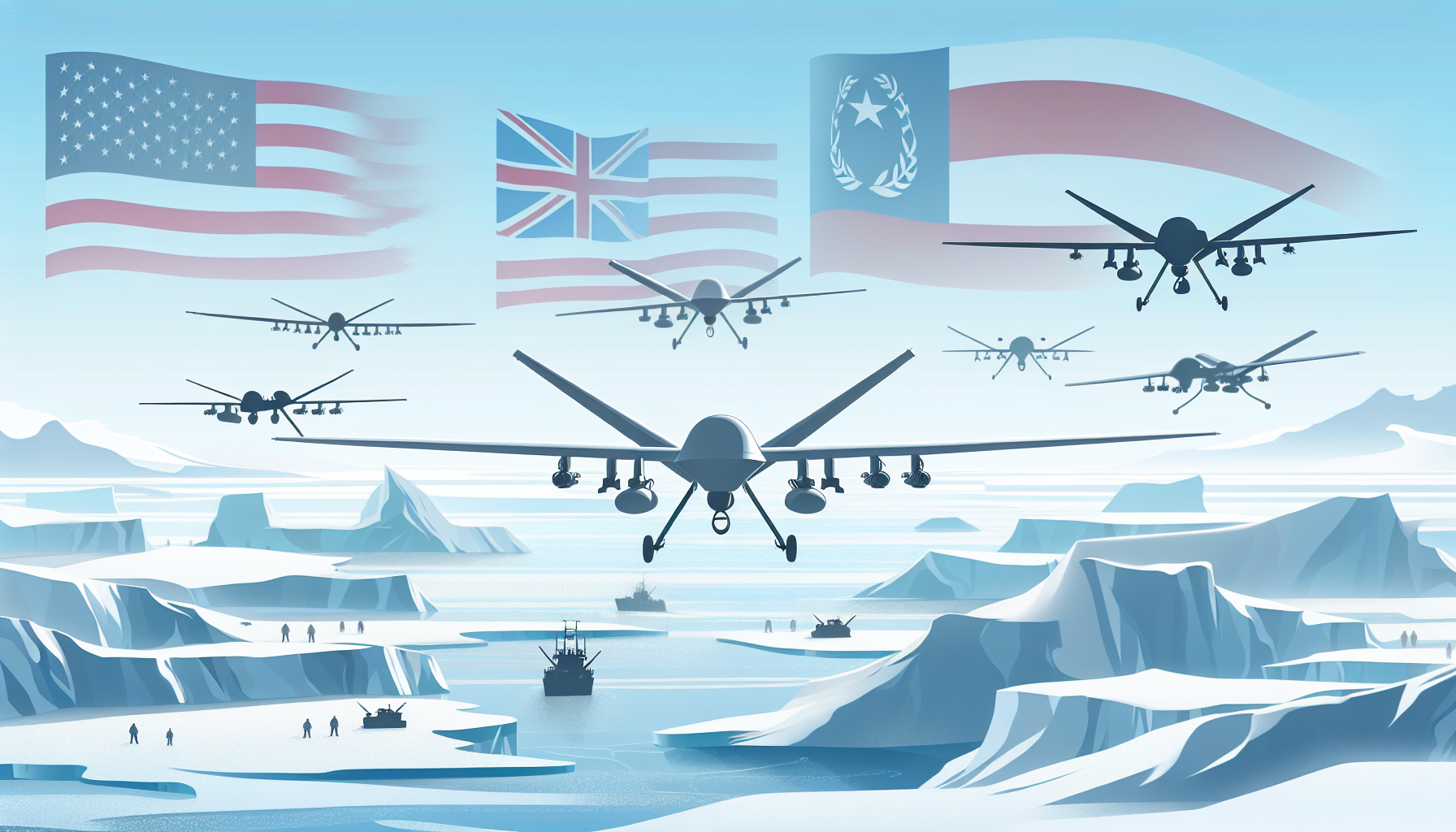
The CEPA report further elucidates the necessity for uncrewed systems to bolster NATO’s strategic presence in these regions. The potential for drones and other unmanned technologies is seen as pivotal in securing critical infrastructure and enhancing surveillance capabilities, especially in disputed zones.
The Technological Challenge
Despite the advancements in technology, NATO faces challenges in integrating existing uncrewed systems. Davis pointed out that the pace of technological innovation is so rapid that the more pressing issue lies in maturing and integrating these advancements into a cohesive operational structure. This integration is essential for credible deterrent capabilities in an increasingly contested Arctic.
Navigating Geopolitical Tensions
The geopolitical climate in the Arctic is fraught with tension, particularly among the U.S., Russia, and China, all of whom are vying for advantageous positions regarding natural resources and strategic control. While the focus remains on integrating drones into Arctic defense, panelists acknowledged the complexity of monitoring sovereignty, especially as discussions around Trump’s proposals for Greenland intensify.
Jan Kallberg, a CEPA senior fellow, emphasized the role of drones in extending surveillance over terrain, effectively enhancing claims of sovereignty in areas like Greenland, where human presence is often limited. This technological capability is crucial not just for patrolling but also for monitoring Russia’s Northern Fleet.
Maritime and Underwater Surveillance
Innovative ideas are emerging about how NATO can enhance its maritime security in the region. Kallberg suggested deploying underwater drones around Greenland to effectively monitor adversarial naval operations, reflecting the unique demands of Arctic military operations. Given the harsh Arctic conditions, specialized equipment is essential, and few NATO allies possess the requisite expertise.
Minna Ålander, another CEPA fellow, noted that NATO’s Task Force X is already experimenting with uncrewed maritime systems, highlighting their potential in tracking subsea activities. This capability is vital for monitoring critical underwater infrastructure and countering hybrid warfare tactics, such as the sabotage of underwater cables.
Blueprints for Future Missions
Ålander also noted that there are existing frameworks that could provide templates for future NATO operations in Greenland. For example, the ongoing buildup of a forward land force in Finland, a collaboration primarily among European allies, could serve as a model. This could potentially inspire a similar approach for military readiness in Greenland, drawing contributions from various NATO nations.
Through this lens, the evolving geopolitical landscape of the Arctic presents both challenges and opportunities. As NATO explores ways to embed advanced technologies into its operational strategies, the focus on Greenland may well define future alliances and conflicts in this vital region.