


Project Kei/Wikimedia Commons
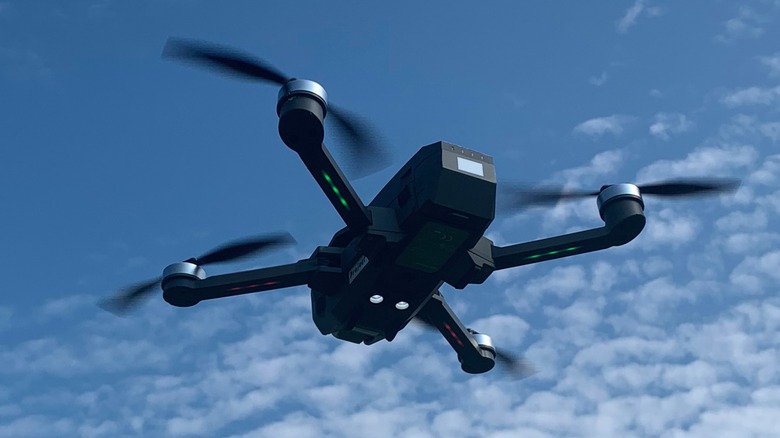
In recent years, military drones have become superbly sophisticated instruments in modern warfare. Their use extends well beyond traditional combat scenarios; they provide invaluable support in locating lost personnel and conducting reconnaissance. While larger models like the MQ-9 Reaper and the RQ-4 Global Hawk grab headlines, smaller drones are increasingly seen as disruptive forces that necessitate immediate countermeasures.
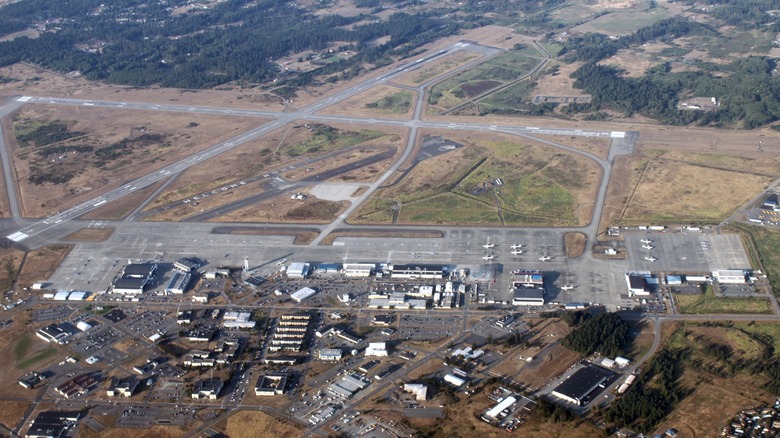
The situation recently unfolded at Ault Field, Naval Air Station Whidbey Island, Washington, where an unauthorized drone was taken down by military defenses. Initially, the incident raised questions around security protocols, given that a military base must maintain strict operational boundaries. The Navy remained tight-lipped about the defense systems employed during the incident, but it soon became clear that the drone operator was not an external threat.
Base spokesperson Michael Welding revealed that this drone operator was, in fact, a reservist who, during a break, flew a personal drone without prior knowledge of his superiors. This breach of regulations underscored not only the importance of security on military installations but also highlighted the need for continual education about restrictions and operational safety.
Restricted Drone Operations on Military Bases
Jelson25/Wikimedia Commons
Understanding why drone operations are tightly controlled on military bases requires a look into the inherent risks associated with unauthorized airspace access. Most servicemembers are acutely aware that personal drones are forbidden on base due to restricted airspace and possible breaches of security protocols. Many bases display signs to remind personnel of these regulations, yet the unique circumstances surrounding this incident—a reservist with less familiarity about such restrictions—led to a lapse in judgment.
NAS Whidbey Island is home to highly sensitive aircraft, including the EA-18G Growler, which focuses on electronic warfare. This makes it crucial to maintain tight security protocols, which is why the Navy acted swiftly to neutralize the unauthorized drone. According to Navy policy, any personal drone operation requires explicit authority from the commanding officer, and the regulations are clearly outlined in Navy Region Northwest’s COMNAVREG NW NOTICE 3501.1.
This incident serves as a stark reminder of the potential repercussions for violating such regulations, which could range from criminal charges under the Uniform Code of Military Justice to civil penalties enforced by the FAA. The significant threat posed by small drones has been underscored in contexts like the Russo-Ukrainian War, where their use has directly impacted military strategies, heightening the need for bases to be perpetually vigilant.