


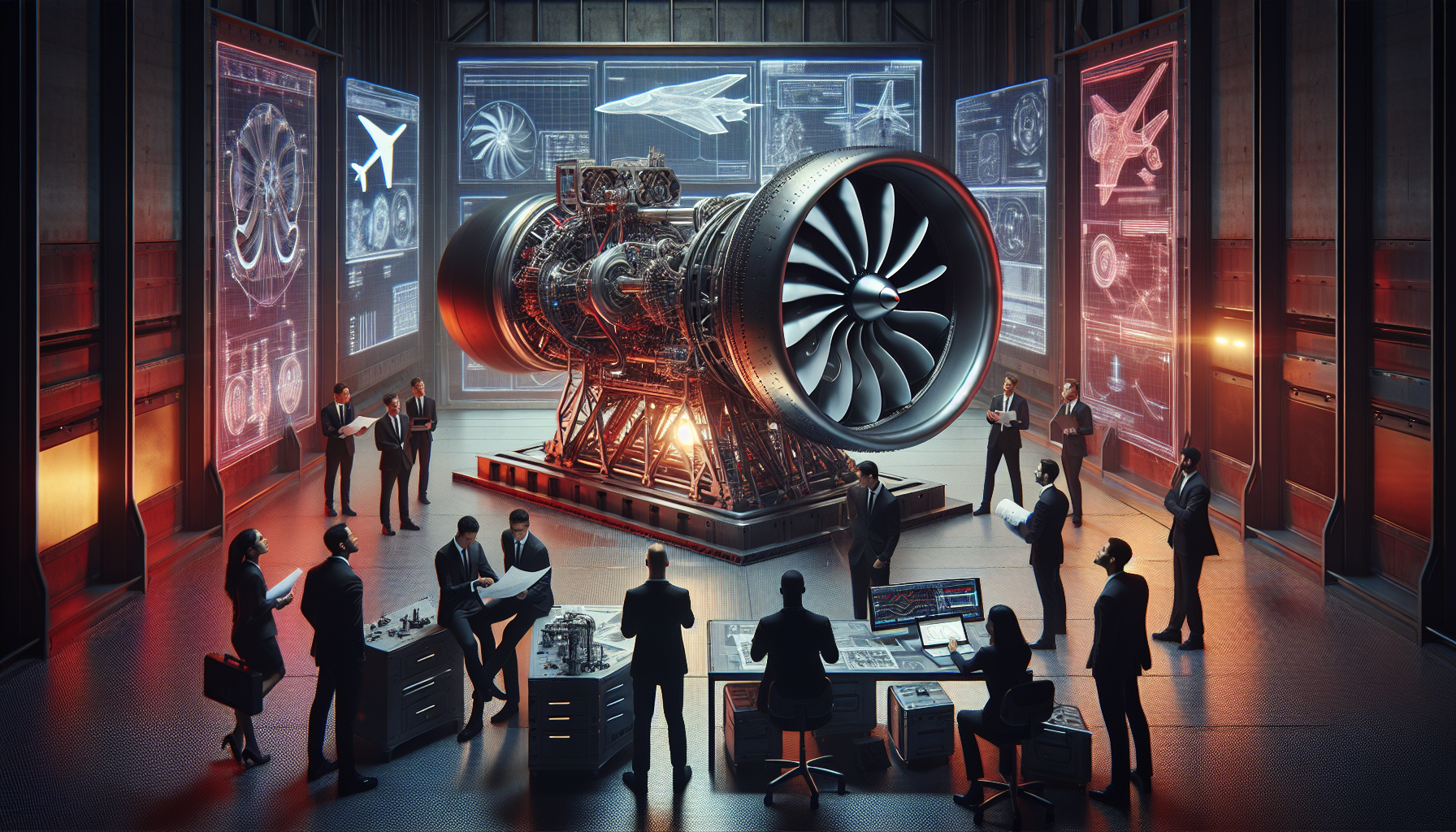
Advancements in U.S. Air Force Unmanned Warfare with Honeywell’s New Engine
The U.S. Air Force recently made headlines by enhancing its unmanned warfare capabilities through a significant contract awarded to Honeywell. This contract focuses on the development of a new small engine tailored for autonomous drone wingmen, marking a pivotal moment in the advancement of military drone technology.
The SkyShot 1600 Engine
At the heart of this collaboration is Honeywell’s modified SkyShot 1600 engine. Known for its versatility and compact design, the SkyShot is aimed at meeting the specific demands of the Air Force’s Collaborative Combat Aircraft (CCA) program. This engine boasts impressive thrust capabilities, supporting both turbofan and turbojet propulsion configurations.
The turbofan variant is especially noteworthy, as it offers efficient and quieter airflow, making it suitable for stealth operations. In contrast, the turbojet version is typically found in supersonic military aircraft, providing high-speed performance needed for more aggressive missions. This adaptability allows the Air Force to leverage the engine across various unmanned systems, amplifying its operational readiness.
Commitment from Honeywell
Dave Marinick, President of Engines and Power Systems at Honeywell, expressed enthusiasm about the partnership. According to him, “We’ve combined decades of proven technologies with the latest advancements to create an engine that can keep pace with cost, speed, and performance demands of next-generation platforms.” This represents not only a technological advancement but also a commitment to collaborative innovation aimed at bolstering national defense.
The Role of Collaborative Combat Aircraft (CCA)
The CCA initiative is designed to facilitate operations between human pilots and autonomous drones, providing enhanced mission flexibility. These aircraft are intended to engage in diverse activities, such as reconnaissance, air-to-ground assaults, and air-to-air combat. To visualize this collaborative capability, one can recall a significant Air Force exercise from last July. During this event, fighter pilots effectively worked alongside two Kratos XQ-58A Valkyrie drones in conjunction with traditional aircraft like the F-16C Fighting Falcon and the F-15 Strike Eagle, showcasing how human operators can seamlessly integrate with unmanned platforms.
Broader Military Investments
The U.S. Navy is concurrently pushing advancements in CCA technology. Numerous defense contractors, including renowned names like Anduril, Lockheed Martin, General Atomics, Boeing, and Northrop Grumman, have received contracts aimed at developing drone aircraft capable of being launched from aircraft carriers. This highlights a broader military commitment to integrating unmanned systems into operational strategies, signaling a transformative shift in how warfare might be conducted in future conflicts.
A Future Built on Collaboration
As both branches of the U.S. military continue their investments in unmanned aircraft technology, the collaboration with Honeywell emerges as a crucial piece in the overall puzzle. With the integration of advanced propulsion systems into autonomous platforms, the potential for enhanced operational capabilities in modern warfare is vast. This pivotal partnership underscores a shared vision for the future of military aviation—one where drones and traditional aircraft work hand in hand to secure air dominance.