


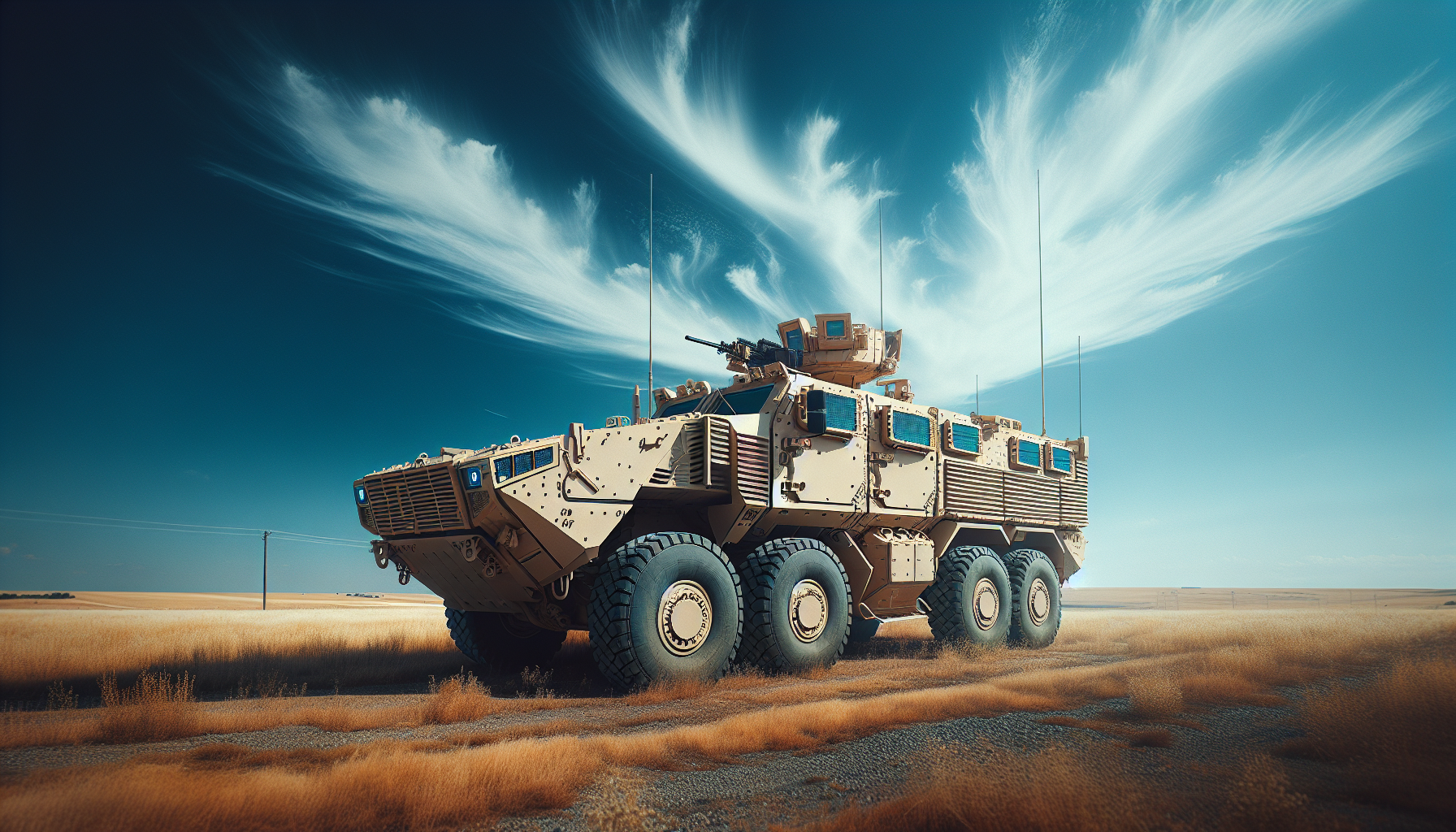
Introduction to Belgium’s Griffon Armored Vehicle
At the recent BEDEX 2026 defense exhibition in Brussels, the Belgian Army proudly unveiled its latest asset—the Griffon wheeled armored vehicle. This introduction comes as a significant advancement in the modernization of Belgium’s motorized brigade. The Griffon, part of the Franco-Belgian CaMo (Capacité Motorisée) cooperation program, is designed to enhance tactical mobility, troop protection, and interoperability with French forces.
The CaMo Program: A New Era of Cooperation
Initiated in 2018, the CaMo program is pivotal in aligning the capabilities of the Belgian Land Component with those of the French Army. It is particularly focused on the SCORPION program, which equips French forces with next-generation combat vehicles. The partnership aims to ensure seamless cooperation during joint operations, enabling Belgian and French forces to execute missions with greater efficiency and speed.
The Griffon: Design and Capabilities
Developed by a consortium comprising KNDS, Arquus, and Thales, the Griffon is an Armoured Personnel Carrier (APC) meticulously engineered to fulfill modern combat demands. This multipurpose vehicle can be configured into eleven variants, each tailored for different operational roles, including troop transport, command-and-control posts, artillery observation, and medical evacuation.
Configurations and Roles
The main configuration of the Griffon is designed for transporting an infantry combat group, with room for a driver, a commander, and up to eight soldiers. Other configurations include specialized variants for command operations or artillery assistance, showcasing the vehicle’s versatility in various combat scenarios.
Technical Specifications
The Griffon boasts impressive specifications that underline its capability. With a combat weight of approximately 24.5 tonnes, the vehicle is powered by an engine that produces around 400 horsepower, ensuring it can maintain high mobility on the battlefield despite its protective features. Its maximum speed reaches approximately 90 kilometers per hour, allowing it to keep pace with fast-moving mechanized units.
Size and Agility
Dimensions of the Griffon further highlight its design for operational agility. Measuring about 8 meters in length, 3.3 meters in width, and 3.7 meters in height, the vehicle’s compact structure is tailored for maneuverability in diverse terrains. With an operational range of around 800 kilometers, troops can conduct extended movements without the immediate need for refueling, making it a strategic asset in prolonged operations.
Recent Developments and Training Initiatives
On March 9, 2026, the Griffon made a compelling appearance during a press demonstration at the Infantry School in Arlon, where Belgian defense personnel showcased its functionalities before the formal integration into service. Initial deliveries of the vehicle mark the beginning of rigorous training programs aimed at preparing crews for future missions.
Further Acquisitions and Operational Readiness
As part of its modernization strategy, Belgium plans to acquire a total of 382 Griffon vehicles, alongside 24 mortar-equipped versions. An additional agreement finalized in 2025 will see the procurement of 92 more vehicles, reinforcing the capabilities of the motorized brigade. These new additions aim to phase out older armored platforms, ensuring that the Belgian forces remain equipped with state-of-the-art technology.
The Vision for Modular and Digitally Connected Warfare
The Griffon’s presence at BEDEX 2026 reflects a broader shift in military strategy towards modular, digitally connected armored platforms. With an increasing emphasis on networked battlefield operations, Belgium aims to ensure that its forces can effectively communicate and coordinate during joint missions with allies.
In summary, the Griffon is more than just a vehicle; it represents a strategic investment in the future of Belgian land forces. Prepared to enhance interoperability with French units under the CaMo program, the Griffon is set to be a game-changer on the modern battlefield, equipped for the challenges of contemporary military operations.