


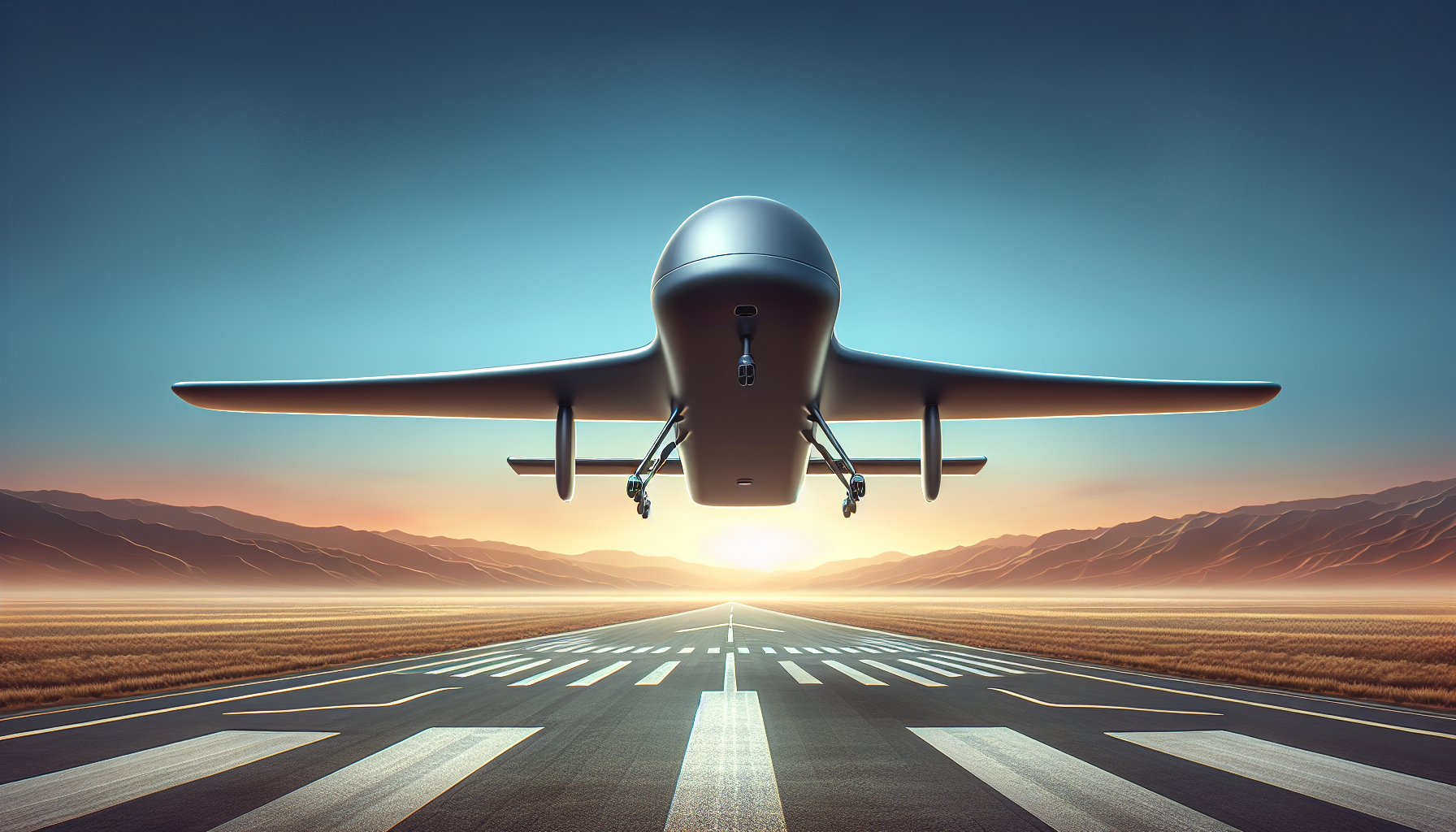
China’s Ambition in Unmanned Aviation: The Changying-8 Drone
China has taken a significant leap in the realm of unmanned aviation with the recent test flight of the Changying-8 (CY-8), touted as the world’s heaviest cargo drone. This ambitious undertaking reflects China’s broader strategy to enhance its logistics capabilities, particularly in hard-to-reach areas, by utilizing advanced drone technology.
The Maiden Flight
On a notable Tuesday in Zhengzhou, located in Henan province, the CY-8 completed its inaugural test flight. The operation involved a surprisingly brief ground run of just 280 meters before it ascended into the sky, remaining airborne for approximately 30 minutes. During this flight, engineers assessed key flight systems, including crucial components like avionics, propulsion, and intelligent flight controls. This first trial demonstrates the drone’s readiness for operational scrutiny while signaling its potential for future applications.
Heavy Payload and Design
What sets the CY-8 apart is its impressive payload capacity and physical dimensions. With a maximum take-off weight of 7 tonnes, the drone itself weighs around 3.5 tonnes, capable of carrying an equivalent load. It boasts a considerable airframe, measuring 17 meters in length and featuring a 25-meter wingspan, along with a spacious enclosed cargo bay of 18 cubic meters. This design not only maximizes its carrying capabilities but also facilitates efficient loading and unloading with both front and rear access doors.
Described by state broadcaster CCTV as an “unmanned aerial heavy truck,” the CY-8 utilizes twin turboprop engines. This dual-engine configuration allows the drone to engage in short take-off and landing (STOL) operations, making it ideally suited for various operational environments, including those with minimal infrastructure.
Versatility in Operations
The CY-8 is engineered for adaptability, intended for both military and civilian purposes. It features a quick-switch payload configuration, enhancing its versatility across multiple mission profiles. The drone is expected to be deployed for a range of tasks, including emergency communications, weather modification, and electronic reconnaissance. Its capabilities extend further into logistics and disaster relief, particularly in rugged terrains or during humanitarian missions.
Optimization for high-altitude performance is a key trait of the CY-8. It is designed to operate effectively in challenging regions like the Tibetan Plateau, where elevations can exceed 4,000 meters. Furthermore, this drone can tackle operations from short and basic airstrips, requiring less than 500 meters for take-off and landing. With a range of over 1,850 miles, the CY-8 can cover extensive distances, reaching remote and strategically important locations.
The Competitive Landscape
China’s emergence with the CY-8 enters a fiercely competitive arena. The drone sector, particularly in heavy cargo UAVs, is witnessing a surge in innovation and investment. Beijing is not alone in this pursuit; other Chinese aircraft, like the Air White Whale’s W5000—an even larger 10-tonne-class cargo drone—are currently under development, showcasing China’s ambition in this sector.
The United States is also making strides in comparable technologies. California-based Sabrewing has developed the RH-1-A Rhaegal cargo drone, which recently completed its first hover flight. With plans for a larger variant boasting a maximum take-off weight of 6.25 tonnes, Sabrewing’s design diverges from the CY-8 by utilizing vertical take-off and landing capabilities, which eliminates the need for traditional runways.
Future Developments
As China progresses with the CY-8, plans for continued flight testing are in the works, aiming for full-scale production by the end of the year. The drone stands not only as a testament to China’s industrial prowess but also as a strategic asset for enhancing logistical operations in challenging environments.