


The Evolving Landscape of Drone Warfare: Ukraine’s Pivotal Role and Global Implications
Trump’s Hesitant Approach to Ukraine’s Defense Capabilities
Earlier this month, former President Donald Trump made headlines with his assertion that he didn’t want Ukraine’s assistance in drone defense. He remarked that Ukrainian President Volodymyr Zelenskyy was the last person he would consult. This dismissal comes at a time when, paradoxically, countries in the Gulf are seeking Ukraine’s expertise on countering drones amid their ongoing conflict with Iran. Notably, Zelenskyy’s recent visit to Saudi Arabia illustrates a growing trend: nations are eager to tap into the practical knowledge Ukraine has gained in its battle against drone warfare, specifically regarding Iran’s advanced capabilities.
The Sting Drone: A Game-Changer in Asymmetric Warfare
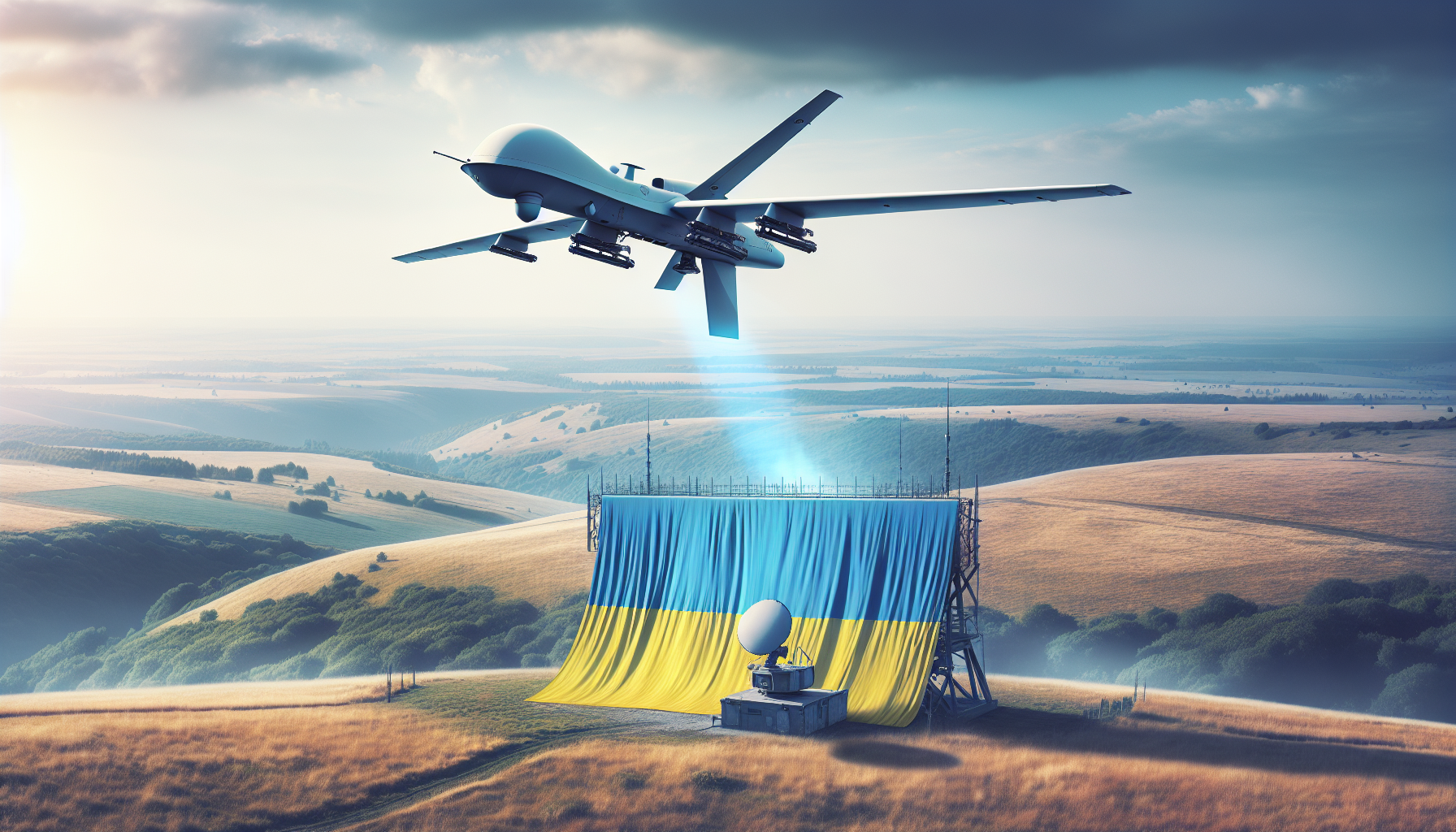
At a discreet location in Ukraine, Simon Ostrovsky reported on a local defense manufacturer showcasing its innovative weapons. Among them is the “Sting” drone, designed to intercept the Iranian-engineered Shahed suicide drones that Russia frequently deploys in its military operations against Ukraine. The Sting drone stands out for its speed, accuracy, and affordability—costing between $1,300 and $2,200—while Iranian and Russian drones can cost around $50,000. This technology exemplifies Ukraine’s prowess in asymmetric warfare, allowing it to effectively counter financially superior adversaries.
America’s Defense Strategy: A Costly Oversight
The evolving drone warfare landscape highlights a critical concern for American defense. The U.S. military has traditionally relied on high-cost weaponry, epitomized by the use of multimillion-dollar Patriot missiles. Reports indicate that to shoot down 300 Shahed drones, the U.S. expended $1.2 billion worth of resources. In contrast, Ukrainian interceptor drones from companies like Wild Hornets could have eliminated the same threat for approximately $600,000. This mismatch emphasizes the inefficiencies in the U.S. defense strategy and sparks a dialogue about the need for adaptable, cost-effective solutions in drone warfare.
The Surge in Interest for Ukrainian Drone Technologies
Interest in Ukrainian drone technologies has soared, particularly following the outbreak of conflict involving Iran. General Cherry, a Ukrainian manufacturer, asserts that they produce around 100,000 drones per month—more than the total annual production in the U.S. Marko Kushnir, the Communications Director at General Cherry, noted that foreign interest has surged, with over 10 negotiations underway. This kind of demand underscores the transformative potential of Ukrainian innovation in military technology on a global scale.
Continuous Innovation: The Role of Ukrainian Engineers
What sets Ukrainian drone technology apart is its battle-tested nature. Companies like General Cherry are adaptable, constantly improving their prototypes based on real-world conditions. Engineers are often out in the field, gathering data that feeds back into the design process. The updated models are designed to be faster and more resilient; for instance, the latest prototypes can reach speeds of close to 250 miles per hour, allowing them to engage sophisticated adversarial technology effectively.
American Firms Collaborating with Ukrainian Tech
Interestingly, some American defense firms have been collaborating with Ukrainian manufacturers. Vermeer, founded by Brian Streem, specializes in developing navigation systems that enable drones to operate deep within enemy territory without detection. Their technology is essential for countering Russian electronic warfare tactics, highlighting how American firms are integrating lessons learned from Ukraine into their own operations. This relationship emphasizes the importance of staying on the cutting edge of technology in today’s competitive military landscape.
The Shift in U.S.-Ukraine Relations
The U.S.-Ukraine relationship has shifted dramatically over recent years. While Congress previously approved substantial aid packages amounting to nearly $175 billion since the invasion began in 2022, the funding has significantly diminished during Trump’s administration. Many experts warn that this withdrawal not only harms Ukraine’s defense efforts but also limits the U.S.’s understanding of emerging threats from adversarial nations learning from the conflict in Ukraine.
Adversaries Learning from Ukraine’s Battlefield
As Ukraine evolves into a central player in modern warfare, countries like China, Iran, and North Korea are concurrently studying the dynamics of this conflict. Rush Doshi from the Council on Foreign Relations points out that adversaries are not only observing methods and tactics but also evolving their own military capabilities based on the lessons learned. This intelligence gathering is critical for them as they seek to enhance their own strategies in contemporary warfare.
The U.S. Military’s Adaption to New Threats
In light of recent challenges posed by Iranian Shahed drones, the American military has begun to reconsider its stance. Despite initial reluctance, there is now evidence that the U.S. is forming partnerships with Ukrainian advisors in the Middle East. This pivot illustrates a recognition of the valuable tactical insights Ukraine has to offer, emphasizing the overall significance of collaborative defense strategies in an increasingly complex geopolitical landscape.