


Escalating Tensions in the Middle East: Recent Attacks and Military Operations
Iranian Missile and Drone Strikes
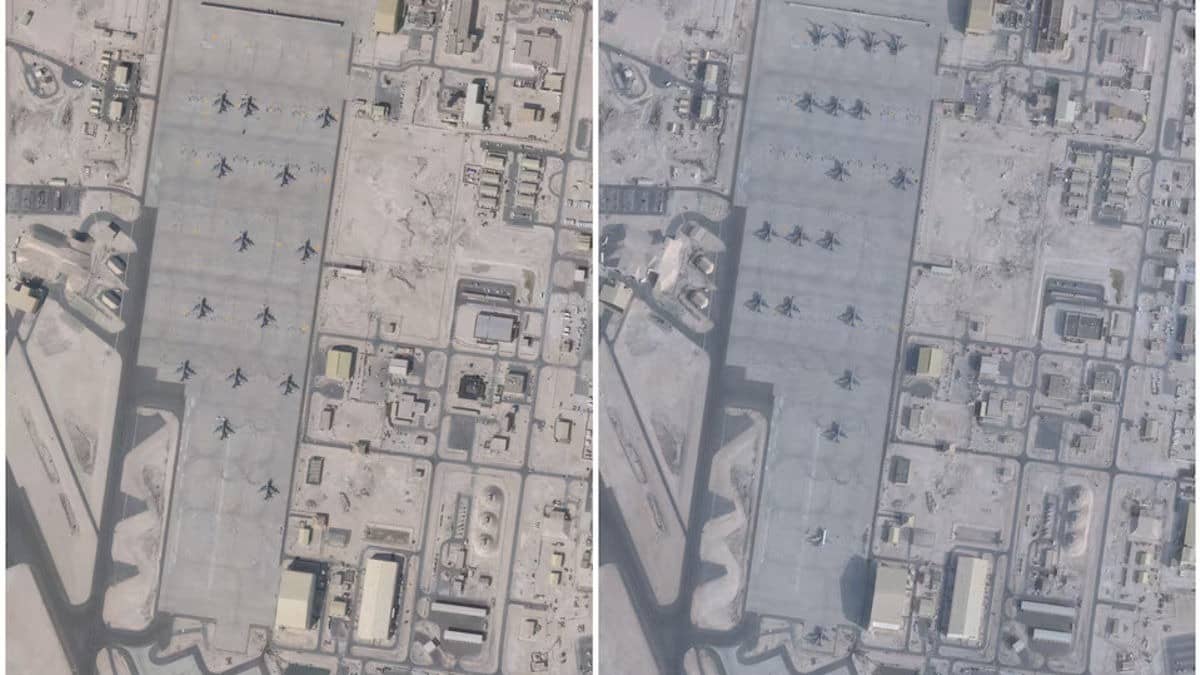
In the early hours of a recent Sunday morning, Iran’s Islamic Revolutionary Guard Corps (IRGC) conducted a series of missile and drone strikes on four United States airbases. Reports from Al Jazeera indicate that these coordinated attacks were aimed at key military infrastructure used by U.S. forces in the region. The strikes have intensified concerns about escalating military confrontations and the implications for regional stability.
The IRGC stated that the operations specifically targeted command centers, air traffic control towers, and air defense facilities associated with U.S. military operations. This marked a significant demonstration of Iran’s military capabilities and its willingness to confront U.S. interests head-on. The complexities of this situation are heightened by the long-standing tensions between the U.S. and Iran that have been exacerbated by various geopolitical factors in recent years.
Strategic Use of Technology in Warfare
The strikes employed advanced missile and drone technologies, suggesting that Iran has made significant advancements in its military capabilities. According to statements from the IRGC, these “precise and crushing blows” were part of a broader strategy to assert Iranian power in the region. Notably, the Iranian forces claimed that satellite imagery revealed extensive damage to the targeted American bases, with assertions that over 80% of the strategic radars and vital points were destroyed.
This claim, while indicative of Iran’s confidence in its military strength, also raises questions about the role of technology in modern warfare. The effectiveness of drone and missile strikes can be seen as a shift in the nature of military engagements, where the usage of sophisticated technology can alter the dynamics between traditional military powers.
Israel’s Response: Airstrikes in Lebanon
Amidst the Iranian attacks, tensions flared on another front as Israeli warplanes conducted strikes in southern Lebanon. According to Lebanon’s National News Agency and reports from Al Jazeera, these strikes targeted the town of Zibdin in the Nabatieh district, among other locations. This dual surge of military actions underscores the complex web of alliances and hostilities in the Middle East.
Israeli airstrikes typically aim to neutralize perceived threats from Hezbollah, the Lebanese militant group. Reports indicate that previous strikes in the region also involved targeting towns such as Hanin, Kfar, Aita al-Shaab, and Yater, further complicating the security landscape in southern Lebanon. The repeated Israeli operations reflect a consistent strategy to preempt potential attacks on its territory.
Unraveling Connections to Global Terrorism
Adding another layer to this already intricate situation, the Israel Defense Forces (IDF) recently claimed that a key figure linked to a synagogue attack in Michigan had familial ties to Hezbollah. This revelation connects larger global issues of terrorism with local conflicts, demonstrating how terrorist networks can influence and intersect with regional military operations.
In a post on social media platform X, the IDF stated that Ibrahim Muhammad Ghazali was identified as a commander responsible for weapon operations within Hezbollah’s Badr Unit. This unit has reportedly launched numerous rockets towards Israeli civilian areas amid the ongoing war. The IDF has indicated that Ghazali was killed in a recent airstrike targeting a Hezbollah military structure, highlighting the lethal nature of this ongoing conflict.
Implications for Regional Stability
The intertwining events of missile strikes by Iran and air raids by Israel paint a picture of a volatile situation that could lead to further escalation in the already tenuous relationships between regional powers. The claims and counterclaims regarding military effectiveness, the use of high-tech weaponry, and connections to global terrorist networks complicate the narrative and create an urgent need for diplomatic dialogue.
These developments serve as a stark reminder of the fragile state of peace in the Middle East, where the balance of power can shift dramatically with each military engagement. The ramifications of these incidents will likely reverberate beyond the immediate region, affecting global politics and international relations in the months to come.
As tensions rise and military operations intensify, the question remains: how will these developments shape the future of governance and security in this strategically important part of the world?