


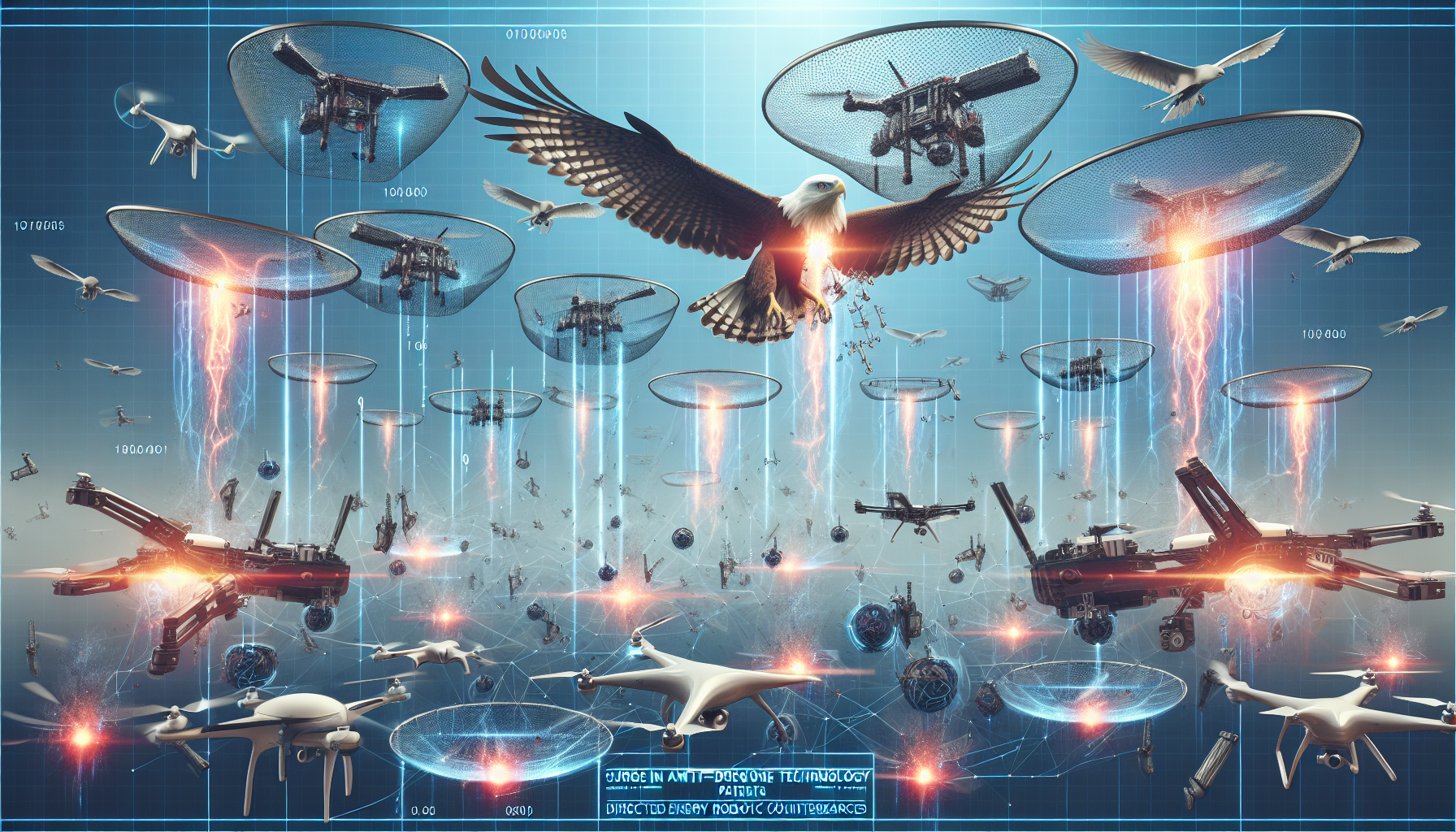
The recent surge in patent applications for anti-drone technologies has made headlines, with a 27% increase reported by Mathys & Squire, an intellectual property (IP) law firm. Last year, 126 applications were filed globally, up from 99 the previous year. This sharp rise underscores a growing global demand for effective countermeasures capable of disabling or neutralizing drones, which have found increasing utility across various sectors.
The urgency for robust anti-drone systems has been amplified by geopolitical conflicts, particularly in the Gulf region. Traditional methods, such as high-cost interceptor missiles, have been rendered less feasible in scenarios where budget constraints and rapid response are crucial. Moreover, the proliferation of drones has sparked concerns regarding the vulnerability of both civilian and defense infrastructure to potential attacks. Recent incidents of drone sightings in Europe and America have only heightened the calls for increased vigilance and preparedness against this evolving threat.
Leading the way in the anti-drone patent landscape is China, which filed a remarkable 82 applications last year. This figure starkly contrasts with the U.S.’s 22 submissions, placing the two nations at the forefront of the counter-UAV innovation race, followed closely by South Korea. However, European nations appear to be lagging behind, even as drone-related disturbances have disrupted operations at major airports like Brussels and Munich on multiple occasions since September. This discrepancy raises questions about the preparedness of European infrastructure against emerging drone threats.
A closer examination of the types of innovations emerging reveals that interference and jamming technologies dominate the patent landscape. Last year saw the filing of 49 new patents in this area alone, reflecting a pronounced focus on non-kinetic countermeasures that effectively disrupt drone communication and navigation systems. In light of recent unsettling events—such as the temporary shutdown of operations at Copenhagen and Oslo airports—it’s clear that there is a growing market for technologies that can quickly disable rogue drones.
Interestingly, the landscape of anti-drone technologies is evolving. Not only are traditional jamming technologies gaining traction, but next-generation solutions are also emerging. The growing patent filings related to laser technologies, which reached 39 last year, and microwave systems, which spiked to 24, showcase a burgeoning interest in directed-energy methods for securing airspace. These advances signal an innovative shift towards more sophisticated and potentially more effective counter-drone solutions.
According to Andrew White, a partner at Mathys & Squire, drones have transitioned from a niche concern to a mainstream security challenge. The recent spike in patent filings reflects the urgent need for reliable countermeasures in response to disruptions at sensitive sites and infrastructures, prompting organizations to race against time to devise robust solutions. Importantly, this innovation is not limited to previous methods; the rise of laser and microwave systems indicates that the industry is gearing up for a transformative shift in addressing aerial threats.
The applications for anti-drone technologies are also diversifying. They are increasingly being tailored for use in critical areas such as airports, prisons, energy infrastructure, ports, and large public gatherings. As drones proliferate, the intersection of technology development and security measures will become increasingly vital. The landscape is changing, and the push for effective counter-drone strategies reflects the urgent need for industries and governments alike to safeguard their operations and public spaces against this modern hazard.
Mathys & Squire, founded in 1910, has established itself as a prominent full-service intellectual property law firm in Europe. With over 115 years of experience, the firm remains a key player in the protection and commercialization of intellectual property rights, navigating the complexities of a rapidly evolving technological landscape.