


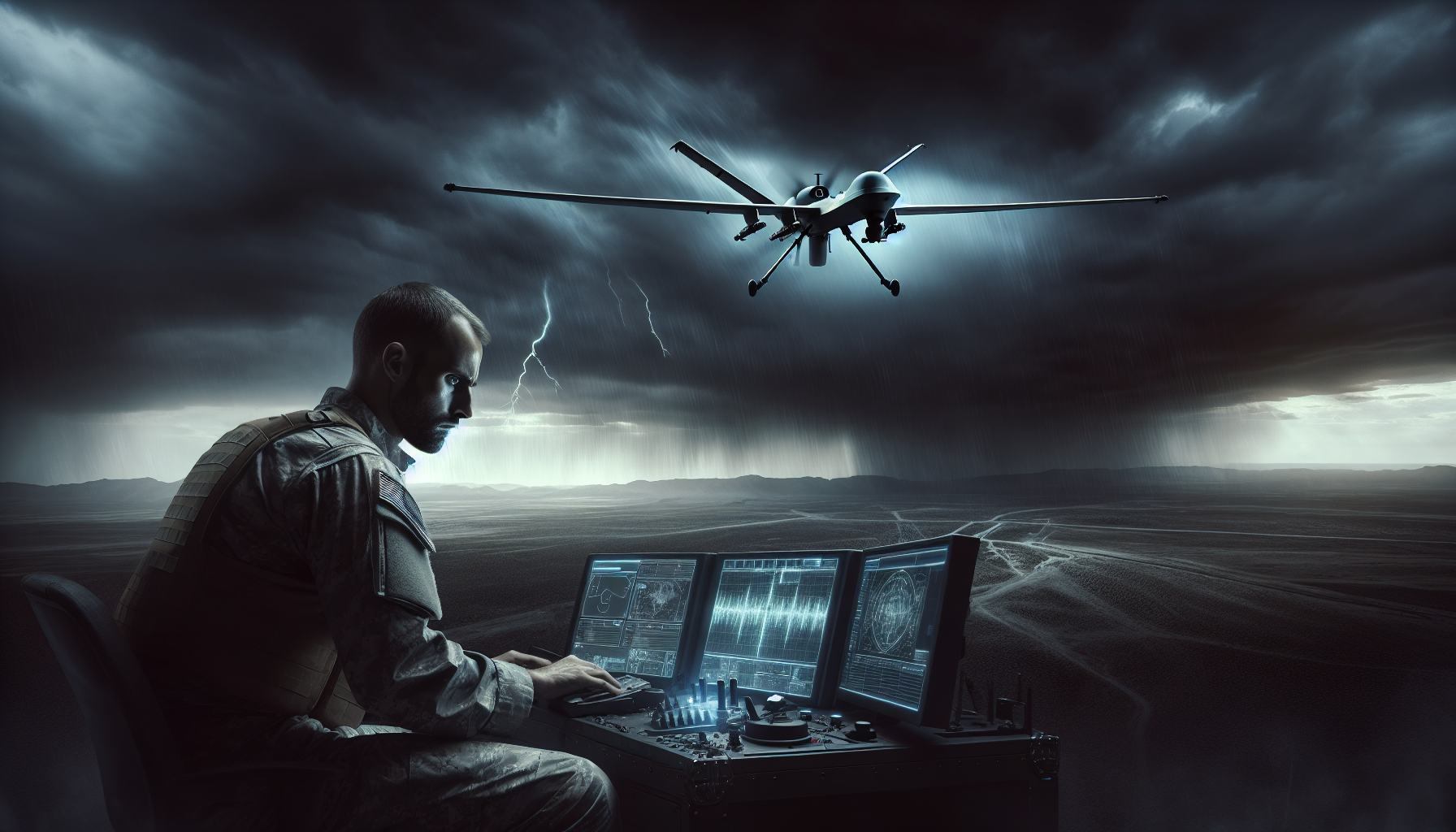
The Hidden Costs of Drone Warfare: Understanding Psychological Trauma
Drone warfare is often portrayed as a clean, detached means of engagement in conflict. Pilots and sensor operators sit in air-conditioned trailers, sometimes half a world away from the battlefield, living lives of relative normalcy while conducting missions that can mean life or death for those below. Yet, this physical distance creates a paradoxical layer of trauma, leading to complex moral and psychological burdens that operators grapple with long after their missions are over.
The Disconnect of Remote Warfare
The moral weight of drone missions lies in the contradiction between safety and violence. Traditional combat stress derives from the fear of injury or death; drone operators, insulated from the physical dangers of warfare, confront a different kind of anxiety. Instead of dropping bombs and flying away, these operators watch their strikes unfold in real time. They observe the aftermath—seeing bleeding survivors, the chaos that follows an explosion, or bodies being gathered into shrouds. The intimate nature of these observations amplifies their emotional toll.
Psychologists have introduced the term “moral injury” to encapsulate this anguish. It refers to the inner wounds caused when one’s actions clash with deeply held values. Studies show that around 4.3% of Air Force drone operators report experiencing moderate to severe PTSD symptoms. While this rate is lower than that of service members returning from deployment, it still reflects significant psychological distress that is often overlooked.
What Research Shows
Recent large-scale studies conducted by the U.S. Air Force reveal that remotely piloted aircraft (RPA) crews carry unique psychological burdens. These include higher instances of burnout, psychological distress, and sleep disruptions across various operations. Data illustrated in the Medical Surveillance Monthly Report highlights a troubling landscape: meaningful mental health diagnoses and counseling needs are evident among the RPA community, countering the misconception that this role is stress-free.
A narrative review published in 2023 synthesizes clinical and qualitative research, concluding that persistent surveillance, remote decision-making for strikes, and the persistent guilt associated with these actions contribute to a psychological burden that mirrors, and in some ways exceeds, conventional PTSD experiences.
Human Stories Behind the Numbers
The psychological impact of drone warfare becomes clearer through the personal testimonies of operators. Brandon Bryant, a former Air Force drone operator, recounted his struggles post-service, burdened with vivid memories that haunt him. One particular incident—a failure to warn a convoy of a potential IED—left him with deep feelings of depression and an overwhelming sense of moral collapse, illustrating the severe aftermath of remote engagement in warfare.
Similar accounts paint a grim picture of life for drone operators. Michael Haas, another former operator, reflected on how they coped with their realities through euphemistic language about targets, only to wrestle with feelings of guilt and numbness in civilian life afterward. The emotional detachment that some try to cultivate only heightens the psychological strain when they return to their daily routines.
A Different Kind of Trauma
Drone warfare trauma diverges from traditional PTSD that often focuses on the reliving of life-threatening experiences. Instead, operators face a cycle of violence intertwined with guilt and disassociation. This phenomenon is exacerbated by the stark contrast between their roles on the battlefield and their lives in suburban neighborhoods. This juxtaposition amplifies the psychological toll they experience.
Conventional treatments for PTSD may not address the specific needs of drone operators, who require support focused on moral injury and the unique psychological whiplash that comes from living dual lives. Incorporating routine after-action counseling could provide needed support to help these operators process their experiences holistically.
Rethinking Responsibility in Remote War
The often-ignored mental health challenges faced by drone operators complicate the narrative of remote warfare as clean or cost-effective. While operators avoid physical danger, they still bear the heavy emotional load of moral conflict and psychological scars. This highlights a critical point: the human mind cannot simply compartmentalize violence, regardless of physical distance.
As drone technology increasingly shapes modern combat strategies, the military must make crucial decisions about how to support these operators. Acknowledging their unique challenges means recognizing that they engage in a new kind of warfare, requiring tailored support systems. If moral injury remains unaddressed, drone operators may continue to be the unnoticed casualties of a technology designed to minimize risk, grappling silently with deep psychological wounds.