


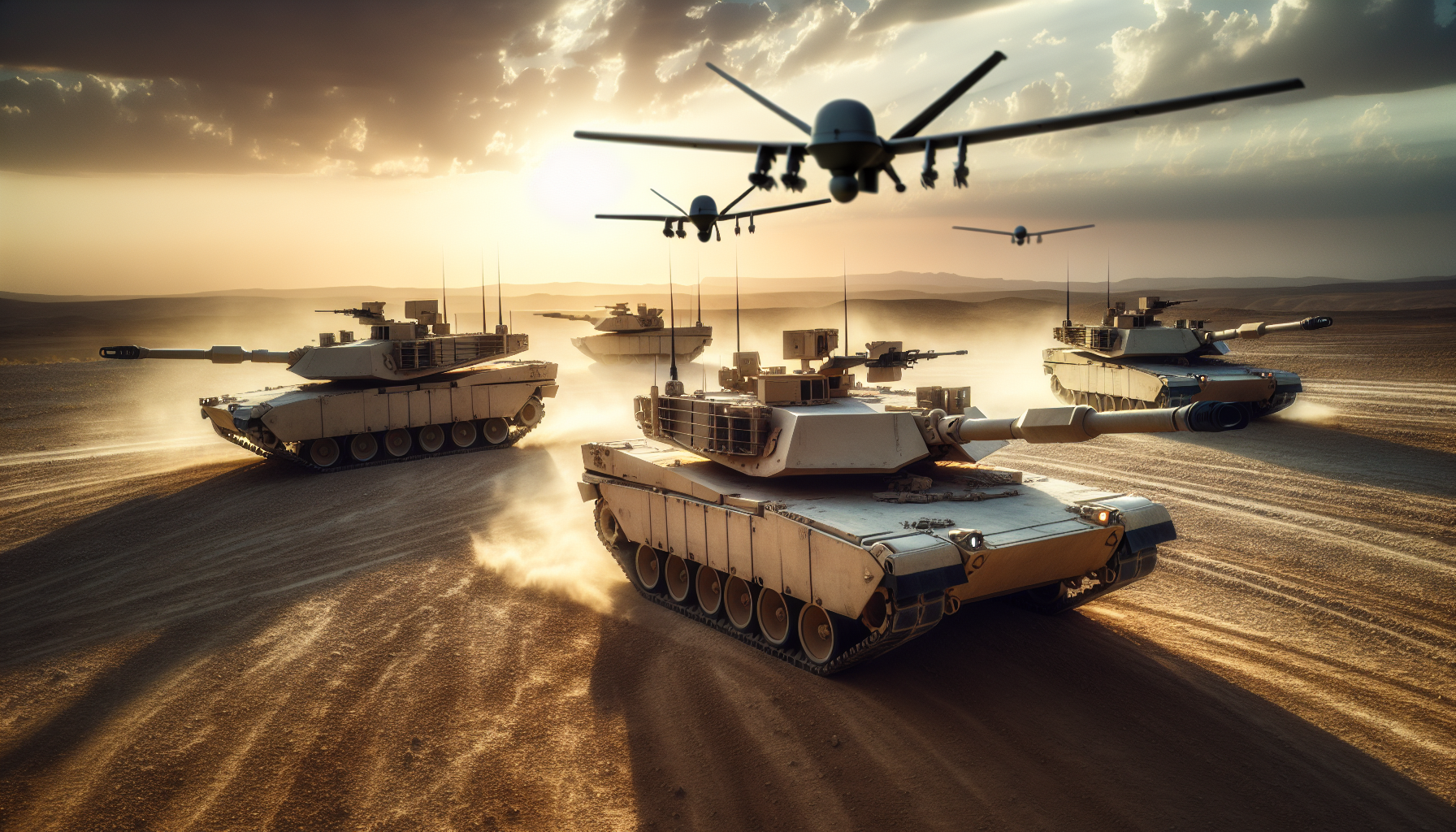
The Struggles of the M1 Abrams Tank: Lessons from Ukraine
In the wake of modern warfare, the iconic M1 Abrams tank faces an unprecedented test that reveals the harsh realities of contemporary combat. Initially heralded as one of the greatest main battle tanks (MBTs), the Abrams’ performance in the Ukraine War has sparked significant debate among military experts, particularly regarding its viability on today’s battlefield.
The Legacy of the M1 Abrams
The M1 Abrams, introduced in the 1980s, was designed to counter the Soviet threat during the Cold War. It proved its worth during the Gulf War, effortlessly overpowering the Iraqi army and cementing its reputation. With its powerful turbine engine, advanced armor systems, and superior firepower, the Abrams tank became a symbol of American military prowess.
Yet, as warfare has evolved, so too have the challenges faced by armored vehicles. In Ukraine, the Abrams’ capabilities have been put under a spotlight, revealing the limitations of a platform built for a different era.
The Shift in Warfare: Drones and Logistics
One of the most significant challenges for the Abrams in Ukraine has been the proliferation of inexpensive, yet effective, drones. Armed with advanced sensors and loitering capabilities, these drones have proliferated and can swarm, overwhelming traditional armored units.
Fuel and Maintenance Issues
The operational demands of the Abrams are substantial. Its turbine engine is notoriously fuel-hungry, requiring dependable logistics that are hard to maintain in the chaotic environment of modern warfare. Additionally, the complex systems require specialized training, making the effective deployment of these tanks more difficult. With limited resources and support systems, Ukrainian forces found maintaining the Abrams to be logistically burdensome, especially on the muddy and contested frontlines.
The Importance of Combined Arms
Unlike during the Gulf War, where air superiority played a crucial role in the Abrams’ effectiveness, Ukrainian forces have faced a vastly different scenario. The lack of sky dominance has rendered individual tank units vulnerable, exposing them to ground and aerial attacks without substantial support. In essence, tanks cannot operate effectively when isolated; they require an integrated combined-arms approach to maximize their potential.
Vulnerabilities Exposed
The vulnerabilities of the M1 Abrams have been starkly exposed in Ukraine. Notably, the design flaws became apparent when facing cheaper Russian first-person view (FPV) drones. Armed with precision loitering munitions capable of targeting the Abrams’ weaker areas, these drones have significantly tarnished the tank’s legendary status.
The limited number of Abrams on the ground compounded these challenges. With only around 31 units sent to Ukraine, each loss has been magnified. As enemy forces target these tanks, their operational effectiveness diminishes rapidly.
The New Paradigm: Armored Warfare in the Drone Age
As warfare evolves, so does the role of tanks on the battlefield. The Abrams in Ukraine serves as a stark reminder that the approach to armored conflict has shifted dramatically. Rather than acting as the spearhead of attacks, tanks may need to transition into supportive roles.
Mobile Artillery: A Tactical Shift
Instead of engaging directly with enemy front lines, modern MBTs like the Abrams may thrive as mobile artillery platforms, providing suppression and support for infantry. The lessons from Ukraine showcase how tanks must adapt to new realities, emphasizing the necessity for active counter-drone systems and enhanced electronic warfare capabilities.
Logistics: An Often Overlooked Factor
Ultimately, logistics are the backbone of successful military operations. For the M1 Abrams, the combination of high maintenance requirements, lack of air support, and counter-drone strategies has highlighted the importance of robust logistical planning in any future conflicts. The ability to keep tanks operational and supplied is paramount, and the Ukraine War has cast a spotlight on how critical these factors are.
The Road Ahead: Learning from Experience
The experience of the Abrams in Ukraine serves as a blueprint for understanding the future of armored warfare. As military planners look ahead, the key takeaways are clear: Do not rely solely on traditional armored strategies in isolation. Instead, a holistic understanding of modern combat dynamics—including the integration of drones, logistics, and air power—is essential for success on the contemporary battlefield.
This reflection on the M1 Abrams is not just about assessing a single platform; it encapsulates a broader understanding of how warfare has transformed, demanding adaptation and innovation in military strategy from all nations involved.