


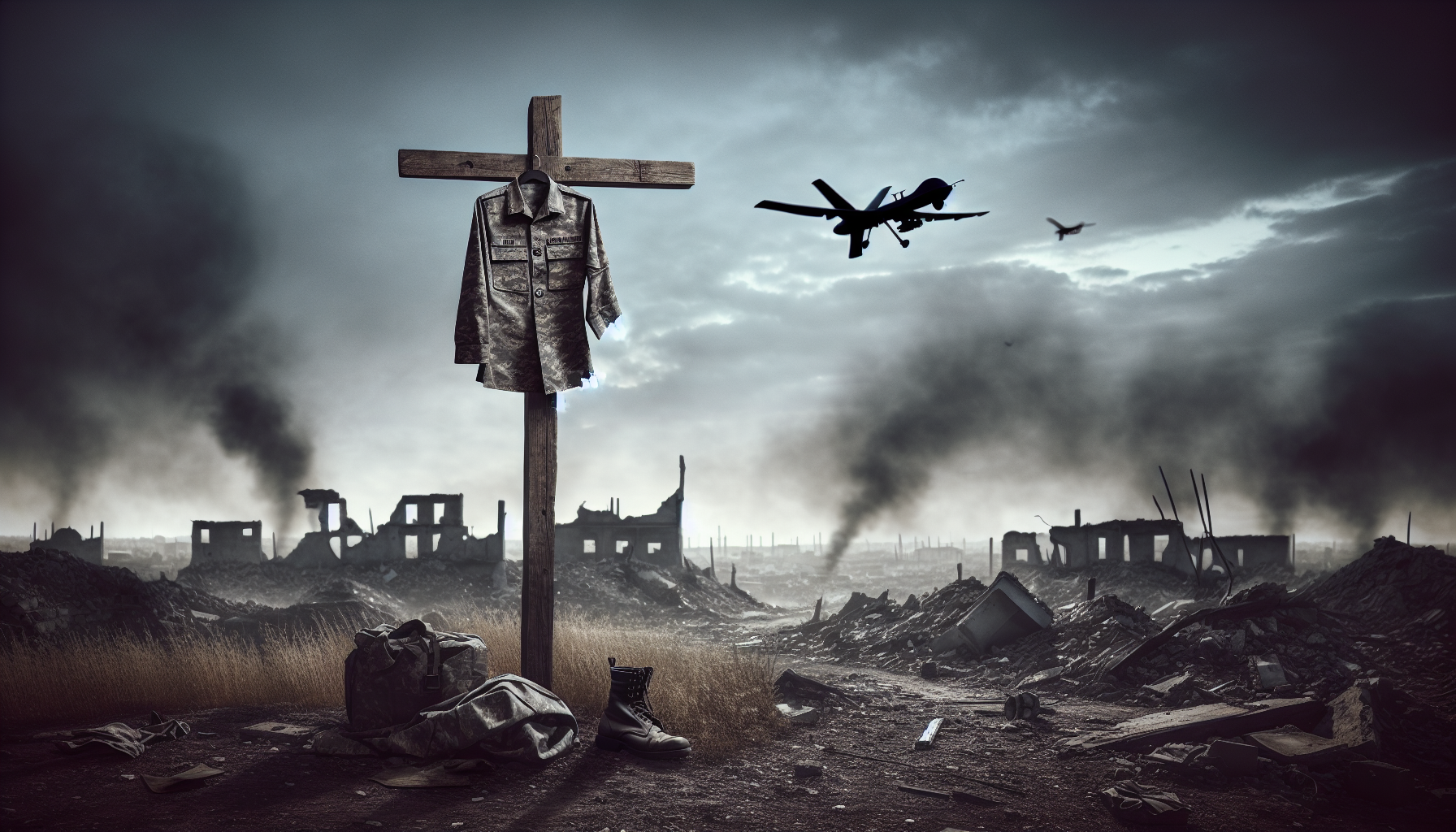
The Grim Reality of Self-Destruction on the Battlefield
In recent months, reports from the frontline have painted a haunting picture of despair among Russian Armed Forces soldiers. A troubling trend has emerged, marked by an unsettling increase in instances of self-destruction among troops, especially in the wake of drone strikes and encirclement. As these accounts circulate, concerns about the psychological toll on soldiers are coming to the forefront.
Dark Realities on the Frontlines
Minister of Defense Mykhailo Fedorov has publicly addressed the increasingly disturbing phenomenon. He acknowledged the frequency of video evidence showcasing soldiers committing suicide, primarily following injuries inflicted by Ukrainian drone strikes or during tumultuous encounters with drone swarms.
“We receive video confirmations from the front daily, where the enemy infantry commits suicide. More often this occurs either after being wounded by a drone, or during encirclement by a Ukrainian drone swarm.”
– Mykhailo Fedorov
The grim reality depicted in such reports is underpinned by a significant rise in these tragic incidents, raising critical questions about the factors driving soldiers to such devastating decisions.
Understanding the Causes
The Psychological and Strategic Landscape
Fedorov attributes the surge in suicides to a combination of factors deeply entrenched in Russian military ethos and propaganda. He highlights the paradox between the narrative spun by military leadership and the actual conditions soldiers face:
“Such a brutal suicide is the result of decisions made in Russia. First, propaganda speaks of control of the situation and advantage. But in practice, it looks different: unprepared people, lack of chances for evacuation, and constant drone pressure.”
– Mykhailo Fedorov
This dissonance between expectation and reality contributes to a state of hopelessness among troops, who find themselves overwhelmed by relentless technological warfare.
Restrictions on Surrender
Adding to the dire situation is the restriction imposed by Russian military leadership against surrendering. Soldiers are led to believe that surrendering is not an option, a notion that can have dire consequences:
“Propaganda says it’s better to die immediately. Although after captivity, a soldier has every chance of exchange – they regularly occur between the sides. But Russia deprives its citizens of the right to life.”
– Mykhailo Fedorov
The moral ramifications of such a stance compounded by intense psychological pressure contribute to a landscape where self-destruction appears to be the only escape.
Alarming Predictions for the Future
As the conflict continues, Fedorov predicts that the month of March could see unprecedented rates of casualties among Russian troops. The dynamics of warfare and the strategic intelligence provided by the Armed Forces of Ukraine suggest that losses could soar beyond 30,000, a staggering statistic that implies a potential obliteration of military morale and capability:
“Achieving a figure of 50,000 destroyed occupiers per month will have catastrophic consequences for the enemy.”
– Mykhailo Fedorov
Such predictions illuminate the severe implications of ongoing combat strategies and the psychological landscape facing Russian soldiers.
Innovative Incentive Systems?
In an effort to address these issues and possibly boost morale, Fedorov has floated the idea of introducing a points system designed to reward video-confirmed instances of self-destruction among enemy troops.
“Perhaps, to propose awarding 12 ePoints (the same amount as for a destroyed one) to the unit in whose sector the occupier carried out the self-destruction – given there is video confirmation?”
– Mykhailo Fedorov
This proposed system aims to create an additional incentive layer for troops operating under extreme psychological stress, but it raises ethical considerations about the value placed on human life in the context of warfare.
The Role of Propaganda
Underlying these developments is the broader impact of propaganda on soldiers’ morale and the incentive structures within the military. The harsh realities confronting troops on the battlefield are exacerbated by a controlled information environment, where the narrative often does not align with the frontline experiences. Fedorov’s emphasis on controlling the information flow underscores the psychological warfare at play, magnifying the stress and anxiety experienced by soldiers who perceive an imbalance between command directives and their lived experiences.
As the conflict escalates, the interplay between technological warfare, psychological pressure, and military strategy continues to evolve, revealing the complex layers shaping the combat experience for soldiers on both sides.