


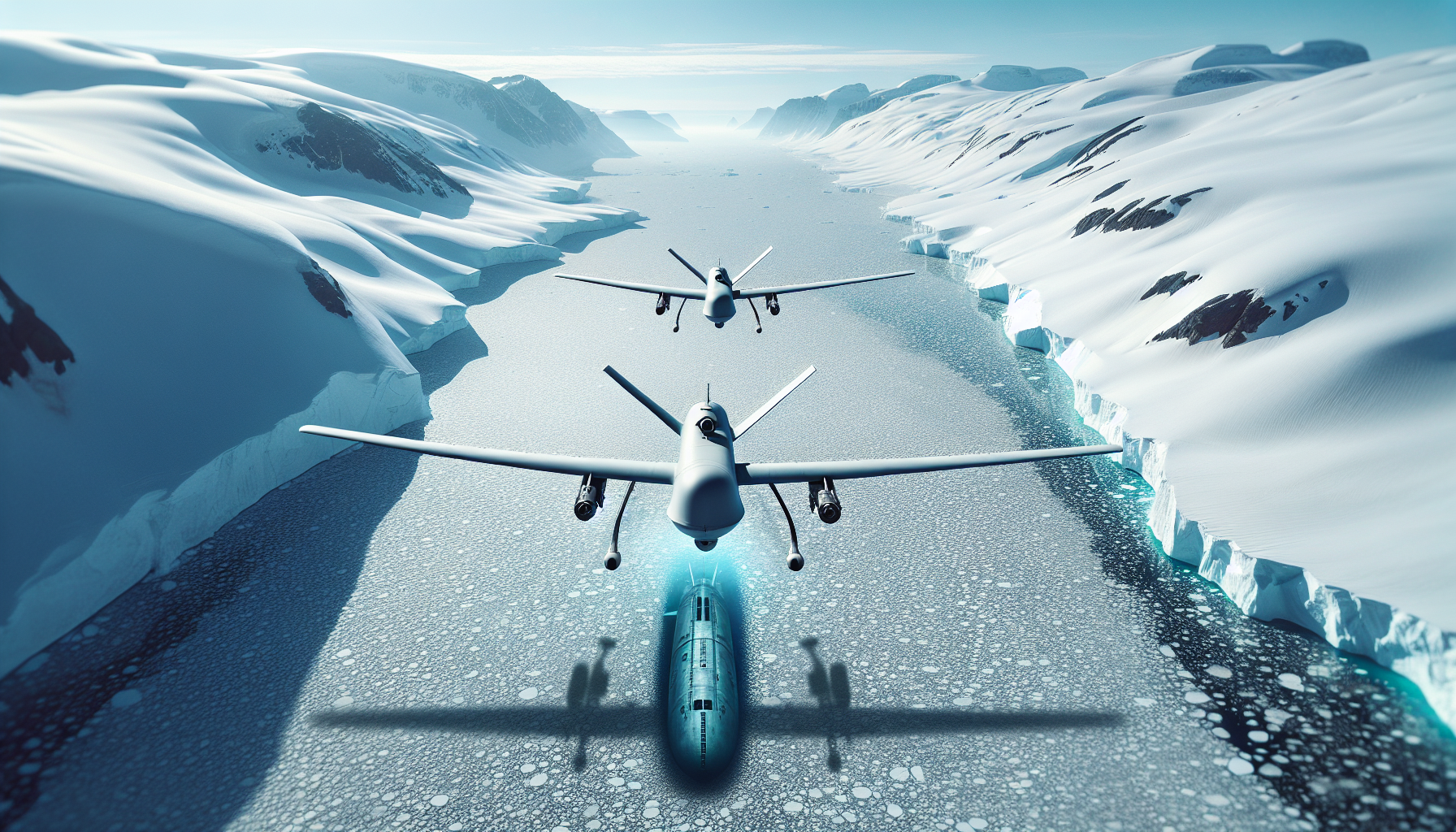
The Future of Arctic Security: Drones Over Dog Sleds
In a world increasingly defined by technological advancement, the Arctic region is on the brink of a transformative shift in security operations. As climate change opens new waterways and alters territorial dynamics, especially in Greenland, cutting-edge unmanned drones are emerging as vital tools for national defense—far superior to outdated methods like dog sledding.
Drones: A Leap Forward in Arctic Surveillance
The call for modernizing security in Greenland aligns with President Trump’s vision of leveraging technology to enhance military readiness. Drones—adapted for harsh Arctic conditions—are touted as critical assets for monitoring activities, gathering intelligence, and providing domain awareness. Skip Davis, a retired U.S. Army general and co-author of a recent report, highlights these unmanned systems’ maturity and versatility. He asserts that they present capabilities that human operatives simply cannot match.
“They’re maturing, they’re versatile and they provide critical capabilities that can’t necessarily be substituted by human presence,” Davis explains.
This sentiment illustrates a compelling case for drones in the Arctic, where the challenges posed by extreme weather can be life-threatening.
The Challenges of the Arctic Environment
The environmental conditions in the Arctic are notoriously challenging; survival is a fundamental concern. Minna Ålander, a fellow at the Center for European Policy Analysis, underscores the risks involved in human operations in such frigid temperatures. In her view, the foremost concern in Arctic military operations is how one can endure the elements.
“There is a chance that you will die from natural causes, basically, if you’re not very well prepared,” Ålander warns.
In contrast, drones can surmount these obstacles, operating autonomously without the risk of frostbite or hypothermia—a distinct advantage in this inhospitable terrain.
Enhanced Capabilities: Drones vs. Human Patrols
Drones promise not just safety but efficiency. Jan Kallberg from the Army Cyber Institute at West Point draws a striking comparison when he mentions traditional patrols. Typically, a platoon can cover perhaps 20 miles a night on skis with considerable effort. However, with drone technology, obtaining intelligence becomes far more straightforward.
“You can send a drone to answer the intelligence questions,” Kallberg notes, advocating for a shift toward automated surveillance over conventional methods.
Technological Limitations and Operational Hurdles
While the advantages are numerous, adapting drone technology for Arctic conditions is not without its difficulties. The extreme cold presents a battery issue, as energy sources may degrade quickly. Additionally, susceptibility to freezing temperatures can impact both the engine functionality and the material integrity of these devices. Kallberg points out that drones require robust engineering to withstand minus degrees, emphasizing that materials can become brittle in such climates.
“It’s important to understand… about material, plastic and so forth, [it] gets brittle in the cold weather,” Kallberg explains.
Moreover, the stark, expansive settings of the Arctic can make it difficult for drones to conceal their electronic signatures from potential adversaries.
Undersea Monitoring: A Comprehensive Defense Strategy
Monitoring does not solely take place in the skies; undersea surveillance is equally crucial. Experts stress the pressing need for the U.S. and its allies to enhance capabilities for tracking Russian submarine movements in the strategic waters off Norway and Greenland. This calls for a dual approach employing both aerial drones and underwater sensors, thus broadening operational capability.
In a realm where maintaining a military presence is challenging, the ability to employ various technological platforms for distinct environments becomes essential.
The Political Landscape: Sovereignty and Security
Underpinning all discussions about Arctic security is the matter of sovereignty. Trump has expressed that the United States will assert control over military sites in Greenland. Currently, the U.S. already has a strategic military base in the territory under a historical 1951 agreement with Denmark.
As tensions rise, the geopolitical stakes in the Arctic become clearer, particularly with rival states like Russia and China looking to establish a foothold in this pivotal region. Trump’s comments about Greenland’s security have sparked intrigue, drawing attention to the region’s current military capabilities—which he has derided as inadequate.
“They’ve got two dog sleds,” Trump remarked during previous dialogues, emphasizing the need for enhanced military strength.
This juxtaposition highlights the urgency for the U.S. to invest in better surveillance and defense strategies—including drone technology—instead of relying on outdated methods.
Conclusion: The Path Forward
The juxtaposition of drones against traditional methods underscores a critical turning point for Arctic security. As nations grapple with the realities of climate change and geopolitical tensions, drones, particularly those advanced for harsh terrains, offer promising solutions that align with modern military strategy. The drive to innovate in this space not only demonstrates a commitment to national security but also sets the stage for a new chapter in Arctic defense collaboration.