


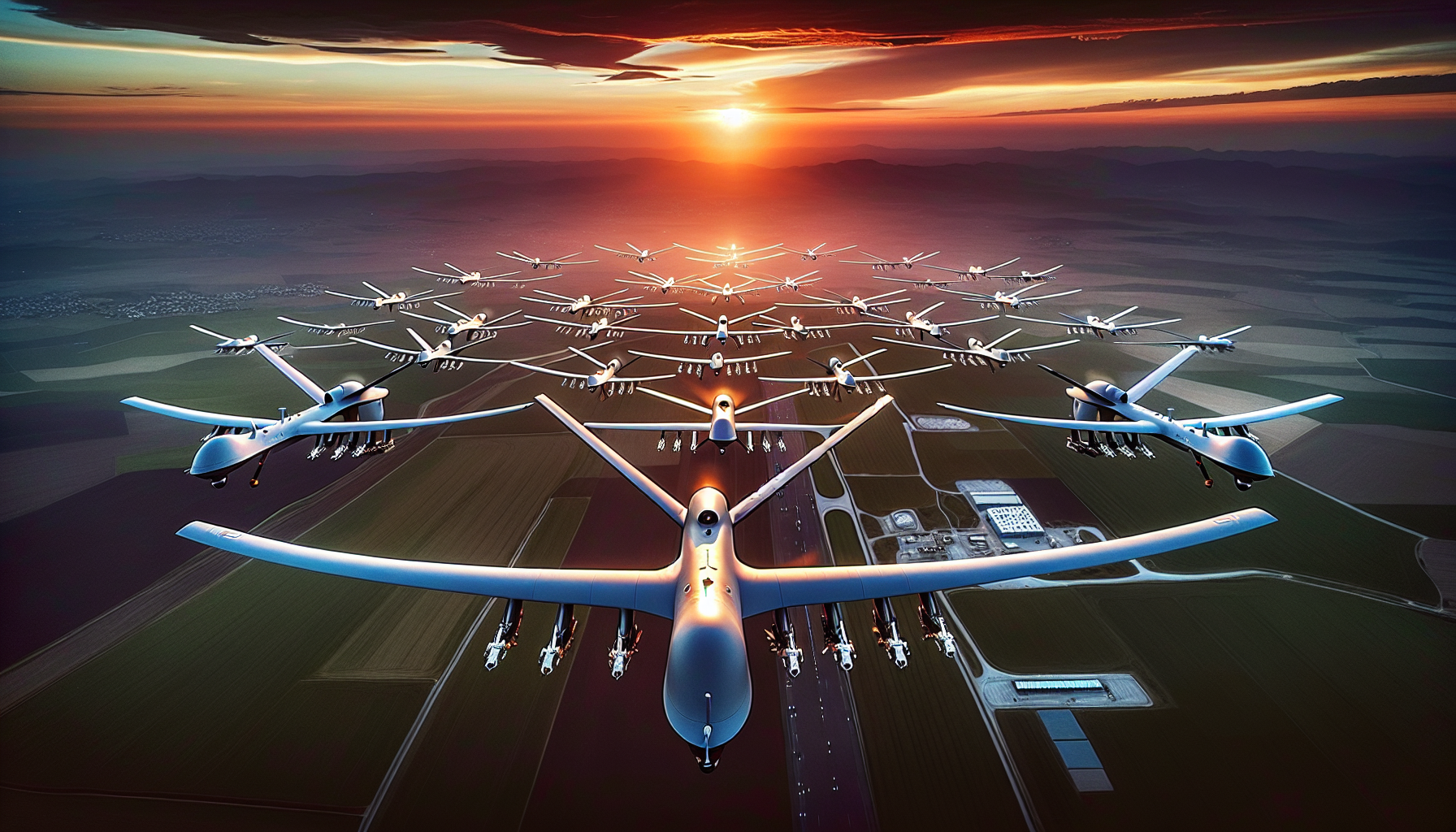
The Dawn of a New Era in Military Drones
The U.S. Department of Defense (DOD) recently initiated an ambitious plan to deploy small drones across approximately 17 military units, marking a significant leap forward in modern military capabilities. The integration of these unmanned aerial systems (UAS) is part of a larger strategy to modernize the military’s arsenal as well as counterbalance emerging threats, particularly from China.
Enhancing the U.S. Drone Arsenal
During a recent Senate Armed Services Committee hearing, senior defense officials outlined their strategies to enhance the U.S. drone industry. The burgeoning global drone market has seen China taking a notable lead, prompting urgent action from U.S. officials. Travis Metz, DOD’s Drone Dominance Program Manager, emphasized the importance of leveraging American industrial ingenuity to lower unit costs while boosting production rates. The objective is clear: to provide U.S. forces with sufficient quantities of effective drones essential for contemporary warfare.
The Role of Drones in Modern Warfare
The strategic deployment of small unmanned aerial systems has revolutionized how military operations are conducted today. These drones have become pivotal in various conflict zones, as evidenced by the recent collaborative operations of U.S. forces alongside Israel, which involved thousands of drone strikes against Iranian positions. The drone technology has drastically altered the dynamics of combat, bringing new challenges and capabilities to the battlefield.
The Drone Dominance Program
Launched in late 2025, the DOD’s $1.1 billion Drone Dominance Program sets an ambitious target: to procure over 300,000 domestically manufactured weaponized drones by 2027. The program employs a phased competition approach dubbed “Gauntlets,” where different commercial drone vendors showcase their products. The best-performing systems, as judged by military operators, will receive contracts for large-scale orders, starting with 30,000 drone systems soon to be delivered.
A Competitive Edge on Costs
One of the most attractive aspects of the Drone Dominance Program is its focus on cost-efficiency. Initially, drones were priced around $5,000 each; however, Metz envisions this cost decreasing to below $2,000 by the conclusion of the program. This strategy is vital for maintaining operational readiness without budget overruns, giving U.S. forces the edge in affordability and capability.
Tactical Use and Training
While these drones will primarily be utilized for training exercises, they hold the potential for deployment in real conflict scenarios should the need arise. As military service departments develop their own tactics, techniques, and procedures (TTPs), these drones will quickly transition from training tools to vital components of modern military strategies.
Underestimating Drone Warfare Could Be Dangerous
Officials note that the battlefield impact of drones is profound. Owen West, DOD’s Senior Advisor for Drone Dominance, pointed out the significant casualties attributed to low-cost drone technology across various global conflicts. This shift in combat dynamics underscores the importance of continuing to innovate and adapt military strategies to include these new capabilities effectively.
Counteracting Emerging Threats
The Pentagon’s approach extends beyond merely increasing drone supply. It is also focusing on counter-drone strategies through the Army-led Joint Interagency Task Force 401. This initiative seeks to address challenges posed by adversaries who are also leveraging drone technology for military advantage, ensuring U.S. forces remain at the forefront of combat readiness.
Continuous Improvement and Iteration
Future phases of the program will see the DOD engage in continuous improvement cycles, aiming to refine operational capabilities and pricing structures. The next phase plans to incorporate feedback from current testing, ensuring that drones do not just meet immediate needs but are adaptable to evolving threats and operational realities.
Conclusion
The DOD’s focused efforts to ramp up drone production and address modern battlefield challenges represent a pivotal shift in military strategy. As these developments unfold, they promise to redefine the landscape of modern warfare while maintaining a proactive stance in a rapidly changing global security environment.