


Indian Army Showcases Artificial Intelligence Innovations at AI Impact Summit
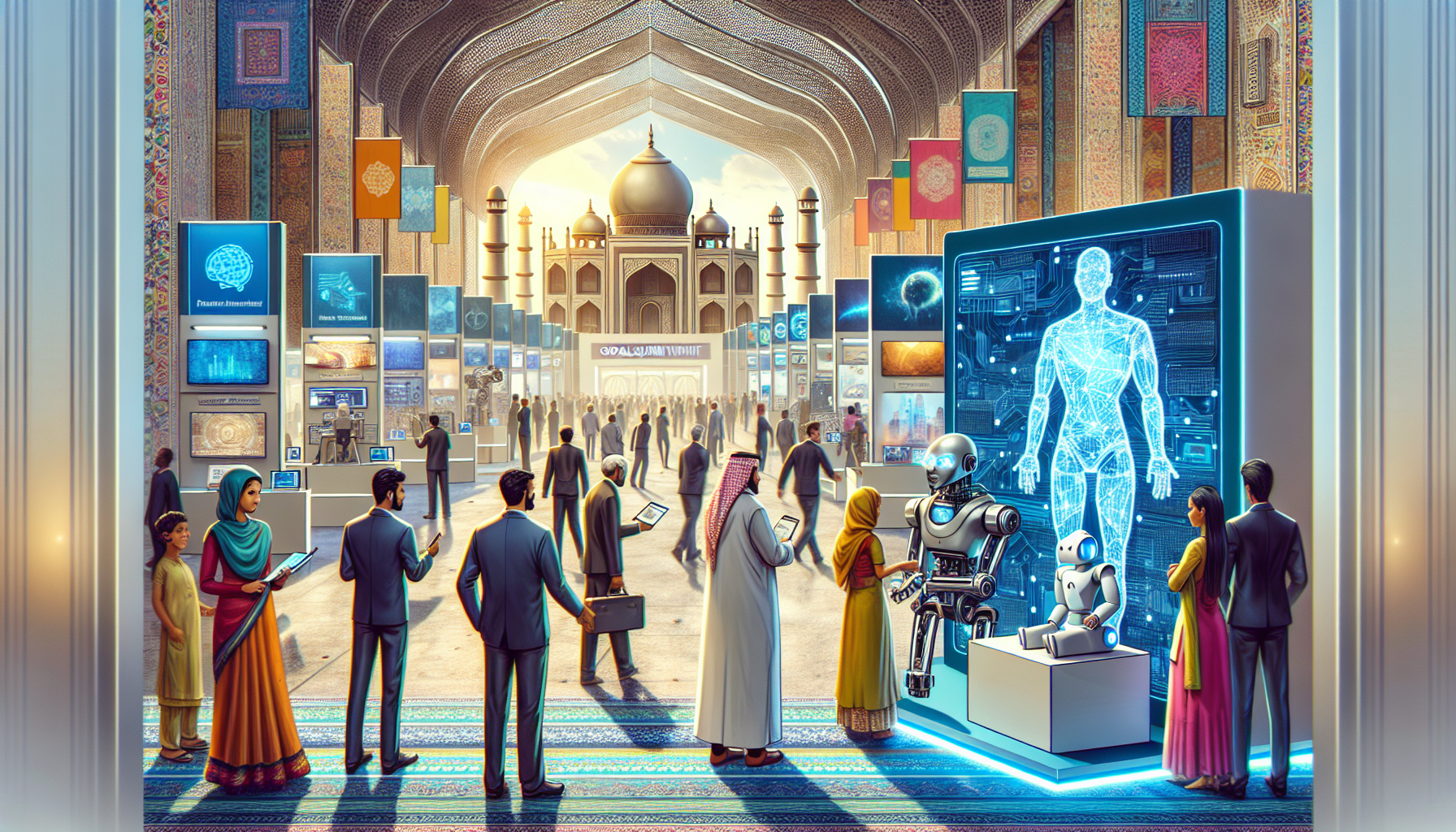
The Indian Army recently made headlines at the AI Impact Summit, held from February 16-20 at Bharat Mandapam. The event gathered a diverse audience, including heads of state, tech leaders, academicians, and researchers, all exploring the potential of artificial intelligence in various sectors. Defence Minister Rajnath Singh visited the Army pavilion, where cutting-edge AI innovations were on display, highlighting India’s commitment to advancing military technology.
Diverse AI Applications on Display
Among the notable innovations showcased were several AI-based applications designed not only to enhance military capabilities but also to have potential civilian applications. These included systems for climatology, disaster prediction, and driver fatigue detection, all aimed at improving operational efficiency and safety in various environments.
Highlighting ‘Prakshepan’
One of the standout features was ‘Prakshepan,’ a military climatology and disaster prediction system. Launched by Defence Minister Singh in November, this application is a pioneering effort developed by the Army’s Directorate General of Information Systems. With its roots in the Sanskrit word meaning “projection,” Prakshepan harnesses scientific collaboration with multiple government agencies, including the India Meteorological Department and the Geological Survey of India.
The system boasts three prediction modules for floods, landslides, and avalanches, making it the first hybrid military climatology tool to accurately forecast these events 3-7 days in advance. This predictive capability is a game-changer, not just for military operations, but also for civilian disaster management, especially in remote areas.
Advancing Security with Xface
Another fascinating application, Xface, is a facial recognition system designed for rapid image and video verification, significantly enhancing security and surveillance mechanisms. Utilizing advanced algorithms, Xface can process visual data quickly, providing a crucial tool for identity verification in sensitive military operations.
Monitoring Drone Activity with Nabhdrishti
In addition to these systems, the Army also unveiled Nabhdrishti, a telemetry reporting tool capable of capturing positional data and imagery—particularly useful for monitoring drones. This application employs AI to analyze aerial images, enhancing situational awareness by identifying unidentified aerial vehicles in real-time.
Promoting Safety with Driver Fatigue Detection
Safety is another area where AI is making strides. The Army displayed an innovative device that detects driver fatigue, alerting individuals when they need to take a break. This feature not only aims to enhance operational safety for military drivers but also has significant implications for civilian road safety, potentially reducing accidents on highways.
A Vision for AI-Driven Future
Defence Minister Rajnath Singh emphasized that AI is not merely a driver of economic growth but acts as a multipurpose tool for national security and governance. He highlighted India’s vision of leveraging AI responsibly and ethically, guided by principles of morality and accountability. This commitment aligns with Prime Minister Narendra Modi’s vision of MANAV, focusing on a human-centric approach to AI usage.
Engaging the Next Generation
The pavilion drew considerable attention not only from military personnel and researchers but also from young visitors eager to learn about the applications of AI within the military. This engagement signifies a growing interest among the youth in technology and innovation, reflecting a shift toward modernizing the Indian Army as an appealing career choice.
Collaborative Development
In showcasing these innovations, the Army expressed gratitude for the collaborative development efforts with various ministries and scientific agencies, which have greatly contributed to the creation of these applications. There’s a clear recognition that the framework established could benefit both military and civilian sectors, promoting resilience and capacity building nationwide.
Embracing the Era of Networking
The Indian Army recently declared 2026 as the Year of Networking and Data Centricity, an initiative aimed at enhancing connectivity and real-time decision-making on the battlefield. This forward-thinking strategy is expected to bolster the Army’s combat effectiveness while preparing for future challenges.
Dual-Use Potential
The Army’s innovations not only cater to military applications but also emphasize dual-use potential, showing how technology can positively impact civilian life. Systems like Prakshepan can provide crucial early warnings to remote communities, and fatigue detection systems can be used by everyday drivers, indicating a strong commitment to the well-being of the broader public.
Through these latest developments, the Indian Army is carving a niche for itself as a leader in military innovation, ensuring that technology serves both defensive needs and enhances community safety.