


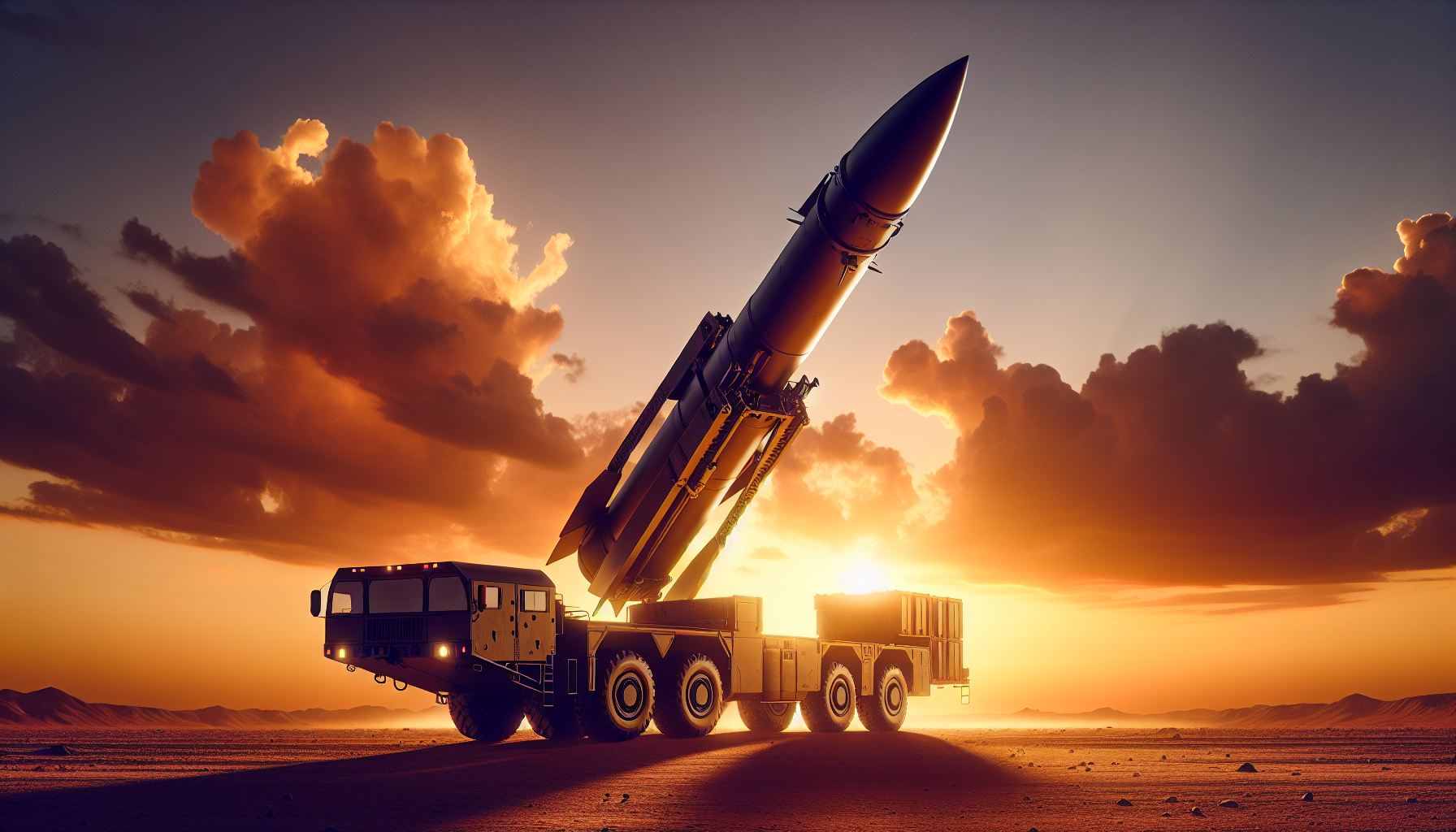
Iran’s Bold Missile Strike: The Khorramshahr-4 in Action
Iran has escalated its military posture in the Middle East with a significant and sophisticated display of force. The recent utilization of the Khorramshahr-4 ballistic missile marks a crucial turning point, showcasing Iran’s advancing military capabilities and broadening its operational reach. This missile, alongside a staggering barrage of approximately 600 missiles and 2,000 drones aimed at Israel, signifies a bold strategic maneuver that places U.S. military infrastructure in the crosshairs.
The Khorramshahr-4: A Technological Marvel
The Khorramshahr-4, also known as the Kheibar missile, is hailed as Iran’s most advanced domestically produced ballistic missile. With an operational range of around 2,000 kilometers and a payload capacity of 1,500 to 1,800 kilograms, it is capable of striking a variety of targets across the Middle East. This missile exemplifies the technological advancements in Iran’s missile program, incorporating innovations in propulsion, guidance systems, and survivability.
What sets the Khorramshahr-4 apart is its maneuverable re-entry vehicle, which allows it to alter its trajectory during the final phase of flight. This feature complicates interception by contemporary air defense systems, making it a formidable threat to regional adversaries. Analysts have noted that this missile’s deployment reflects a maturation of Iran’s strategic missile forces, capable of executing coordinated strikes across multiple fronts simultaneously.
A Coordinated Offensive
According to reports, the missile and drone strikes, which unfolded on March 6, 2026, targeted critical U.S. military bases in Qatar and Bahrain. Al Udeid Air Base in Qatar, the primary hub for U.S. Central Command air operations, and the U.S. Navy’s Fifth Fleet headquarters in Bahrain are pivotal installations in the region. The choice of targets underscores Iran’s intent to signal a drastic shift in its military strategy, aiming to challenge U.S. influence and military presence in the Gulf.
Iran’s offensive isn’t just about the missiles; it’s a combined arms approach. The simultaneous launch of thousands of UAVs and missiles is designed to create overwhelming pressure on Israeli defenses. By forcing Israel to engage multiple threat types at once—ballistic and cruise missiles alongside drones—Iran effectively strains its adversary’s layered air defense systems.
The Scale of Iranian Military Capability
The scale of the attack highlights Iran’s extensive missile arsenal. U.S. intelligence estimates that Iran possesses over 3,000 ballistic missiles, the largest in the Middle East. These range from short-range systems, like the Fateh-110 and Qiam-1, to medium-range systems capable of reaching the far corners of the region. This vast array of munitions is strategically deployed and mobile, enabling quick relocations and launches that enhance their survivability.
The integration of these missile capabilities can overwhelm advanced air defense networks, allowing Iranian forces to potentially execute saturation attacks. This approach not only showcases their sheer volume of firepower but also their tactical ability to deliver coordinated strikes at scale.
Underground Missile Storage and Launch Facilities
A key aspect of Iran’s missile strategy is its network of underground storage and launch facilities, often referred to as “missile cities.” These hardened complexes, buried within mountains and fortified near urban areas, allow Iran to conceal and protect its missile arsenal from aerial attacks. The extensive tunnel networks can store not only missiles and launchers but also fueling systems and command infrastructure.
This underground network is critical for Iran’s deterrence strategy. By ensuring that a significant portion of its missiles can survive a potential first strike, Tehran maintains a credible retaliatory capability. These fortified positions enable rapid mass launches, meaning that Iran can quickly respond to any military provocation.
Strategic Implications of the Attacks
The confirmed use of the Khorramshahr-4 against Gulf military installations would represent a profound shift in Iran’s military capabilities and intentions. It underscores the importance of ballistic missiles in Tehran’s military doctrine, granting it a powerful asymmetric capability to project force across the region despite limitations in conventional air power.
As more information becomes available regarding the exact nature of the attacks—including the types of missiles used, the interception rates of the defense systems, and damage assessments of military facilities—these factors will inform broader strategies for both Iranian and regional military engagements. The current operational landscape may very well depend on how these dynamics evolve.
The ongoing tensions and escalations in the region continue to shape the geopolitical landscape. Iran’s recent actions not only reflect its growing military competencies but also highlight the potential for future confrontation, raising stakes for U.S. presence and allies in the Middle East.