


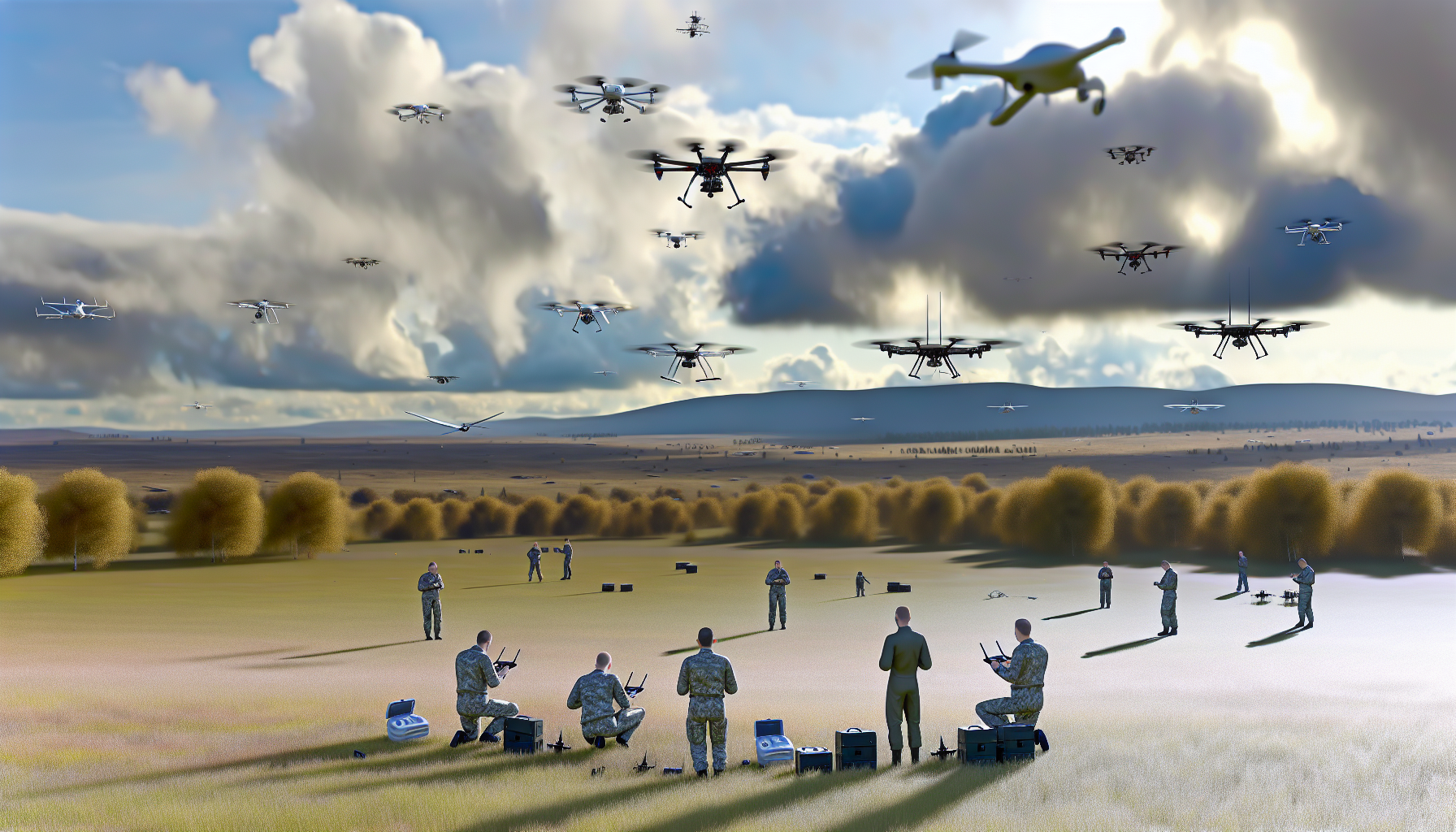
The Indian armed forces are stepping up their game with an ambitious exercise set to test the capabilities of their drones and counter-drone systems. Scheduled for the first week of October, specifically from October 6 to October 10, this high-stakes operation will take place at a location in Madhya Pradesh that remains undisclosed to maintain strategic secrecy. This exercise, organized by the Headquarters Integrated Defence Staff (HQ-IDS), signifies a major stride in the military’s ongoing efforts to enhance aerial warfare capabilities and address emerging threats.
Air Marshal Rakesh Sinha, serving as Deputy Chief of Integrated Defence Staff (Operations) at HQ-IDS, recently accentuated the critical nature of learning from past military operations. He cited Operation Sindoor as a significant learning experience, emphasizing that such historical context is pivotal in maintaining a competitive edge over adversaries. At a recent conference focused on air defense systems, Air Marshal Sinha articulated the importance of forward-thinking military strategies, which adapt to evolving technological landscapes and operational challenges.
One of the standout features of this upcoming exercise is Exercise Cold Start, which will unfold specifically in the Central Sector. This multi-faceted event promises comprehensive participation from all three branches of the Indian armed forces—the Army, Navy, and Air Force—alongside active cooperation from industry experts, research institutions, and academic partners. This collaborative approach aims to rigorously test and refine existing air defense and counter-unmanned aerial systems (UAS) capabilities, marking a notable advancement in the joint operational readiness of the Indian military.
The underlying objective of Exercise Cold Start is to establish a more robust air defense mechanism capable of responding to contemporary threats posed by unmanned aerial vehicles (UAVs). With the proliferation of drone technology among both state and non-state actors, ensuring the adequacy of counter-drone systems has never been more critical. During the exercise, various scenarios will likely be simulated, allowing participants to evaluate responsive measures in real-time, thus preparing the armed forces for quick, effective decision-making in future conflicts.
Moreover, the involvement of industry and academic partners underscores a significant shift towards a more integrated defense ecosystem in India. By fostering collaborations that blend military expertise with cutting-edge research and technological innovation, the Indian armed forces are positioning themselves to leverage the latest advancements in defense technology. This approach not only enhances operational capabilities but also encourages a culture of innovation within the defense sector.
As the defense landscape continues to evolve, exercises like this one play a crucial role in shaping the future readiness of armed forces. The Indian military’s proactive stance in testing and adapting to new threats reflects a broader commitment to securing national sovereignty while remaining prepared for complex, multifaceted conflicts. This exercise, therefore, represents not just a test of hardware and strategies but a holistic approach to defense, integrating lessons learned, modern technology, and inter-service collaboration.
(With inputs from agencies.)