


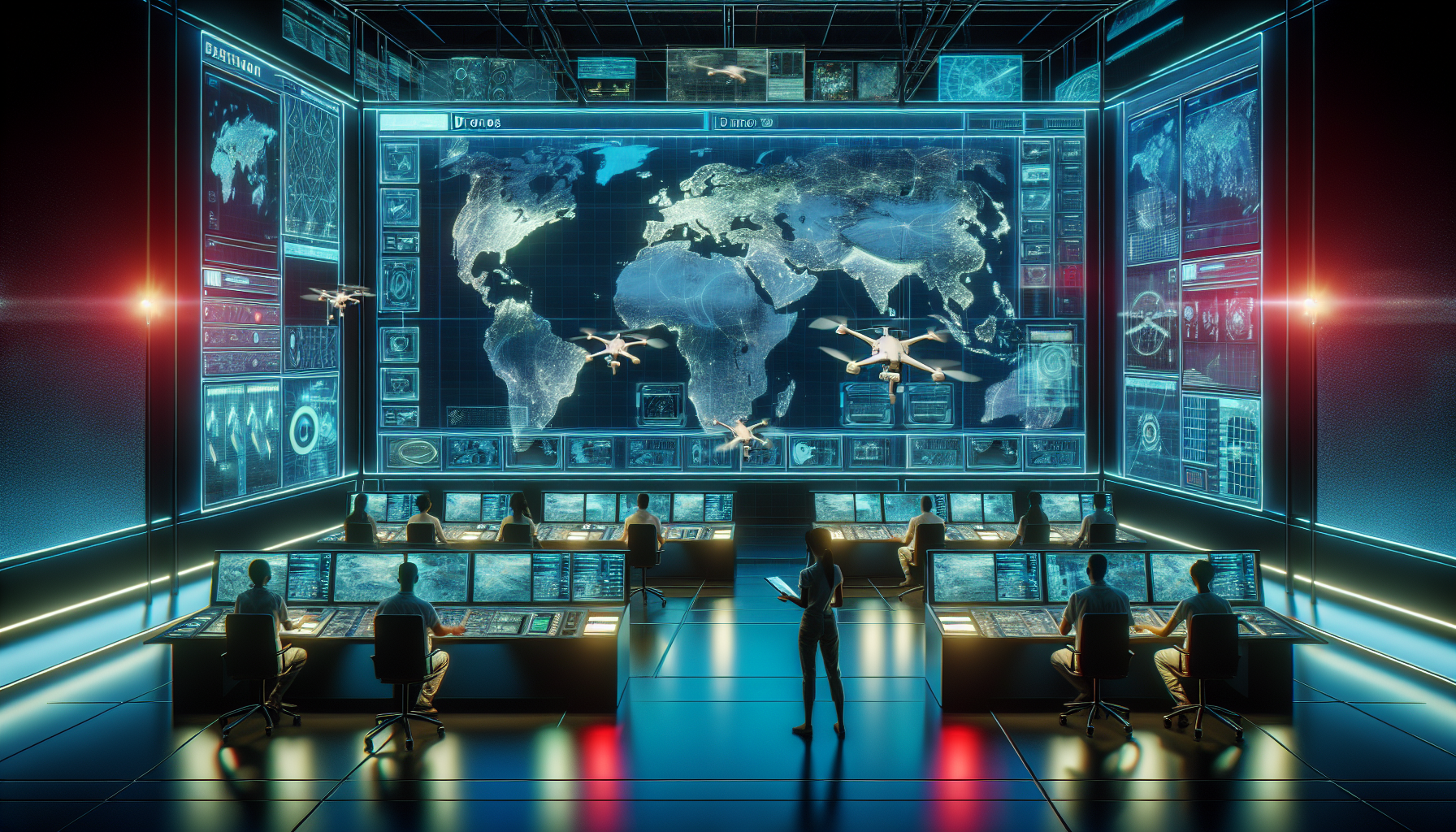
Monitoring Drone Threats with Anduril’s Lattice Platform
The U.S. military and federal law enforcement agencies are stepping up their fight against drone threats through a collaborative approach using Anduril’s Lattice platform. Recently, the U.S. Army-led Joint Interagency Task Force 401, which is at the forefront of counter-drone initiatives, awarded an initial $87 million contract to Anduril. This significant funding aims to establish Lattice as a unified national command and control infrastructure for countering potential intrusions and attacks by Unmanned Aircraft Systems (UAS).
“It ensures that our operators, agents and allies have immediate access to the best-in-class tools needed to defeat the UAS threat,” stated U.S. Army Brig. Gen. Matt Ross, the director of the task force.
Addressing Drone Threats in the “Gray Zone”
The establishment of a single command and control software dedicated to drone monitoring sets a revolutionary precedent. The Lattice platform serves a dual purpose: improving coordination among various U.S. military branches and federal law enforcement agencies. A spokesperson for the task force emphasized this is a game-changer, allowing for enhanced communication and tactical operations.
The platform is not just a tool; it enables military and law enforcement personnel to share critical data about drones, facilitating the development of joint responses to potential threats. As drones are increasingly turned into surveillance and weaponizing devices by both state actors and criminal organizations, this collaborative effort becomes crucial. The U.S. military and law enforcement agencies are tackling threats in what’s referred to as the “gray zone”—an arena characterized by covert interactions between criminals and state entities.
Streamlining Communications
One of the standout features of the Lattice platform is its ability to eliminate traditional communication challenges. Historically, military operations have suffered from compatibility issues due to disparate interfaces. Service members, often required to interpret varying data from different technologies, faced hurdles during operations.
With a centralized data flow facilitated by Lattice, these discrepancies can be resolved. The platform is built on a foundation of artificial intelligence and deep learning technology, enabling it to seamlessly integrate thousands of systems into a single interface. From operations on land to naval and aerial engagements, Lattice redefines the command-and-control landscape.
“The intent is for all future counter-UAS that the Department of War purchases to be plug-and-play into our common tactical command and control interface,” the spokesperson noted.
By consolidating efforts through a single platform and including law enforcement as key players responding to drone threats, the task force aims to enhance oversight and control over U.S. airspace.
Enhancing Operational Flexibility
The integration of Anduril’s Lattice platform represents a monumental shift in how the U.S. military and law enforcement interact with drone technology. The streamlined interface not only improves communication but also bolsters operational flexibility, allowing for quicker and more effective responses.
For instance, joint training exercises using Lattice have already demonstrated how service members can fuse data from different sensors and cameras seamlessly. This capability will be essential as the demands on security agencies continue to evolve, particularly given the increasing sophistication of drone attacks.
Moving forward, the U.S. military is expected to leverage this innovative platform to devise new tactics that protect critical infrastructure from aerial threats. By utilizing a unified command and control system, the potential for miscommunication is drastically reduced, leading to more cohesive and strategic responses to incidents involving drones.
Conclusion: A New Era of Collaboration
With Lattice at the helm, the U.S. military and federal agencies are entering a promising new era of collaboration against drone threats. As these agencies adapt to an increasingly complex aerial battleground, the need for effective integration of technology and intelligence becomes paramount. The establishment of a unified counter-UAS approach will not only enhance the safety of U.S. airspace but also solidify the operational capabilities of both the military and law enforcement in addressing these emerging challenges.