


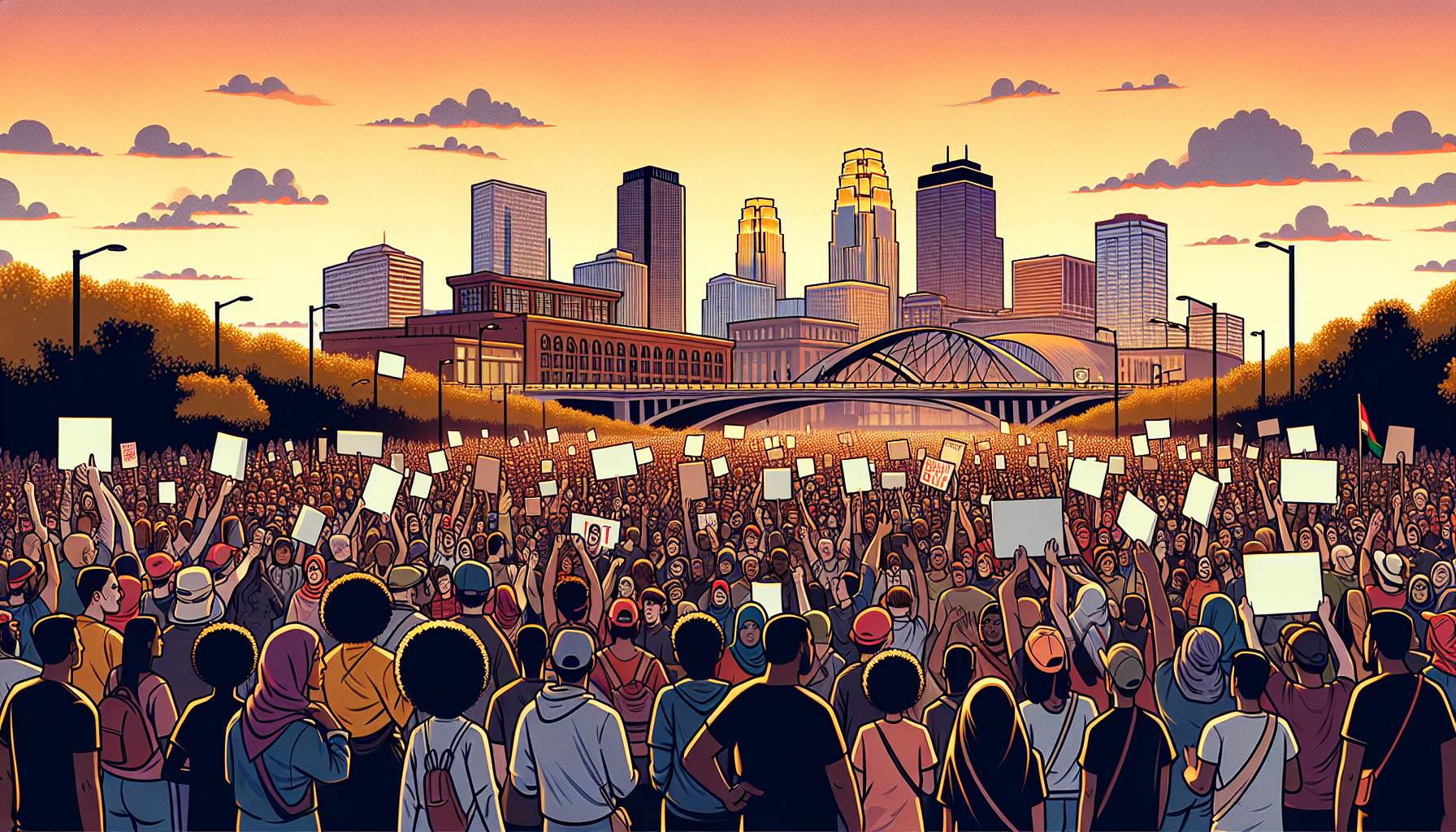
Nationwide “No Kings” Protests Ignite as Cities Rally Against Government Crackdowns
Demonstrators have decisively taken to the streets across the United States for the first “No Kings” protest since the onset of the conflict involving the U.S. and Israel’s war against Iran, which began a month ago. This weekend’s marches represent the third nationwide “No Kings” protest since President Donald Trump began his second term, underscoring a growing public outcry against perceived government overreach and authoritarianism.
A Nationwide Movement
According to details shared on the “No Kings” website, over 3,300 events were planned across all 50 states, with large crowds expected in major cities like New York, Los Angeles, and Washington, D.C. Notably, parallel demonstrations were set to unfold internationally in cities such as Rome, Paris, and Berlin, indicating a global resonance with the themes of the protest.
Organizers aim to reach beyond major metropolitan areas, focusing instead on regions that traditionally lean conservative. They project that roughly two-thirds of the participants will gather outside of the usual urban centers. Leah Greenberg, co-founder of the progressive nonprofit Indivisible—which initiated the “No Kings” movement last year—remarked, “The defining story of this Saturday’s mobilization is not just how many people are protesting, but where they are protesting.”
The Heart of the Protests: Minneapolis-St. Paul
The largest event was scheduled for the Minneapolis-St. Paul area, commonly referred to as the Twin Cities. This region has been focal in the national conversation about immigration policy following President Trump’s controversial Operation Metro Surge. Launched last December, this crackdown saw federal immigration agents flood the Twin Cities, which led to claims of excessive force and raised serious concerns about civil rights violations.
Tragedy struck in January when agents shot and killed two U.S. citizens, prompting nationwide outrage. Their deaths galvanized calls for comprehensive reform in immigration practices, leading to a series of lawsuits against federal authorities. Saturday’s protest intended not only to honor the victims but to shine a spotlight on the ongoing struggle for justice in these communities, featuring speeches, concerts, and appearances from various activists and political leaders.
Voices of the Movement
Prominent figures lent their voices to rally the crowd. Senator Bernie Sanders addressed attendees directly, reminding them of the stakes in the upcoming midterm elections. Rock legend Bruce Springsteen and folk icon Joan Baez also performed, adding a significant cultural dimension to the gathering. In a pre-recorded message, actor Robert De Niro highlighted the bravery of those participating in the protests, stating, “You’ve shown courage in the face of armed attack by government thugs.”
Demonstrations Across the Country
In Washington, D.C., participants gathered around major landmarks like the Lincoln Memorial and Washington Monument. They waved signs and displayed papier-mache effigies of the Trump administration, showcasing a blend of creativity and spirited dissent. The energy was palpable as demonstrators came together, channeling their frustrations into a powerful statement against the current administration.
The earlier “No Kings” marches held in June and October drew millions of participants, reflecting a growing momentum against Trump’s presidency. In response to the October protest, Trump’s scornful portrayal of the demonstrators through an AI-generated video exemplifies the contentious relationship between the administration and protest movements.
Political Landscape and Future Implications
As the U.S. gears up for pivotal midterm elections in November, the implications of these protests cannot be overlooked. With Trump’s Republican Party seeking to defend its majorities in Congress, Democrats are eager to capitalize on the current dissatisfaction, hoping to widen their seats as Trump’s popularity wanes. Amidst this backdrop, figures like Sanders serve to remind attendees of the critical nature of their participation in the upcoming electoral process.
With sentiments ranging from anger to hope, the “No Kings” protests shine a light on the deep divisions within American society, spotlighting the urgent need for political accountability and social justice. The atmosphere at these events not only reflects a reaction to current events but also embodies the aspirations of countless individuals yearning for a more equitable and just society.