


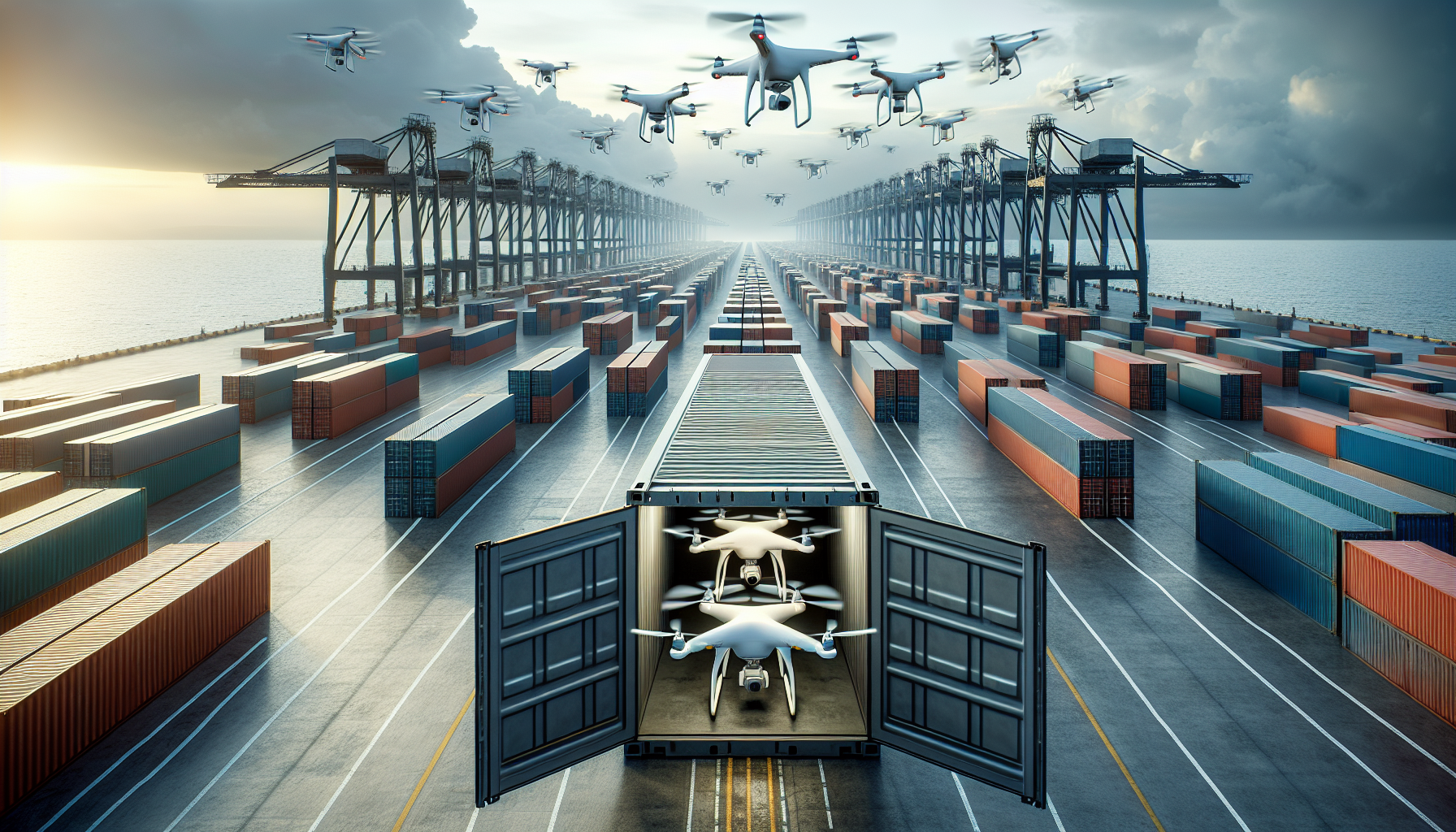
The Future of Drone Warfare: Containerized Autonomous Drone Delivery Systems
The increasing push by the U.S. military for an expansive fleet of drones reflects a significant shift in how modern warfare is evolving. As reports highlight plans for the acquisition of hundreds of thousands, if not millions, of drones—especially smaller models—there’s a growing demand for robust systems that can effectively launch and recover these uncrewed aerial systems (UAS).
The Pentagon’s Vision
The Pentagon’s Defense Innovation Unit (DIU) has recently unveiled its intentions through the Containerized Autonomous Drone Delivery System (CADDS). This initiative is centered around harnessing commercial technologies to meet military needs, particularly focusing on enhanced operational agility. The DIU emphasizes the challenges posed by the current methods of deploying drones, which often require direct human interaction. This “1:1 operator-to-aircraft” model limits deployment speed, scales, and exposes operators to unnecessary risks in contested environments.
Streamlining Operations
The CADDS aims to eliminate these limitations by enabling rapid drone deployments without a heavy reliance on human operators. The goal is to deploy large quantities of UAS quickly while minimizing the risks to human personnel engaged in both kinetic and non-kinetic operations. DIU’s mandate pushes for innovative solutions that would allow effective management of drone operations from various platforms while ensuring functionality in challenging conditions, including inclement weather and limited visibility.
Design Requirements
For the CADDS, the specifications include systems that can be easily transported—whether by land, sea, or air—and quickly set operational with minimal handling. This push for automation extends to the storage, launching, recovering, and refitting of drones, enabling these systems to remain dormant until activation. Notably, the DIU has not limited the launchers to specific drone models, leaving room for diverse capabilities depending on mission needs.
Evolving Market Trends
The market for containerized drone launchers is witnessing significant growth. Companies globally are innovating solutions, often adapting existing systems for drone deployment, particularly for loitering munitions. For example, Northrop Grumman has advanced its Modular Payload System (MPS) as a versatile launch platform, illustrating how military needs are shaping technological advancements in the defense sector.
International Innovations
Countries like Japan and Germany are not lagging behind in this technological race. Recent concepts, such as the containerized launch systems from Mitsubishi Heavy Industries and Rheinmetall, showcase a global recognition of the potential efficiency gains from such systems. These innovations underline a trend toward integrating drone capabilities for military applications while ensuring rapid deployment and logistics support.
The Chinese Perspective
Interestingly, China has also made strides in this area, especially concerning drone swarms. Companies have developed systems that underscore the tactical advantages of using swarms in military strategy. However, unlike many U.S. concepts focused solely on launch capabilities, these Chinese systems often include advanced swarm capabilities, reflecting a broader military doctrine centered around overwhelming enemy defenses.
Autonomous Decision Making
The autonomous component of the CADDS is particularly intriguing. The DIU envisions systems that support both operator-on-the-loop and operator-in-the-loop decision-making processes. This dual approach allows for greater flexibility in how these systems are deployed and controlled, making them adaptable to various operational environments.
Potential Applications
Containerized systems capable of acting as hubs for drone operations present myriad opportunities. Their versatility would allow them to support multiple mission requirements, including intelligence, surveillance, airborne strikes, and electronic warfare. Such adaptability could revolutionize how military forces execute operations, aligning with the increasing trend toward swarming tactics.
Operational Efficiency
A key strength of drone swarms lies in their configuration flexibility. Each drone can be tailored to carry specific mission equipment without requiring all drones to possess identical capabilities. This flexibility enhances operational resilience; even if one drone is lost, the swarm can continue to fulfill its assigned missions.
Emerging Threats
However, the rapid expansion of drone technologies also introduces significant threats. Issues concerning counter-drone measures become increasingly critical as swarming capabilities become more prevalent. Advances in AI and machine learning will likely compound the challenges for hostile forces attempting to defend against swarms. Strategies for employing electronic warfare systems and high-powered microwave technologies are already evolving, though they also possess inherent limitations.
A Shift in Military Strategy
As the U.S. military continues to refine its approach to drone capabilities, the CADDS stands at the intersection of innovation and necessity. These systems may address existing capability gaps in drone deployment and management, ensuring U.S. forces remain agile and effective on the modern battlefield.
Amid this evolving landscape, the full potential of containerized drone systems is yet to be realized. The future of military operations may hinge on how effectively these technologies are integrated into strategic frameworks, transforming not just drone warfare but the very nature of combat itself.