


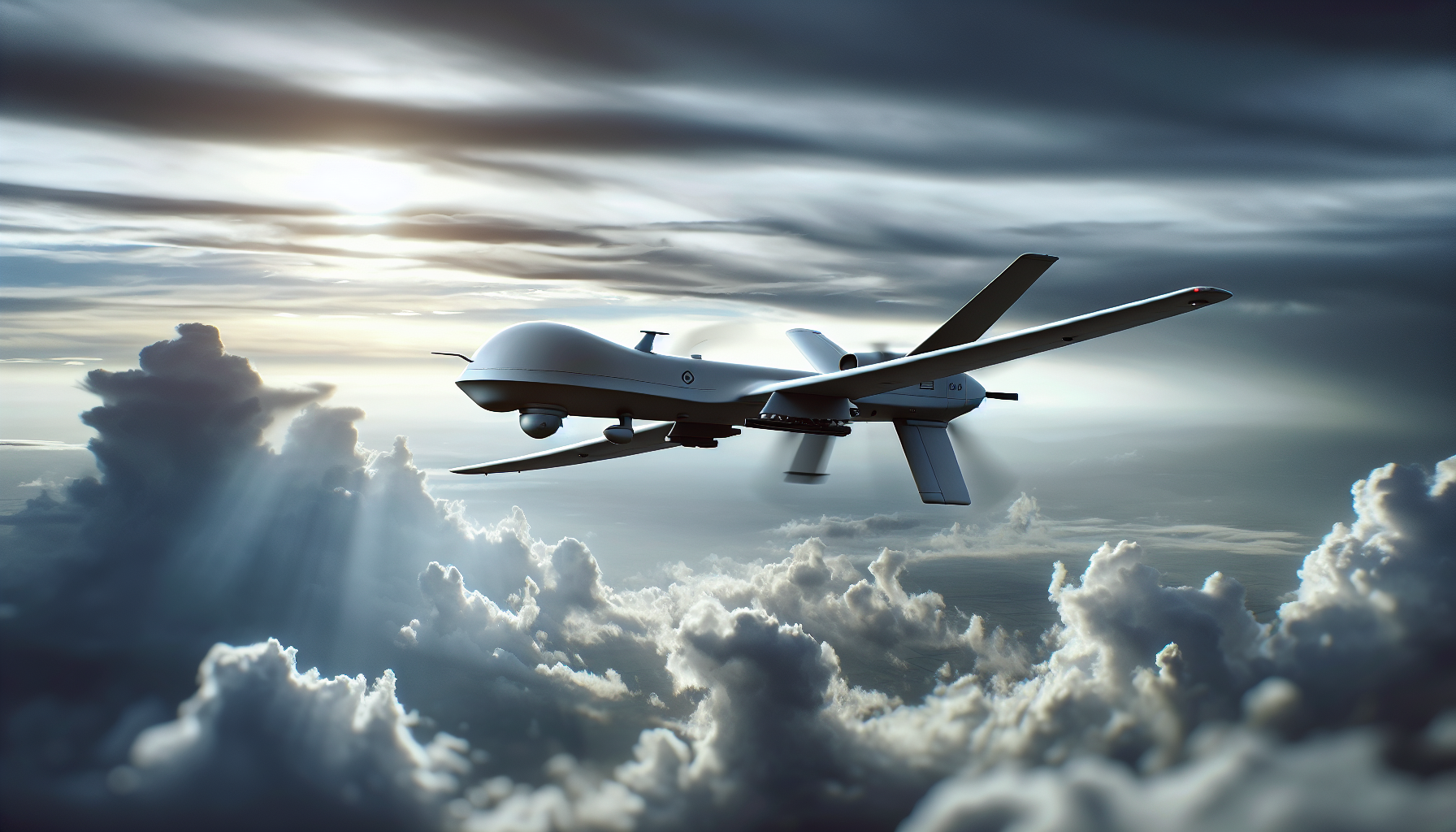
In recent developments from the battlefield, Russian military forces have unveiled a new type of one-way reactive strike drone that has been deployed during combat operations. This system made its first appearance in a video capturing a dramatic attack on a Ukrainian HIMARS launcher, showcasing a rapid and aggressive strike capability. Intelligence reports from Russian sources indicate that these drones work in tandem with reconnaissance UAVs, which relay real-time target coordinates, enhancing their effectiveness. This information was notably reported by Defence Blog, as referenced by UNN.
Drone Design and Features
The newly introduced drone features a streamlined swept-wing design, which is optimized for high-speed operations. It is powered by a compact jet engine, a significant upgrade over traditional propeller-based systems. One standout capability of this drone is its first-person view (FPV) control, allowing operators to guide the drone actively, adjust its trajectory, and track moving targets effectively. This advanced control system represents a shift towards more interactive drone operations in combat scenarios, improving precision and adaptability.
Operational Advantages
The jet propulsion mechanism allows the drone to reach speeds that far exceed those of conventional drone models. This increased velocity is crucial, as it minimizes the reaction time available to Ukrainian military units when faced with an incoming strike, thereby complicating their maneuvering capabilities. The swift nature of these drones could turn them into formidable tools on the battlefield, particularly against mobile targets like artillery systems and command posts.
Tactical Shift in Warfare
The introduction of these high-speed drones signifies a tactical evolution in Russia’s military strategy. They appear to be a cost-effective alternative to more expensive systems such as Iskander-type ballistic missiles, which were previously utilized for rapid assaults on key targets. By deploying these drones, Russian forces can achieve a similar pace of strikes while significantly reducing expenditure and logistical complexity. This shift underscores a broader trend in modern warfare where reliance on sophisticated technology combines with a need for economical alternatives.
Current Status and Anonymity
As of now, crucial information regarding the manufacturer, production numbers, and the official designation of this drone remains classified. Experts emphasize that the lightweight and compact design paired with jet propulsion not only enhances its mobility but also positions it as an effective instrument for targeting artillery units and radar installations. The drone’s ability to engage quickly and accurately marks a new chapter in aerial strike capabilities, which could have lasting implications for battlefield dynamics.