


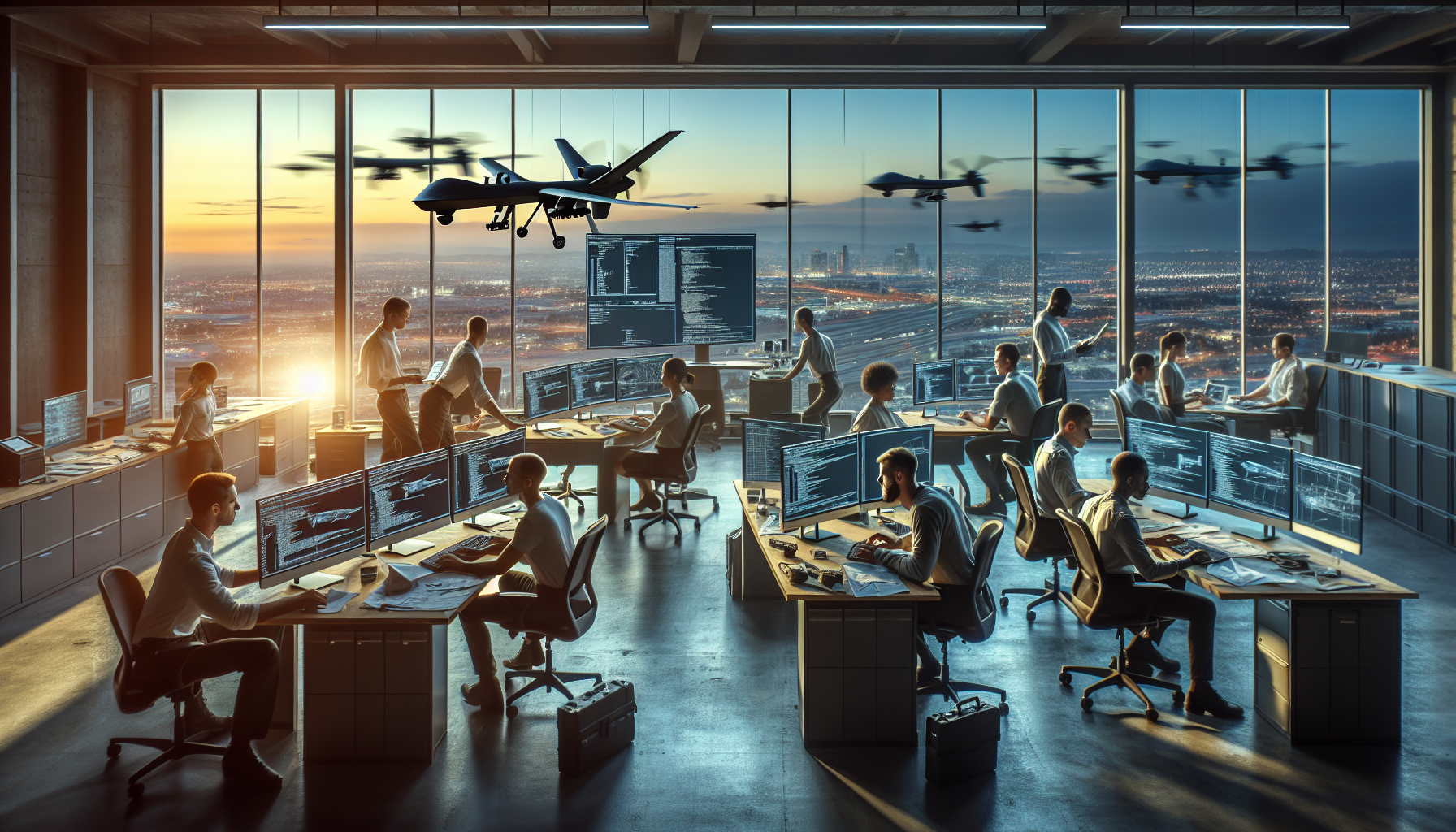
The Impact of Digital Force Technologies on Modern Warfare in San Diego
San Diego, a city known for its stunning coastline and vibrant culture, plays a pivotal role in the United States’ military landscape. Home to over 130,000 active-duty service members and a robust $60 billion defense industry, this coastal city is shaping the future of warfare. Among the key players in this sector is Digital Force Technologies (DFT), a company dedicated to enhancing threat detection through innovative technology.
A Legacy of Partnership
Established over 25 years ago in Sorrento Valley, Digital Force Technologies has carved a niche for itself within the defense sector. DFT operates exclusively with the federal government, focusing on cutting-edge solutions to bolster military readiness. According to Justin MacLaurin, the company’s CEO, DFT engages in a suite of activities aimed at detection, tracking, and mitigation of threats. The significance of their work is compounded by the evolving nature of warfare, particularly with the introduction of unmanned systems.
The Drone Revolution
In recent years, the military landscape has been transformed by the introduction of drones. These unmanned aircraft have become integral to modern combat strategies, offering a low-cost alternative with substantial impact. MacLaurin notes the irreversible nature of this technological shift, stating, “Drones have changed warfare.” As these systems become commonplace, the challenge lies in countering their effectiveness.
Technology for Tomorrow’s Threats
Digital Force Technologies specializes in developing solutions to identify and neutralize unmanned aircraft systems (UAS). While MacLaurin cannot divulge specific deployment locations for security reasons, he affirms that the U.S. military is their primary customer. “It is being used by the U.S. military,” he confirmed, emphasizing the importance of their technology in various military exercises and training programs, often beyond American shores.
Addressing Emerging Challenges
As American forces confront new threats, particularly from adversaries employing inexpensive FPV (first-person view) drones, the stakes are getting desperate. “You’re starting to take a $1,000 drone, and, to knock it out of the air, the U.S. would use a Patriot missile,” MacLaurin explains. This stark contrast in cost—from $500 to $4 million—places American forces at a tactical disadvantage. The sheer number of drones that an opponent can deploy creates a scenario where U.S. resources could be rapidly depleted.
Assessing Foreign Drone Threats
Additionally, MacLaurin points to the Shahed drones utilized by Iran, which boast an impressive 10-foot wingspan and a range of nearly 1,000 miles. While these drones may pose a significant threat in the Middle East, MacLaurin assesses the risks to the U.S. mainland as limited. He explains that if a drone is launched from a ship 1,000 miles offshore, it will take approximately nine hours to reach land—far exceeding the United States’ response time from bases like Miramar.
Confidence in U.S. Defense Systems
Despite the challenges posed by evolving drone technology, MacLaurin remains optimistic about the United States’ defense capabilities. He reassures that there are numerous technological advancements in progress. “There are technologies and companies that have been working on this for a long time and that are here to support the U.S.,” he insists, fostering a sense of security even amid ongoing technological adversities.
Innovating for the Future
As the landscape of warfare continues to evolve, MacLaurin reveals that the U.S. is developing several programs aimed at creating low-cost drones that can respond effectively to cheaper, opposing threats. This strategic pivot is crucial for maintaining operational efficiency without over-relying on expensive systems, allowing the military to adapt to modern challenges.
Final Thoughts
Digital Force Technologies exemplifies innovation and resilience within the military defense industry. Based in San Diego, their advanced solutions and focus on unmanned systems position them at the forefront of a rapidly changing battlefield. With a commitment to enhancing the safety and effectiveness of U.S. forces, DFT stands as a testament to the city’s vital role in national defense.