


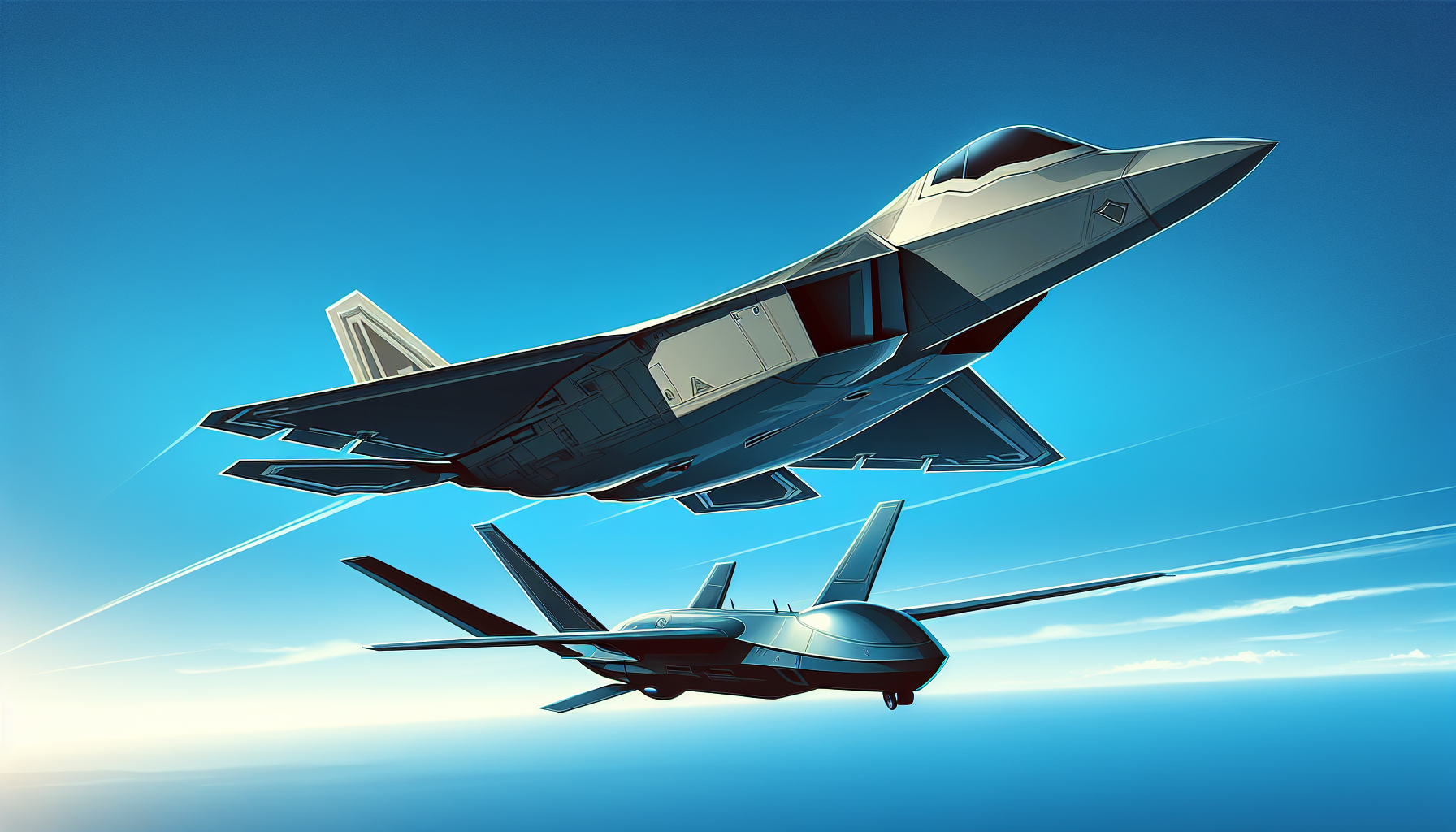
The Future of Air Combat: F-22s and Collaborative Combat Aircraft
In an era where technological advancements shape the battlefield, the integration of unmanned systems into military aviation is taking center stage. A recent demonstration involving the US Air Force’s F-22 Raptor and the MQ-20 Avenger underscores this shift, showcasing how collaborative combat systems (CCAs) could redefine air warfare strategies.
The Demonstration at Edwards Air Force Base
General Atomics, a key player in the Air Force’s Collaborative Combat Program, conducted an autonomy test featuring the stealthy F-22 Raptor alongside the MQ-20 Avenger. This event, held earlier this month at Edwards Air Force Base, was more than just a test flight; it represented a leap toward a future where drones and manned aircraft operate seamlessly together.
During this ground-breaking demonstration, a pilot aboard the F-22 used advanced autonomy software to control the drone. The pilot commanded the MQ-20 to perform tactical maneuvers, conduct combat air patrols, and engage airborne threats, illustrating how drones could augment human decision-making in high-stakes scenarios.
A Look Back at Previous Tests
This most recent flight follows an earlier test in November 2025, where the F-22 pilot commanded an MQ-20 using a tablet interface. While that test set the groundwork, the latest demonstration showcased even more advanced interaction capabilities. By employing a tactical data link, the Raptor pilot could relay commands to the drone in real time, displaying a significant advance in human-drone collaboration.
David Alexander, the president of General Atomics Aeronautical Systems, highlighted this achievement, noting, “This demo featured the integration of mission elements and the ability of autonomy to utilize onboard sensors to make independent decisions.” Such capabilities signify the potential for enhanced operational agility in future combat environments.
What Are Collaborative Combat Aircraft?
Collaborative Combat Aircraft, or CCAs, are drones designed to work in conjunction with human pilots. Unlike traditional unmanned aerial vehicles (UAVs), which often function independently, CCAs are characterized by their ability to act as “loyal wingmen.” They can either assist pilots in executing complex missions or undertake tasks autonomously, allowing human operators to focus on decision-making and strategy.
These platforms aim to bolster American airpower by serving alongside manned fighter jets like the F-35 Lightning II and future generations, including Boeing’s forthcoming F-47. The integration of CCAs is seen as an evolutionary leap in air combat, capable of maximizing combat efficacy without the risk of losing expensive crewed aircraft.
Cost-Effectiveness and Strategic Value
One of the most appealing aspects of CCAs is their cost-effectiveness. Positioned as attritable assets, these drones can be risked in combat situations that would otherwise place human lives and costly military hardware at risk. Despite being designed for combat, their lower expense compared to traditional aircraft allows for tactical flexibility in high-risk engagements.
Air Force officials emphasize that CCAs are not intended to replace crewed jets. Instead, they are seen as invaluable partners that can shift how pilots operate in conjunction with artificial intelligence. This collaborative approach is particularly relevant when facing near-peer adversaries, where superior coordination and expanded capabilities can make a decisive difference.
The Road Ahead for Collaborative Combat
As the Air Force continues to refine its CCA program, ongoing testing with the MQ-20 Avenger will inform the development of next-generation systems. The program includes various platforms sourced from innovators like Anduril and Northrop Grumman, each designed to enhance mission versatility.
These platforms are not solely about augmentation; they are designed to operate autonomously, performing roles that range from air-to-air combat to intelligence gathering. By integrating advanced sensors and weaponry into their design, CCAs enhance operational capability without requiring additional pilots in the cockpit.
Changing Dynamics in Air Warfare
The introduction of CCAs marks a significant evolution in military aviation, embracing the future of warfare where human and machine intelligence work in concert. The collaboration between the F-22 Raptor and the MQ-20 Avenger exemplifies how emerging technologies can reshape tactics and strategies in the face of evolving threats.
With the increasing complexity of modern warfare and the need for adaptability, CCAs represent a vital tool in the US Air Force’s arsenal. Their ability to enhance situational awareness, execute independent missions, and extend the capabilities of manned aircraft stands to create a more formidable aerial force.
As we watch the development of these technologies unfold, it becomes clear that the battlefield of the future will be a complex interplay of human ingenuity and robotic assistance, poised to redefine the essence of air superiority.