


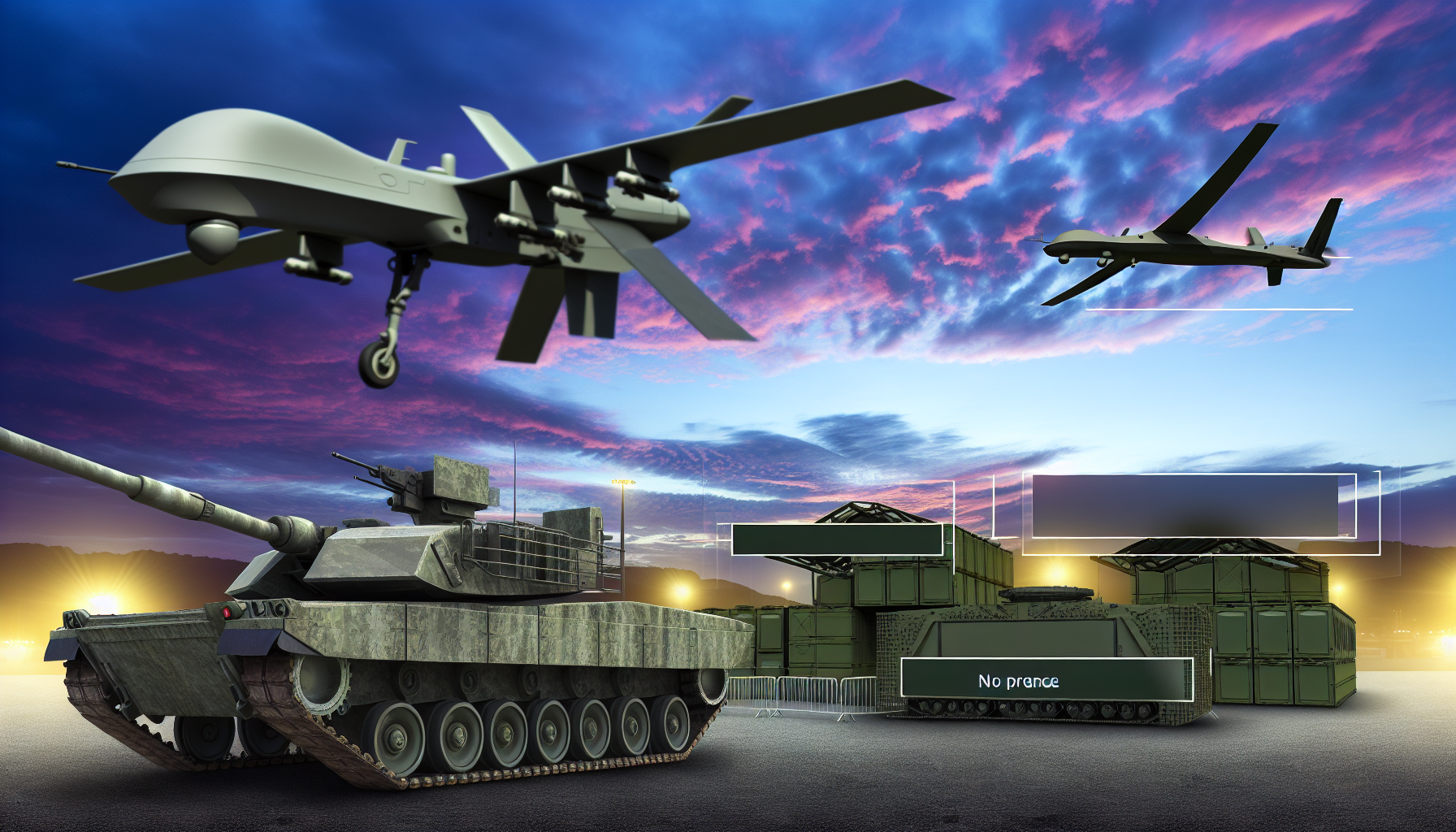
The U.S. Army’s Bold Move: Integrating UAVs with Battle Tanks
In an astonishing leap toward modern warfare, the U.S. Army has developed an innovative system known as PERCH (Persistent Elevated Reconnaissance and Combat Hub). This cutting-edge technology transforms the iconic M1A2 Abrams tanks into mobile drone launching platforms. As the military landscape evolves, this strategy exemplifies the urgency and desperation to maintain tactical superiority in the ever-advancing drone race.
The Evolution of Warfare
Historically, tanks have been a symbol of ground military power. However, with the advent of drone technology, the battlefield is undergoing a seismic shift. Drones, or Unmanned Aerial Vehicles (UAVs), offer unprecedented surveillance and precision strike capabilities. The integration of these UAVs with traditional armored vehicles hints at a future where hybrid systems dominate combat scenarios.
The PERCH System
The PERCH system allows the M1A2 Abrams to launch Switchblade loitering munitions directly from its turret. These munitions can loiter over a target and strike with lethal precision, combining the defensive strength of tanks with the offensive agility of drones. As the military races to adapt to new threats, such innovations could redefine ground combat.
Strategic Advantages
This integrated system addresses several critical needs on the modern battlefield.
-
Enhanced Situational Awareness: Tanks equipped with UAVs can gather intelligence from elevated positions, providing real-time battlefield awareness that is essential for informed decision-making.
-
Rapid Response: The ability to launch drones directly from a moving tank allows for quick and effective targeting of enemy positions. This speed could mean the difference in a high-stakes conflict.
-
Reduced Risk to Personnel: Drones can be deployed in situations too dangerous for ground troops, thus minimizing the risk of casualties while maintaining offensive capabilities.
The Urgency Behind Innovation
The development of PERCH comes shortly after the establishment of a new U.S. military unit in the Middle East, highlighting the urgency to respond to evolving threats in the region. As geopolitical tensions rise, the pressure to develop advanced warfare technologies becomes paramount. Discussion around this integrated approach is growing, with military strategists emphasizing the need for innovation to counter adversaries who are also advancing their own capabilities.
Future Implications for Combat Strategy
Integrating drones with tanks is not just about added firepower; it signals a shift in military doctrine. Future warfare may favor hybrid systems that capitalize on both ground and aerial assets. Military experts predict that such innovations will foster new tactics, ultimately reshaping how conflicts are fought.
The Path Forward
As the U.S. Army explores the full potential of the PERCH system, it sets the stage for further advancements in military technology. Training protocols, logistics, and operational strategies will all need to adapt to accommodate this new paradigm. The melding of aerial and ground systems could indeed be just the beginning of a much broader transformation in military operations.
The unprecedented move by the U.S. Army highlights a critical moment in the evolving landscape of warfare, showcasing the relentless push for tactical superiority in an age defined by rapid technological development. The integration of UAVs into traditional ground warfare marks a significant leap forward, promising to affect the future of battlefield engagements.