


The Revolutionary Launch of the Solid Fuel Integral Rocket Ramjet (SFIRR) Missile
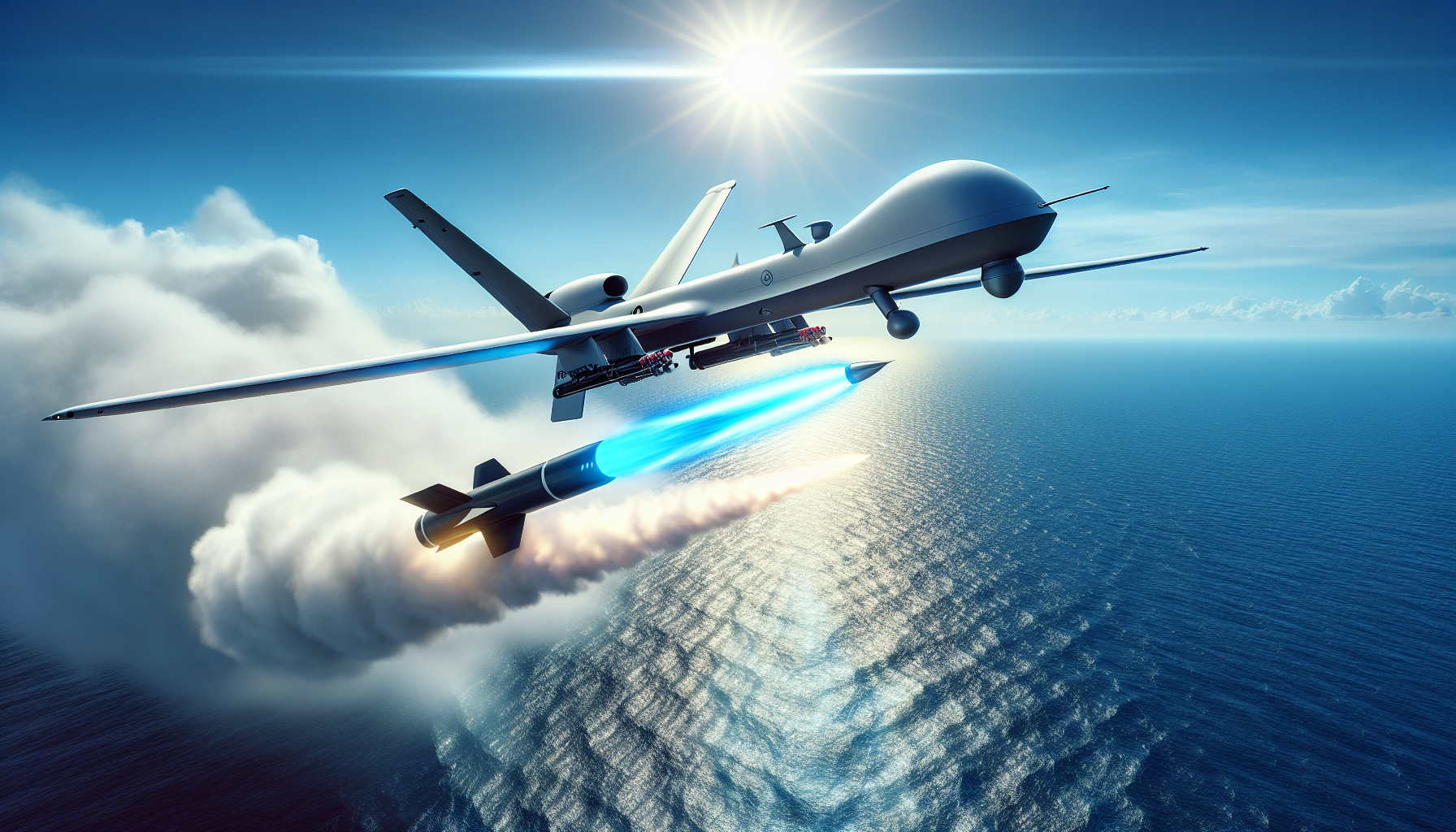
The U.S. Navy is on the brink of a significant advancement in modern warfare technology with the successful test launch of a Solid Fuel Integral Rocket Ramjet (SFIRR) missile from an unmanned aerial vehicle (UAV). This groundbreaking event, conducted by the Naval Air Warfare Center’s Weapons Division (NAWCWD), marks a pivotal moment that could redefine the capabilities and strategies of the U.S. naval force in the aerial combat arena.
A Game-Changer in Air Warfare
The test was not merely a demonstration of technology but a strategic evolution in warfare. By utilizing a BQM-34 drone as the target vehicle, the Navy successfully integrated a fire control system, enabling a live firing that validated the operational effectiveness of high-speed, long-range weapons. This approach symbolizes a monumental shift in how the military envisions future operations, allowing for attacks on adversarial positions with enhanced safety and precision, significantly reducing risk to personnel.
Official communications from NAWCWD emphasize the transformative nature of this technology. The integration of SFIRR with UAVs paves the way for sophisticated strike capabilities, showcasing flexibility in targeting distant objectives without compromising the security of human operators.
Key Insights from Military Experts
Abbey Horning, the product director of Advanced Concepts, Prototyping and Experimentation at NAWCWD, remarked on the successful integration of the SFIRR missile, stating, “This validates key aspects of our project and brings us closer to delivering an advanced propulsion system that will provide warfighters with greater range and speed.” This statement underlines the strategic importance of integrating advanced missile technologies into operational frameworks, reflecting a forward-thinking approach to military readiness.
Proven Technology Reimagined
While the concept of solid-fuel ramjets is not entirely novel, this recent test demonstrates its revival and modernization to suit contemporary battlefield needs. The SFIRR simplifies the propulsion system by eliminating the complexities associated with liquid-fueled ramjets. This innovation results in a lighter missile with enhanced payload capacity and extended range, allowing for greater maneuverability and operational efficiency.
Horning further clarified that the SFIRR “offers a balance between affordability, reliability, and performance tailored to the Navy’s operational needs.” This balance is crucial for large-scale military operations, where resource management and effectiveness are paramount.
The Broader Implications for Military Readiness
NAWCWD’s deputy director of energy, Ephraim Washburn, provides an insightful analogy comparing technological advancements in warfare to the continuous improvements in the automotive industry. He stated, “We’ve been driving cars since the early 1900s, but that doesn’t mean we’ve stopped improving them.” This perspective highlights the necessity of ongoing innovation in military technologies.
Washburn pointed out that while investments in solid ramjets peaked during the 1970s and 1980s, the Navy is now leveraging this historical foundation to create an effective modern solution. The SFIRR technology is moving past experimental stages and becoming integral to military readiness strategies.
Collaboration for Technological Superiority
The successful launch of the SFIRR missile aligns with the broader objective of maintaining technological superiority in an ever-evolving global military landscape. NAWCWD collaborates with various stakeholders, including government entities, industry leaders, and academic institutions, to drive innovation in propulsion systems. These collaborative efforts aim to meet modern battlefield demands, focusing not only on speed but also on enhancing accuracy and operational sustainability.
As Washburn stated, “We are working to refine its range, endurance, and targeting capabilities,” illustrating the Army’s commitment to developing dependable combat technology. The emphasis is on creating systems that are not only fast but also precise and sustainable in real-world combat situations.
The Dawn of a New Era in Warfare
The launch of the SFIRR missile demonstrates a significant progression in integrating unmanned systems with advance weaponry. It signifies the beginning of a new era where combat operations are increasingly dominated by technology, precision, and automation. This technological evolution raises critical questions about the future of warfare and the changing dynamics of military power.
As military technology advances, the introduction of drones equipped with supersonic missiles stands to reshape the balance of global military capabilities. The potential impact on international relations and defense strategies is profound, heralding a transformed battlefield where automation and cutting-edge technology redefine engagement principles.
In this context, the pressing question remains: will the convergence of drone technology and advanced missile systems ultimately alter the landscape of global military power?