


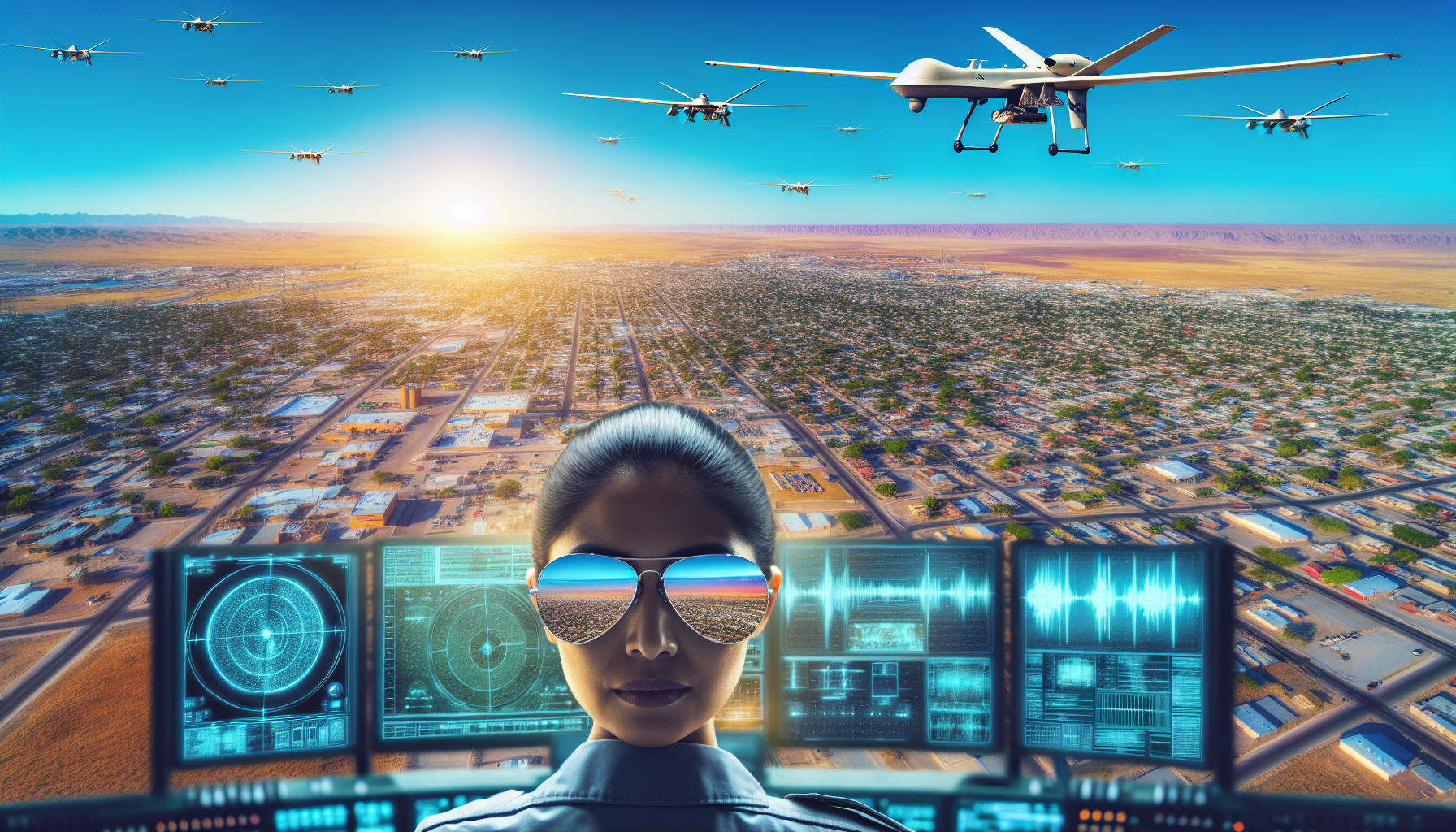
The El Paso Drone Scare: A Reflection of National Security Paranoia
Life often imitates art, as highlighted by the 1983 hit song “99 Red Balloons” by Nena. This cultural artifact tells a story of innocent party balloons mistakenly triggering a catastrophic nuclear war. Recently, a real-life scenario unfolded when Secretary of Transportation Sean Duffy announced that authorities confronted what they believed to be a “cartel drone incursion” over El Paso, Texas. To everyone’s surprise, this supposed threat turned out to be a mere party balloon.
The ramifications, while not catastrophic in the nuclear sense, were significant. The government deployed experimental laser weapons and temporarily shut down the airspace above El Paso, causing disruptions to flights and inconveniencing countless travelers.
Echoes of Past Drone Scares
This incident wasn’t isolated; it stands on the shoulders of previous drone scares that have sparked public anxiety. In December 2024, the FBI urged citizens in New Jersey to watch for suspicious drones. This led to a cascade of false reports and even instances of citizens harassing pilots with lasers. The fabric of American society is being tested not by visible threats but by paranoia rooted in our collective psyche.
Similar to the UFO hysteria of the 1950s, today’s drone phobia has emerged from a pervasive sense of insecurity. In an era of increasing global tensions and polarized politics, where both parties express alarm over foreign and domestic enemies, drones serve as a fitting focus for this emerging paranoia. They are a symbol of modern warfare and a tool familiar to millions of Americans, blending both fear and fascination.
Weapons of the Future
Interestingly, the high-tech laser weapon used in El Paso was on loan from the U.S. Army to Customs and Border Protection (CBP). This blurring of lines between immigration enforcement and national security raises numerous questions. CBP operates increasingly like an occupying force in American urban centers, mirroring military interventions overseas. What happens when tools of war are directed at one’s own citizens over mere misinterpretations of reality?
Influences from the Sky: The Chinese Balloon Incident
Congressional fears intensified following the Chinese balloon incident of 2023. This episode not only raised alarms about foreign surveillance but also provoked overreactions. The U.S. military shot down what ended up being a harmless hobby balloon, a move that sparked outrage and concern over unnecessary expenditures of military resources. Such cancellations highlight how a permanent state of anxiety can distort reality, leading to responses far more aggressive than the situations warrant.
The Political Landscape of Paranoia
Notably, recent drone panics haven’t directed their fears towards traditional adversaries like China. During the New Jersey incident, Rep. Jeff Van Drew suggested that Iranian “motherships” were responsible for drone sightings, while in El Paso, the focus was on the potential for intrusions from Mexican gangs. This shift reflects a broader trend in American foreign policy that has transitioned from countering major global powers to battling smaller, emotionally charged threats.
As the Trump administration moved away from conflicts with China, we’ve seen an emotional pivot to more familiar, hyper-local fears—often projected onto unwitting drones filling our skies. These phantom enemies serve as a reminder of a broader narrative: our society is keenly attuned to perceived threats that intrude upon our comfort zones.
The Cost of a Permanent War Footing
Living under a constant state of alert has myriad implications. The embrace of a “permanent war footing” has led to societal disruptions, where each new drone sighting or mysterious object in the sky can throw a major urban area into chaos. The lyrics of “99 Red Balloons” serve as an ironic warning: “This is what we’ve waited for / This is it, boys, this is war.” In our hyper-vigilant quest for security, ordinary life is threatened by jumpy officials armed with high-tech weaponry ready to ensnare anything they deem a threat.
As we navigate these modern fears, the lens through which we view threats—both domestic and foreign—continues to evolve, showcasing the fragility of our perceived security in an increasingly complex world.