


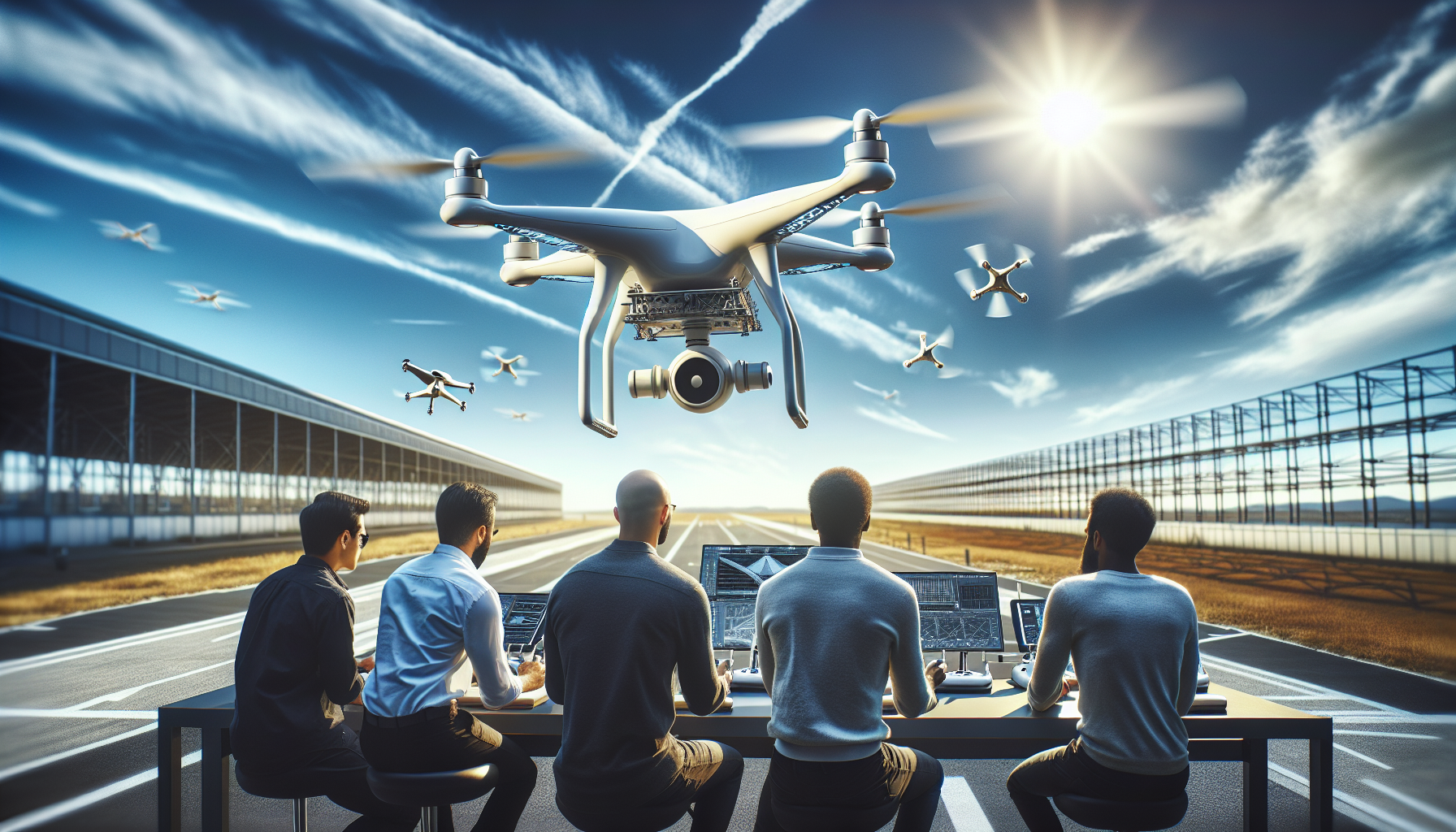

Military personnel configuring a drone for testing – Frame Stock Footage/Shutterstock
On February 3, 2026, members of the Michigan congressional delegation announced the National All-Domain Warfighting Center (NADWC) as a Department of Defense-designated drone testing site. Situated in northern Michigan, the NADWC boasts 148,000 acres of maneuverable land and 17,000 square miles of designated military airspace, making it an ideal location for conducting drone tests in realistic combat scenarios.
According to the Department of Defense, Secretary Pete Hesgeth stated, “We will deliver tens of thousands of small drones to our force in 2026, and hundreds of thousands of them by 2027.” This ambition underscores the necessity for a sophisticated testing environment like the NADWC. Furthermore, Senator Elissa Slotkin’s 2025 defense plan aimed to position Michigan as a leader in defense technology and manufacturing, which would not only enhance national security but also create new defense-related jobs within the state.
U.S. Army Maj. Gen. Paul D. Rogers elaborated that the NADWC would serve as a venue for developing, testing, and operationally employing unmanned systems “at operational tempo under realistic, all-weather conditions.” The facility features a dedicated sixty-mile-long drone corridor, cutting-edge counter-UAV technologies, and a Beyond-Visual-Line-of-Sight (BVLOS) drone operation system, all crucial for advancing the military’s drone capabilities.
How Drone Testing Can Change the Future of Warfare

A swarm of military drones connected in a network – Onurdongel/Getty Images
Drones are becoming increasingly prominent in modern warfare. The advent of AI is not only reshaping military strategies but also redefining operational capabilities. The U.S. Navy has started experimenting with formations of flying drones coordinated by AI, demonstrating the transformative potential of unmanned aerial systems (UAS) in combat situations.
AI-coordinated drones have the potential to achieve strategic aims, evolving the traditional combat paradigm. Recent developments highlight how drone swarms can pose a significant threat to aircraft carriers, which have historically dominated naval warfare. If drone technology progresses to the point where it can challenge traditional naval power, it opens the door for unprecedented tactical options in military engagements.
The efficacy of UAS has already been illustrated in conflicts worldwide, where they provide persistent surveillance, deception tactics, and improved decision-making. The expanded operational reach offered by drone technology is a game changer. At the NADWC, U.S. forces will gain invaluable experience with emerging tactics that promise to revolutionize warfare in ways yet to be fully envisioned.
As drone technology continues to evolve, it raises questions about the ethical and strategic implications of unmanned warfare. With potential advancements in AI and drone capabilities, the landscape of conflict resolution may shift dramatically, leaving previous tactics and strategies obsolete.
For those interested in the intersection of technology and military strategy, the NADWC serves not only as a testing ground but also as a glimpse into the future of warfare. The experience and knowledge gained here are sure to influence military operations and strategies for years to come.