


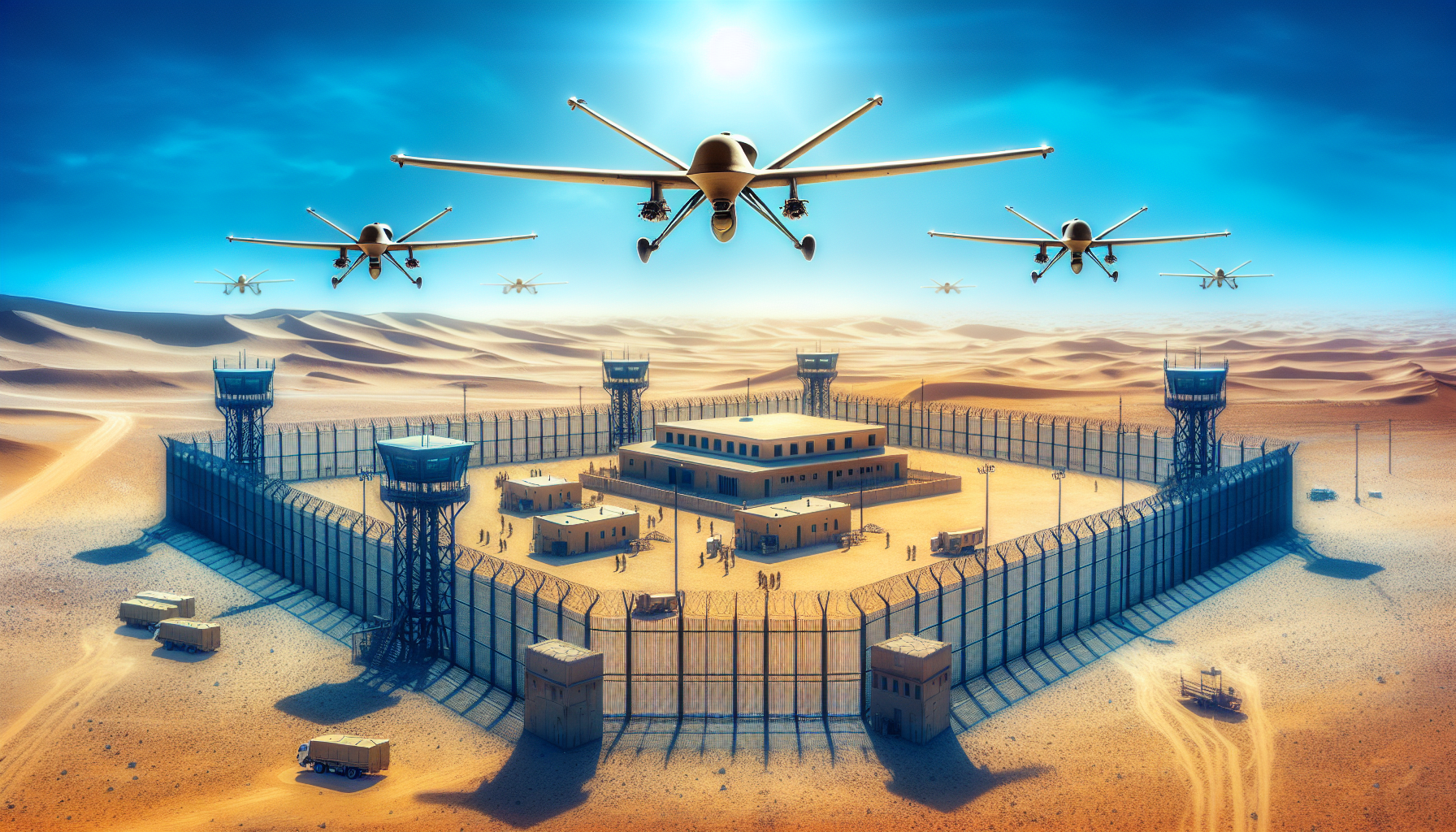
Concerns Over U.S. Military Bases’ Vulnerability to Drone Threats
A recent report from the Pentagon’s Inspector General has brought to light troubling vulnerabilities of U.S. military bases to drone threats, calling attention to significant gaps in existing drone defense policies. Released on Tuesday, the report indicates an urgent need for a consistent framework to protect “covered assets,” which are crucial military sites involved in sensitive operations like nuclear deterrence and missile defense.
Inconsistent Policies Impact Drone Defense
The Inspector General’s analysis revealed that the U.S. military lacks uniform policies for defending these sensitive sites against drone incursions. This inconsistency becomes particularly detrimental when considering the various branches of the military operate under different directives, leading to confusion about which bases qualify for specific counter-drone measures. The compounded nature of these contradictions means that many crucial installations remain unprotected, increasing the risk of unauthorized drone activities.
Specific Vulnerabilities Identified
The report scrutinized ten military installations that had reported drone incursions. Alarmingly, many of these “covered assets” were inadequately defended. For instance, an Air Force base in Arizona—responsible for training F-35 pilots—was not allowed to implement defensive measures during unauthorized drone incursions. Despite the significance of the F-35 for future homeland defense, pilot training is not classified as a covered activity under current policies, leaving the base exposed.
Similarly, another facility in California, which handles aircraft repairs and drone production, was highlighted for its vulnerability. The report noted that this site experienced multiple drone incursions in 2024 while seeking legal clearance to employ countermeasures during these incidents, underscoring the bureaucratic complexities hampering effective defense.
Bureaucratic Challenges
One of the foremost challenges in addressing the drone threat lies within a convoluted bureaucracy. The lengthy approval process for acquiring counter-drone systems amplifies the urgency of reforming current policies. Legal restrictions surrounding the use of electronic jamming and force within the U.S. add layers of complexity that hinder military readiness against drone incursions. This intricate web of regulations emphasizes the necessity for immediate legislative clarity on drone defense protocols.
The Growing Threat of Drone Incursions
Concerns surrounding drone incursions have heightened in recent years due to the surge in small, commercial drones. The accessibility of drone technology has lowered barriers for potential threats, enabling even non-state actors to conduct surveillance and precision strikes. This shift complicates the operational landscape for military installations, compelling them to rethink and revamp their defense strategies.
In 2024, multiple U.S. bases, both domestically and internationally, reported various incidents of unauthorized drone activity, triggering heightened security alerts. Notably, many of these incursions were unrelated to foreign adversaries, suggesting a broader complication within U.S. airspace management. A Department of Defense counter-drone strategy released during the latter part of the Biden administration acknowledged the rapid evolution of drone technology as a clear and present danger to U.S. military forces.
Current Defensive Measures and Concerns
While some military units have begun to receive portable drone disruption kits, uncertainty looms regarding their effectiveness. The Army secretary recently voiced skepticism about a popular system known as the “Dronebuster,” casting doubt on whether current capabilities are sufficient to secure military bases against the evolving drone threat.
Learning from Global Conflicts
The urgency for effective countermeasures has been acutely felt, particularly inspired by lessons from the ongoing conflict in Ukraine, where drones have dramatically changed combat dynamics. Secretary of Defense Pete Hegseth has acknowledged this escalating threat, advocating for the formation of Joint Interagency Task Force 401 to strategically address these concerns.
Navigating Airspace Security
Experts agree that managing airspace incursions presents a unique challenge, particularly in balancing the defense needs of military bases with the safety of civilian air traffic. As drone technology proliferates, the vulnerabilities of both military and civilian installations are expected to grow. This reality calls for immediate and decisive action from military leadership and policymakers to safeguard sensitive locations against an evolving arsenal of drone threats.